




Zirconia alumina sandpaper in the field of metal processing
May 26, 2025
Leave a message
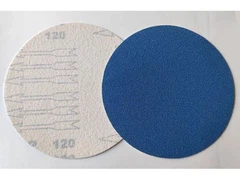
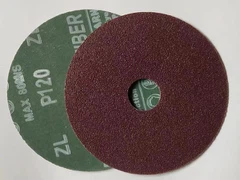
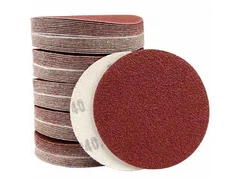
Zirconia alumina sandpaper is a high-performance grinding tool with zirconia toughened alumina (ZTA) as the abrasive. It combines high hardness and toughness, and is suitable for rough to fine grinding of metals, alloys, hard woods and other materials. Its abrasive grains are adhered to a flexible substrate through a special process, featuring strong wear resistance and a long service life. It can withstand high-load grinding without easy detachment, significantly enhancing processing efficiency and surface finish. Widely used in automotive manufacturing, aerospace, precision machinery and other fields, it is particularly suitable for processing difficult-to-machine materials such as stainless steel and titanium alloys, meeting the industrial-level requirements for efficient and stable grinding. It is an upgraded alternative to traditional sandpaper.

I. Historical Tracing of Zirconia Corundum Sandpaper
The birth of zirconia alumina sandpaper marked a milestone in the abrasive technology revolution of the 20th century.
In 1963, Excello Co. of the United States first synthesized zirconia alumina abrasive, which completely transformed the landscape of heavy-duty grinding. Traditional aluminum oxide sandpaper often faced issues such as abrasive blunting and short service life when processing high-hardness metals. However, zirconia alumina, with its unique eutectic structure, successfully addressed these pain points.
In 1972, the Norton Company of the United States commercialized zirconia alumina abrasive and launched the first zirconia alumina abrasive belt, marking the entry of abrasive belt grinding technology into the "heavy-duty and powerful grinding era". This technology has had a profound impact on heavy industries such as aerospace and automotive manufacturing. For instance, in the processing of titanium alloy parts for the Boeing 747 passenger aircraft, zirconia alumina sandpaper increased grinding efficiency by 40% and reduced the frequency of sandpaper replacement by 60%, directly contributing to a significant reduction in aircraft manufacturing costs.
II. Materials Science, Eutectic Structure Properties
The chemical essence of zirconia alumina is a eutectic composite of aluminum oxide (Al₂O₃) and zirconium oxide (ZrO₂). Through high-temperature melting in an electric arc furnace above 2000°C, the two oxides form an interwoven structure of the α-Al₂O₃ main crystal phase and the secondary crystal phase of zircon (ZrO₂). This structure endows zirconia alumina with three core advantages:
Gradient hardness characteristics: According to the ZrO₂ content (10% - 40%), zirconia alumina can be classified into low, medium, and high zirconia series. Experimental data shows that ZA40 (with 40% ZrO₂ content) achieves a grinding volume of 18.53g when grinding malleable cast iron, which is three times that of pure alumina sandpaper.
Microscopic fracture toughness: The fracture toughness of zirconia alumina reaches 5.2 MPa·m¹/₂, far exceeding that of white alumina (3.8 MPa·m¹/₂). This means that under grinding impact, zirconia alumina grains form a micro-crack network, continuously exposing new cutting edges and maintaining efficient grinding.
Thermal stability: The thermal conductivity of zirconia alumina is 0.2718 cal/cm²·sec·℃, and it can maintain structural stability at a high temperature of 1000℃. This characteristic makes it an ideal abrasive for difficult-to-machine materials such as nickel-based alloys and titanium alloys.

III. Manufacturing Process
1. Raw Material Purification: Select high-quality zircon sand (ZrSiO₄) and petroleum coke, and purify zirconia through carbon thermal reduction in an electric arc furnace at 2000°C, removing SiO₂ impurities.
2. Eutectic Melting: Mix purified ZrO₂ with industrial alumina powder, add TiO₂, Cr₂O₃ and other additives, and form a corundum-zirconium oxide eutectic in an electric arc furnace.
3. Crushing and Screening: Cool the zircon corundum blocks, then crush them with a jaw crusher and a Raymond mill, and screen them through a hydraulic classification system to obtain different particle sizes (F36-F2000).
4. Electrostatic Sand Implantation: Use a high-voltage electrostatic field (5-10 kV/cm) to evenly distribute charged zircon corundum particles in a single layer, with the sand particle spacing controlled at 0.1-0.3 mm to ensure uniform grinding.
5. Resin Curing: After coating with phenolic resin binder, the sandpaper is baked at 180°C to fully cure the resin, achieving a holding force of 8.5 N/mm² for the abrasive.
6. Post-treatment: Process the sandpaper into rolls, sheets or irregular shapes using ultra-precision cutting equipment to meet different grinding requirements.

IV. Physical Properties
Hardness Test: Mohs hardness 9.0, Knoop hardness 1450-2000 kg/mm², capable of cutting hard alloys with a hardness of over HRC50.
Abrasion Resistance Test: On the ML-10 abrasion tester, the wear volume of zirconia alumina sandpaper was only 60% of that of silicon carbide sandpaper, and its service life was extended by 2.5 times.
Self-sharpening Observation: Through scanning electron microscopy (SEM) observation, zirconia alumina particles continuously produced new cutting edges during grinding, maintaining a surface roughness of Ra0.4 μm.
Impact Resistance Test: Under 1J impact energy, zirconia alumina sandpaper retained 95% of its original cutting performance, while ceramic alumina sandpaper only retained 78%.
V. Application Scenarios
Aerospace: For processing Inconel 718 nickel-based alloy turbine blades, the single-piece grinding time is reduced by 30%, and the surface residual stress is decreased by 50%.
Automotive manufacturing: In the cylinder block honing process, zirconia alumina sandpaper achieves a surface roughness of Ra0.2μm, reducing engine fuel consumption by 2%.
Mold manufacturing: For precise polishing of H13 steel molds, zirconia alumina sandpaper increases the mirror surface processing efficiency by 40%, reaching a gloss of #8000.
Energy equipment: In the inner wall grinding of nuclear power evaporator heat transfer tubes, zirconia alumina sandpaper solves the problem of work hardening in stainless steel material processing, and the tube wall roughness is controlled within Ra0.1μm.

VI. Usage and Maintenance: Scientific Methods for Prolonging Service Life
Correct usage and maintenance are the keys to maximizing the performance of zirconia alumina sandpaper:
1. Abrasive selection principles:
Coarse grinding (F36-F80): Remove scale and weld seams
Fine grinding (F120-F320): Surface leveling
Superfine grinding (F400-F2000): Mirror polishing
2. Pressure control:
It is recommended to use a linear pressure of 0.8-1.5N/cm². Excessive pressure will cause the abrasive paper to become dull quickly, while insufficient pressure will reduce grinding efficiency.
3.Cooling strategy:
For dry grinding, use intermittent grinding and cool for 1 minute every 5 minutes. For wet grinding, use water-soluble cutting fluid with a concentration of 3-5%.
4. Maintenance regulations:
Storage environment humidity ≤ 60%, temperature 15-25℃
Clean the surface chips after use to avoid scratches from hard objects
Regularly check the flatness of the abrasive paper. Replace it if the deformation exceeds 0.5mm.

Send Inquiry