Company Profile


SHAOXING SHANGYU COATED ABRASIVES CO..LTD is located inLianghuIndustrial Zone of Shangyu District, Shaoxing City,It's a specializedcoated abrasive industrial company that collects designing, developingproducing and selling into integration.
Company with"double horse" and"dark horse","shun source""flying wheel" and other brands as the center. The main production waterproolabrasive paper, silicon carbide sand paper, animal glue emery cloth, half resinemery cloth,resin over resin emerycloth, super coated sandpaper and abrasivecloth, metallographic sand paper and related coating with abrasive products.


Why Choose Us
 
01/

Professional Team
Horizon decided to state,all take the customer as the center, tale the goocfaith as the basic,in order to prefect for the target.Customer satisfactioris our eternal criteria!

02/

High Quality
The product is widely used in machinery, wood, plastics, electronics, instruments, automobiles, shipbuilding, glass and other fields, and is welcomed by customers at home and abroad.

03/

Rich Experience
The main production waterproolabrasive paper, silicon carbide sand paper, animal glue emery cloth, half resinemery cloth,resin over resin emerycloth, super coated sandpaper and abrasivecloth, metallographic sand paper and related coating with abrasive products.

04/

Factory
SHAOXING SHANGYU COATED ABRASIVES CO..LTD is located inLianghuIndustrial Zone of Shangyu District, Shaoxing City,It's a specializedcoated abrasive industrial company that collects designing, developingproducing and selling into integration.


First 123 Last

What Is Waterproof Sandpaper?


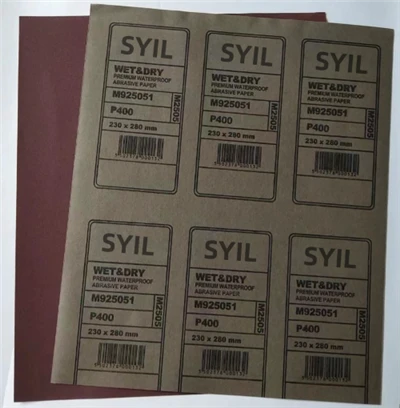
Water sandpaper, also known as waterproof abrasive paper, is named because it can be sanded in water when used. Let's share some of the advantages of waterproof sandpaper this time.
Waterproof abrasive paper is a kind of coated abrasive tool, which is made of water-proof latex paper or waterproof kraft paper, using various resins as binders and firmly adhering alumina abrasives or silicon carbide abrasives to the base material. It can be processed into sheets of A4 paper size and various customized sizes. Water-resistant sandpaper is mainly composed of silicon carbide abrasives according to its abrasive composition. According to the binder, there are ordinary low-cost binder sandpaper; there are also synthetic resin as binder in high-grade water sandpaper.


Benefits of Waterproof Sandpaper


1. Waterproof sandpaper is polished with water without dust hazard, and dust explosion will not occur.

2. The polishing quality of waterproof abrasive paper is higher than that of ordinary dry sandpaper. When sanding with water, the surface of the sandpaper should not be blocked, and the sandpaper has a long life.

3. Waterproof abrasive paper has a wide particle size distribution ranging fromP60 to P3000. It is suitable for the product,and the finest dry sandpaper is about P1000.Water sandpaper is especially suitable for fine-grained and high-precision polishing.

4. Compared with other precision abrasive materials, the fine-sized waterproof abrasive paper is more cost-effective and relatively cheap. It can be used for both water and dry grinding, and has a wide range of adaptability.


Type of Waterproof Sandpaper
 

Aluminum Oxide Sandpaper

This is the most common type of sandpaper for general metal sanding. It is versatile, durable, and offers excellent cutting power. Aluminum oxide sandpaper is suitable for removing rust, smoothing surfaces, and preparing metal for painting or coating.


Silicon Carbide Sandpaper

Known for its aggressive cutting action, silicon carbide sandpaper is ideal for heavy-duty metal removal tasks. It is commonly used for sanding harder metals like stainless steel or titanium and can effectively tackle rough surfaces, welds, or sharp edges.


Emery Cloth

Emery cloth is a type of sandpaper that uses emery minerals as the abrasive material. It is often used for hand sanding and is suitable for polishing and finishing metal surfaces. Emery cloth is known for its flexibility and is commonly used for metalworking projects that require precision and a high-quality finish.


Wet and Dry Sandpaper

Wet and dry sandpaper can be used for both dry and wet sanding applications. It is waterproof and can be used with water or other lubricants to reduce friction and prevent clogging. Wet and dry sandpaper is commonly used for automotive metalwork or applications where a high-quality, smooth finish is desired.


Flap Discs

Flap discs are abrasive discs made of overlapping flaps of sandpaper. They are attached to a backing plate and are usually used with a grinder or angle grinder. Flap discs are efficient for fast material removal and can be ideal for shaping, grinding, and smoothing metal surfaces.


productcate-1-1


Ingredients Of Waterproof Sandpaper

Paper
Materials include kraft paper, latex-treated paper, Japanese paper, etc., and are marked with the symbols AW, CW, DW, and EW. AW is soft and suitable for curved surfaces, and EW is a hard paper base material. It is suitable for applications such as attaching to machines such as belt sanders.

Abrasive grains
There are two types of abrasive particles: natural materials and artificial materials. Natural abrasives do not have uniform properties, shapes, etc. In recent years, many coated abrasives are made of artificial abrasives. Represented by symbols G (garnet), silicon carbide (CC), fused alumina (AA, AW), etc.
Adhesive
Adhesives include natural adhesives (glue, glue, gelatin, etc.) and synthetic resin adhesives (phenolic resin, epoxy resin, etc.), which are different. They are distinguished by the symbols G (glue), R (resin) and W (waterproof resin).


What Are The Grades Of Waterproof Sandpaper?

When it comes to waterproof sandpaper, the grading system works in the opposite way to regular sandpapers. The higher the number, the closer the grit particles are together, resulting in a finer finish with less visible scratches.

60-80 grit: This grade is considered to be a coarse grit sandpaper. It's best used for removing heavy rust, paint, and other types of surface coatings.
100-150 grit: With a medium grit, this grade is ideal for sanding away smaller rough spots on surfaces and preparing them for the next stage of sanding.
180-220 grit: This grade is considered to be a fine grit sandpaper. It's ideal for prepping surfaces for paint or varnish.
320-400 grit: With a very fine grit, this grade is ideal for sanding the surface after applying the first coat ofpaint or varnish.
600-800 grit: This grade is considered to be an ultra-fine grit sandpaper. It's best used for the final sanding stage and produces a very smooth finished surface.

productcate-1-1


productcate-1-1


The Principle of Waterproof Sandpaper

Waterproof sandpaper differs from regular sandpaper in that it can be used moistened with water. Waterproof sandpaper is based on special paper or cloth, and the abrasive particles are evenly distributed at regular intervals. Abrasive particles are made of hard materials such as aluminum oxide, silicon carbide, and diamond, and play a polishing role by scraping the surface of the object to be polished.

Water-resistant sandpaper uses a highly water-resistant adhesive such as resin or rubber, so it can be used even if it gets wet. Adding water removes dust and wear particles produced during the polishing process, ensuring that the polished surface remains in new condition.

Additionally, by using water, the heat generated during the polishing process is cooled and surface damage caused by friction is minimized. That's why waterproof sandpaper creates a beautiful finish.

Additionally, many types of waterproof sandpaper have different types and sizes of abrasive particles, so it's possible to choose the most appropriate one based on the application and polishing material. Choosing the right grit size allows for an efficient polishing job.


The Difference Between Dry Sandpaper And Waterproof Sandpaper


Dry sanding paper uses synthetic resin as a binder to bond silicon carbide abrasive to latex, and is coated with antistatic coating to make high-end products. It has the advantages of anti-clogging, antistatic, good flexibility, and high wear resistance. A variety of particle sizes are available, suitable for polishing metal surfaces, putty powder and coatings. Dry sanding paper generally uses special kraft paper and latex paper, uses natural and synthetic resins as binders, and is produced through advanced high-static sand planting processing technology. This product has high cutting efficiency, is not easy to stick to chips, and is suitable for polishing. It is widely used in furniture, interior decoration and other fields, especially precision grinding.

The gap between the sand grains of Waterproof Sandpaper is small, and the grinding debris is also small. When used with water, the debris will come out with the running water, so it should be used with water. If you use Waterproof Sandpaper to polish, the debris will remain. The gap between the sand grains makes the surface of the sandpaper dull and cannot achieve its original effect. Dry sandpaper is not that troublesome. The gaps between the pebbles are very large, and the grinding debris is also very large. During the grinding process, the debris will fall due to the large gap, so it does not need to be used with water. .It depends on how much thickness you need to polish. Waterproof Sandpaper will grind slower, but the grind will be brighter (the finer the Waterproof Sandpaper, the slower and brighter it will be). Dry sandpaper will grind quickly, but it will grind out a longer surface. Coarse (coarser dry sandpaper will grind faster and rougher). If you don't need to sand a lot, use Waterproof Sandpaper. If you need to sand a lot, use dry sandpaper first, and then polish with Waterproof Sandpaper.

Although sandpaper is just a relatively unique piece of paper, it can play a great role. It can polish some objects cleanly and neatly without any marks. If some materials are not polished in many aspects, they will be very It may scratch people, so the details must be dealt with. There are many differences between dry sandpaper and Waterproof Sandpaper, which depends on the items we are sanding.


How To Properly Store And Handle Waterproof Sandpaper?


As with any other type of abrasive paper, proper storage and handling is crucial to ensure that your waterproof sandpaper remains effective and delivers the desiredb results. If you are not mindful of how you store and handle your waterproof sandpaper, it can lose its effectiveness and become a cause of frustration, as it will not cut through surfaces as well as it used to.

Store the paper in a dry place
Store the paper in a dry place or in wet conditions. However, this does not mean that the paper can tolerate high levels of moisture over extended periods. It is important to keep the paper in a dry place where it cannot be exposed to moisture, as water can eventually weaken the glue on the back of the abrasive paper and cause it to detach from the backing. Store the paper in a cool, dry place and avoid humidity as much as possible.

Keep the paper flat
One of the biggest enemies of waterproof sandpaper is bending or folding. When this happens, the abrasive grit may break off and become unusable, particularly when the paper is used on hard surfaces. To prevent this from happening, it is important to keep your waterproof sandpaper flat when storing or transporting it. You can use a storage container with a lid or a folder in your workshop to keep the sheets flat and separated.

Keep the paper clean
Abrasive paper is designed to cut through surfaces, and it is easy for the particles to get stuck in the grit of the paper. This residue buildup decreases the paper's effectiveness and performance. To avoid this, you should regularly clean your waterproof sandpaper before and after use. You can use a soft brush to remove the particles trapped in the grit or rinse the paper with warm water and pat it dry with a towel. Avoid using harsh cleaning agents or solvents as they can damage the paper and make it unusable.


Our Factory


The product is widely used in machinery, wood, plastics, electronics, instruments, automobiles, shipbuilding, glass and other fields, and is welcomed by customers at home and abroad.

productcate-1-1
productcate-1-1
 
FAQ


Q: What does waterproof sandpaper mean?

A: Waterproof sandpapers or wet/dry sandpapers use a resin bond and a waterproof backing. Sandpaper can be either closed coat or open coat. Approximately 90% to 95% of the surface is covered with abrasive grains with a closed coat. Closed coat sandpaper is good for hand sanding or working with harder materials.

Q: What is the difference between wet dry sandpaper and regular sandpaper?

A: Dry is going to be more aggressive, especially with lower grit sandpaper. This allows you to shape your workpiece or significantly grind down uneven surfaces to level them out. Wet sand paper is used in a later stage of the process to bring out a shine on the object or to prep for buffing and polishing.

Q: Which sandpaper to use with water?

A: Because wet sanding is a finishing process, you'll likely use high-grit sandpaper, from 1000 grit to 3000 grit and above. Compare this to dry sanding, which typically begins with 600- or 800-grit sandpaper. It's best to use a backing pad when wet sanding to achieve a uniform finish.

Q: What is the difference between sand paper and water paper?

A: Water sandpaper is slower but can make the objects smoother (the finer water sandpaper is, the slower the process and the smoother the object is), while dry abrasive paper is faster, but the object is not so smooth (the thicker the dry abrasive paper, the faster the object is polished).

Q: How to tell if sandpaper is waterproof?

A: Waterproof sandpaper texture is relatively fine, waterproof sandpaper is suitable for sanding some fine texture, and suitable for post-processing; water-grit sandpaper it has a small gap between the sand grains, grinding out the debris is also small, and water together with the use of debris will flow out with the ...

Q: When to use wet dry sandpaper?

A: Wet sanding is almost a necessity for really fine grit paper. Otherwise the sanding residue will clog the paper very quickly. Not only will that cut down on the removal of paint, but the residue will ball up and lead to uneven sanding and even scratches.

Q: Is liquid sandpaper better than sanding?

A: Furthermore, when you sand an older object using standard sandpaper, there is the possibility of inhaling toxic lead particles; however, liquid sandpaper obviates that risk. In addition, liquid sandpaper is ideal for removing paint from ornate objects that have grooves and intricate designs.

Q: Should I use fine or rough sandpaper?

A: For heavy sanding and stripping, you need coarse sandpaper grit measuring 40- to 60-grit; for smoothing surfaces and removing small imperfections, choose medium sandpaper from 80- to 120-grit sandpaper. To finish surfaces smoothly, use a super fine sandpaper with 400- to 600-grit.

Q: Why use sandpaper with water?

A: Wet sanding is a sanding process that uses water or another liquid as lubrication to wash away grit particles. Without the liquid, the sandpaper can build up with material, causing scratches that ruin the finish. In general, the best liquid to use for most materials is water with a little bit of detergent in it.

Q: Can you use wet dry sandpaper on wood?

A: When using wet/dry sandpaper to sand wood, use a light touch so as not to clog the paper with wood dust too quickly. Simply allow the abrasive to do most of the work. 6. Never use sandpaper any coarser than 320 grit to sand finishing materials between coats.

Q: Is automotive sandpaper different?

A: The most common grades of automotive sandpaper range from coarse (P60 and P80) to fine (P2000 and P3000). Coarser grits are typically used for removing rust, paint, and other surface contaminants. Finer grits help smooth out surfaces, blend edges or primer, and prepare the area for painting.

Q: Can you wet normal sandpaper?

A: Can you wet sand with regular sandpaper? Not very well, or for very long. On regular sandpaper, the glue and paper are NOT water resistant. Using it “wet” will quickly dissolve the glue holding the abrasive to the paper, then as the paper falls apart, all turns to an awful mess.

Q: Does water affect sandpaper?

A: When used with water, the debris will flow out with the water, thus maintaining the sharpness of the sandpaper surface. If water sandpaper is used for dry grinding, the product debris will adhere to the gap between the sand grains, which will make the surface of sandpaper lose sharpness without grinding force.

Q: Is emery paper the same as sandpaper?

A: Emery cloth differs to sandpaper in several ways: Emery cloth has the abrasive glued to a cloth rather than paper, which makes it far sturdier and less inclined to tear in use. Emery cloth uses a form of corundum (or corundite) as the abrasive, rather than sand. Emery is longer lasting than sand as a glued abrasive.

Q: Why is it called wet and dry sandpaper?

A: In 1921, 3M invented a sandpaper with silicon carbide grit and a waterproof adhesive and backing, known as Wet and dry. This allowed use with water, which would serve as a lubricant to carry away particles that would otherwise clog the grit.

Q: Is waterproof sandpaper wet and dry?

A: On the terminology first, "water sandpaper" is not the commonly used name for this type of paper. It's generally referred to as wet-and-dry, wet-n-dry or wet-or-dry paper (with or without the hyphens) as well as wet/dry paper

Q: What do the grits on sandpaper mean?

A: The grit of sandpapers is a rating of the size of abrasive materials on the sandpaper. The higher grit number is equivalent to a finer abrasive, which creates smoother surface finishes. Lower grit numbers represent coarser abrasives that scrape off materials much quicker.

Q: Can I use wet sandpaper on wood?

A: Wet sanding is used to give wood a fine, smooth finish. The wood needs to be carefully cleaned and varnished. Additionally, you should pick damp sandpaper and let it soak for a while before using it. Always sand with damp sandpaper in small, circular motions.

Q: Is 3M sandpaper waterproof?

A: 3M Wetordry Sandpaper, 5 Sheets, 9 in x 11 in, 320 Grit, Extra Fine, Use for Wet and Dry Sanding, For Sanding Between Coats of Varnish, Lacquer, Paint & Other Finishes, Waterproof Paper (9086DC-NA) Amazon's Choice highlights highly rated, well-priced products available to ship immediately.

Q: Is waterproof sandpaper wet and dry?

A: On the terminology first, "water sandpaper" is not the commonly used name for this type of paper. It's generally referred to as wet-and-dry, wet-n-dry or wet-or-dry paper (with or without the hyphens) as well as wet/dry paper.

We're well-known as one of the leading waterproof sandpaper manufacturers and suppliers in China. Please feel free to buy high quality waterproof sandpaper made in China here from our factory. For customized service, contact us now.

Send Inquiry