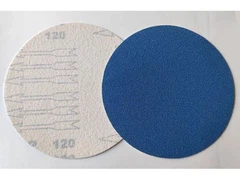
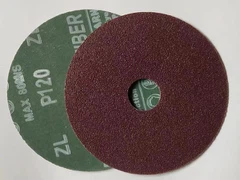
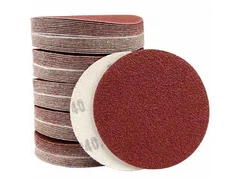


Why choose us?
Your Leading Dry Sandpaper Supplier
Company Brands
Company with "double horse" and"dark horse", "shun source" "flying wheel" and other brands as the center.
Product Application
The product is widely used in machinery, wood, plastics, electronics, instruments, automobiles, shipbuilding, glass and other fields.
Reasonable Price
Our products are complete in variety, good in quality, reasonable in price.
Best Service
All take the customer as the center, tale the goocfaith as the basic,in order to prefect for the target. Customer satisfactioris our eternal criteria!
-
![Hook And Loop Sanding Rolls]() Hook And Loop Sanding Rolls
Hook And Loop Sanding RollsMaterial: C/D kraft paper, resin binder, quartz sand or white conrundum sand. mainly used for grinding and polishing for wood, remoe painting.. package and size can be customized.
-
![Bulk Sandpaper Sheets]() Bulk Sandpaper Sheets
Bulk Sandpaper Sheets* This product is highly durable. * Use to sand wood, paint, metal, plastic, drywall, and fiberglass. * Measures 9 inches by 11 inches per sheet. * Ultimate in performance for surface preparation. *
-
![Sandpape For Sale]() Sandpape For Sale
Sandpape For Sale* This product is highly durable. * Use to sand wood, paint, metal, plastic, drywall, and fiberglass. * Measures 9 inches by 11 inches per sheet. * Ultimate in performance for surface preparation. *
-
![80 Grit Sandpaper Roll]() 80 Grit Sandpaper Roll
80 Grit Sandpaper RollMaterial: C/D kraft paper, resin binder, quartz sand or white conrundum sand. mainly used for grinding and polishing for wood, remoe painting.. package and size can be customized.
-
![Diamond Sandpaper]() Diamond Sandpaper
Diamond SandpaperDiamond sandpaper is a type of abrasive material that is used for sanding and polishing various surfaces, including gemstones, metals, wood, and concrete.
-
![Black Sandpaper]() Black Sandpaper
Black SandpaperModel NO.: fiber disc. Use: Castings and Forging, Deburring & Surface Conditio. Backing Material: Vulcanized Fiber/Fibre. Center Hole: 15.875 mm/0.625 inch, 22.225 mm/0.875 inch Customi. Overall
-
![Yellow Sandpaper]() Yellow Sandpaper
Yellow SandpaperMaterial: C/D kraft paper, resin binder, quartz sand or white conrundum sand. mainly used for grinding and polishing for wood, remoe painting.. package and size can be customized.
-
![White Sandpaper]() White Sandpaper
White SandpaperModel NO.:dry sandpaper. Size:230*280mm. Application:Car, Wood, Furniture, Automobile /Glass Polishing. Shape:Rectangular. Backing:Latex Paper. Transport Package:Standard Carton. Trademark:NA. HS
-
![White Coated Sandpaper]() White Coated Sandpaper
White Coated SandpaperProduct:Sandpaper/Sanding Paper /Sand paper /abrasive paper. Size:230*280mm 9*11. Grit:80-2000#. Grain:AO /SC. Backing:Kraft Paper /Latex Paper. Bonding:Resin over Resin. Shape:Rectangle.
-
![Electro Coated Sandpaper]() Electro Coated Sandpaper
Electro Coated SandpaperProduct:Sandpaper/Sanding Paper /Sand paper /abrasive paper. Size:230*280mm 9*11. Grit:80-2000#. Grain:AO /SC. Backing:Kraft Paper /Latex Paper. Bonding:Resin over Resin. Shape:Rectangle.
-
![Medium Grit Sandpaper]() Medium Grit Sandpaper
Medium Grit SandpaperProduct:Sandpaper/Sanding Paper /Sand paper /abrasive paper. Size:230*280mm 9*11. Grit:80-2000#. Grain:AO /SC. Backing:Kraft Paper /Latex Paper. Bonding :Resin over Resin. Shape:Rectangle.
-
![Diamond Sandpaper]() Diamond Sandpaper
Diamond Sandpaper* This product is highly durable. * Use to sand wood, paint, metal, plastic, drywall, and fiberglass. * Measures 9 inches by 11 inches per sheet. * Ultimate in performance for surface preparation. *