


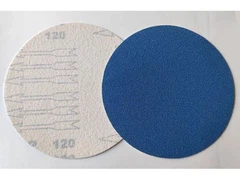
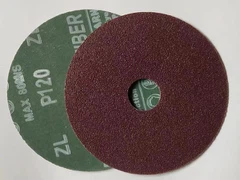
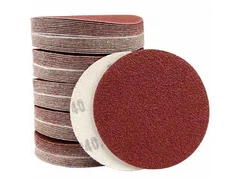


General-purpose alumina sandpaper, classic craftsmanship and practical performance
May 20, 2025
Leave a message

Aluminum oxide sandpaper
Aluminum oxide sandpaper uses aluminum oxide as the abrasive, with paper or cloth as the base material and animal glue or synthetic resin as the adhesive to ensure the stability of the abrasive. It offers a variety of grit options, catering to different needs from rough processing to fine grinding. It is flexible and tensile-resistant in physical properties, easy to operate, provides stable processing results, is durable and economical, and is widely used in woodworking, metalworking, automotive repair and other fields. It is a practical choice for daily grinding.
I. Product Features
1. Base Material and Adhesive
General-purpose aluminum oxide sandpaper typically uses high-quality paper or cloth as the base material. Paper base material has good flexibility and certain tensile strength, which can meet the needs of general grinding operations; cloth base material has stronger tensile strength and wear resistance, and is suitable for grinding tasks that require higher sandpaper strength. In terms of adhesives, commonly used ones include animal glue and synthetic resins. Animal glue has good bonding performance and certain elasticity, but its performance will decline in humid environments; synthetic resins have excellent water resistance, heat resistance, and chemical corrosion resistance, ensuring that the abrasive can firmly adhere to the base material in various environments.

2. Abrasive Type and Grain Size
Aluminum oxide sandpaper, as the name suggests, uses aluminum oxide as the abrasive. Aluminum oxide is a material with high hardness and stable chemical properties, featuring excellent cutting performance and wear resistance. General-purpose aluminum oxide sandpaper offers a wide range of grain sizes, from coarse to fine. Coarse-grit sandpaper (such as 40# and 60#) is suitable for removing thick material layers and rough grinding of surfaces for rough processing tasks; medium-grit sandpaper (such as 80# and 120#) is appropriate for general grinding and finishing work; fine-grit sandpaper (such as 180#, 240# and above) is ideal for fine grinding and polishing, leaving a smooth and fine surface.

3. Physical Properties
The universal type of alumina sandpaper features excellent flexibility, allowing it to easily conform to various grinding surfaces, whether flat, curved, or irregularly shaped, ensuring effective grinding. Additionally, the sandpaper possesses a certain tensile strength, which prevents it from tearing or breaking during the grinding process, thus guaranteeing the continuity and stability of the grinding operation.

II. Manufacturing Process
1. Abrasive Preparation and Coating
The aluminum oxide abrasive used in general-purpose aluminum oxide sandpaper needs to be carefully prepared, usually including processes such as crushing and screening, to ensure a uniform particle size distribution and consistent cutting performance. During the coating process, the abrasive is evenly attached to the substrate to form a dense abrasive layer. The coating process requires precise control of the coating speed and amount to ensure the quality and performance of the sandpaper. If the coating speed is too fast or the coating amount is uneven, it may result in an uneven thickness of the abrasive layer, affecting the grinding effect and service life of the sandpaper.
2. Curing and Post-treatment
After the coating process is completed, the sandpaper needs to undergo a curing process to ensure that the adhesive fully cures and firmly fixes the abrasive onto the substrate. The curing process is typically carried out at a certain temperature and for a specific period of time, and different adhesives require different curing conditions. For instance, sandpaper using animal glue as the adhesive requires a relatively lower curing temperature and a shorter curing time, while sandpaper using synthetic resin as the adhesive needs a higher curing temperature and a longer curing time to ensure complete curing of the adhesive. After the curing process, the sandpaper still needs to go through post-treatment processes such as cutting and packaging before it becomes the final product.

III. User Experience and Advantages
1. Ease of Operation
General-purpose alumina sandpaper features excellent flexibility and hand feel, allowing it to easily conform to various grinding surfaces and operate with great convenience. During use, the sandpaper is less likely to curl or tear, enhancing grinding efficiency. Whether used for manual grinding or in conjunction with grinding tools, it performs well.
2. Processing Effect
The cutting performance of general-purpose alumina sandpaper is stable, providing a uniform grinding effect. Whether it is removing old paint, sanding wood, treating metal surfaces, or grinding other materials, it can handle them with ease, leaving smooth and fine grinding marks. Its multiple grit options also allow users to select the appropriate sandpaper based on actual needs to achieve the best grinding effect. For example, when making woodwork, coarse-grit sandpaper can be used first to roughly sand the wood surface, removing burrs and uneven areas, and then fine-grit sandpaper can be used for fine sanding to make the wood surface smoother and more delicate.
3. Durability and Economy
Due to the use of high-quality base materials and adhesives, as well as uniform abrasive distribution, general-purpose alumina sandpaper has a long service life. Under normal usage conditions, one piece of sandpaper can complete multiple grinding tasks, reducing usage costs. At the same time, its excellent performance also reduces grinding interruptions and repetitive labor caused by sandpaper damage or performance decline, improving work efficiency. Compared with some high-end sandpapers for special purposes, general-purpose alumina sandpaper is relatively affordable in price and has a high cost-performance ratio, making it suitable for a wide range of users.

IV. Historical and Technological Evolution
The history of sandpaper can be traced back to a long time ago. In the early days, sandpaper was mainly made by mixing natural abrasives (such as shell fragments, quartz sand, etc.) with natural binders (such as tree gum, animal glue, etc.) and coating them on paper or cloth. With the advancement of industrial technology and the continuous improvement of grinding requirements, the sandpaper industry has undergone a transformation from manual production to automated production, and abrasives have gradually shifted from natural abrasives to synthetic abrasives. As an important synthetic abrasive, aluminum oxide has been widely used in sandpaper manufacturing due to its excellent performance.
General-purpose alumina sandpaper has also been continuously evolving and improving in this process. Early alumina sandpaper might have had issues such as uneven abrasive distribution and unstable binder performance. With the continuous improvement and optimization of manufacturing processes, these problems have gradually been resolved. Nowadays, general-purpose alumina sandpaper has become a classic product in the sandpaper industry, and its performance and quality have been widely recognized.

V. Storage and Maintenance
To prolong the service life of universal alumina sandpaper, correct storage and maintenance methods are of great importance. Sandpaper should be stored in a dry and well-ventilated environment, avoiding moisture and direct sunlight. A humid environment can cause the substrate of the sandpaper to deform and the adhesive performance to decline, thereby affecting the usage effect of the sandpaper; direct sunlight can cause the color of the sandpaper to fade and even lead to the aging of the abrasive. Additionally, during use, excessive bending and folding of the sandpaper should be avoided as much as possible to prevent damage to the sandpaper. If the sandpaper is not in use for a while after use, it should be placed flat in a dry place or hung on a dedicated rack to avoid mutual squeezing and friction between the sandpapers.

VI. Widespread Application
General-purpose alumina sandpaper has extensive applications in daily life and industrial production. At home, it can be used for polishing furniture, repairing walls, and handling metal utensils; in the woodworking industry, it is used for sanding and polishing wood; in the metal processing industry, it is used for rust removal, sanding, and polishing of metal surfaces; in the automotive repair industry, it is used for sanding and repairing car bodies. It can be said that wherever there is a need for grinding, the presence of general-purpose alumina sandpaper can almost always be seen.
General-purpose alumina sandpaper has become a classic product in the sandpaper industry due to its excellent substrate and adhesive, stable cutting performance, diverse grit options, and convenient operation. Both professionals and ordinary users can experience the convenience and efficiency it brings during use. With the continuous advancement of technology and the development of the market, it is believed that general-purpose alumina sandpaper will continue to play an important role and provide more users with high-quality grinding experiences.
Send Inquiry