




Silicon Carbide Sandpaper Technology and Application
May 16, 2025
Leave a message
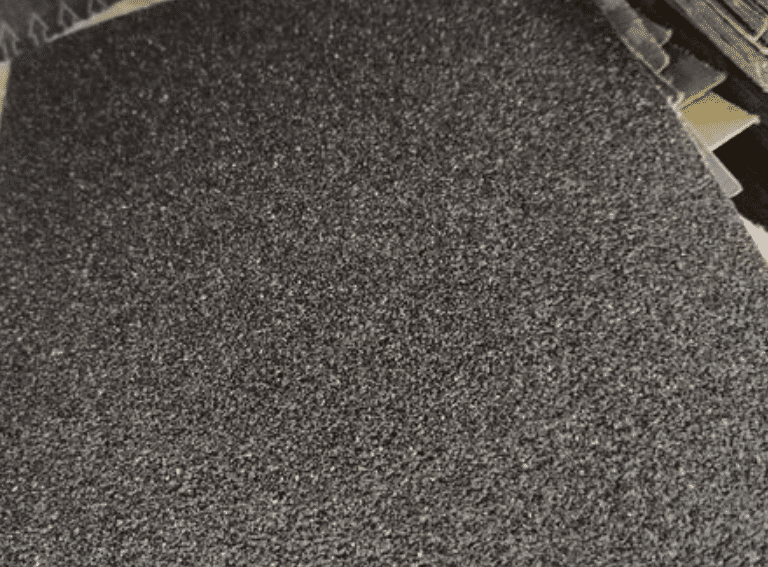
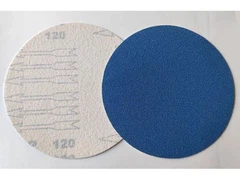
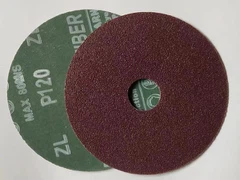
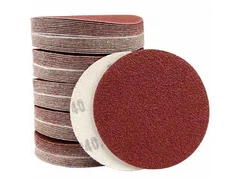
Silicon carbide sandpaper is a highly efficient grinding tool with silicon carbide as the abrasive. It features high hardness, strong wear resistance, and good heat dissipation. Its sharp abrasive grains can quickly cut the surfaces of metals, woods, glasses and other materials, and is suitable for multiple processes from rough grinding to fine polishing, especially for hard materials. The base materials of the sandpaper are diverse, such as latex paper and cloth, which can adapt to both dry and wet grinding environments. It is widely used in mechanical processing, woodworking, auto repair and DIY fields, balancing professional efficiency and operational convenience.
I. Core Competitiveness of Silicon Carbide Sandpaper
Silicon carbide sandpaper, as a core consumable in the field of precision grinding, has its technological advantages in both material science and manufacturing processes. Taking the QMAXIS brand as an example, its products use high-purity black silicon carbide (SiC) micro-powder as the abrasive. This material has a physical property of a Mohs hardness of 9.2. Combined with a resin bonding system and latex additives, it forms a unique sandwich structure. Experimental data shows that this structure enables the sandpaper to maintain over 85% of its original cutting force after continuous use for 20 hours, significantly outperforming traditional aluminum oxide sandpaper.
In terms of particle size control, leading enterprises in the industry adopt digital electrostatic planting technology to achieve uniform arrangement of silicon carbide particles. Taking the ASC series as an example, its particle size covers the entire range from P80 to P4000. Among them, the P1200 abrasive paper can achieve a surface roughness of Ra < 0.05 μm in semiconductor silicon wafer grinding tests. This level of precision control is attributed to the electrostatic planting technology, which keeps the distribution density error of abrasive grains within ±3%.

II. Application Scenario Expansion: From Laboratory to Industrial Site
In the field of metallographic sample preparation, silicon carbide sandpaper has become a standard tool for material analysis. Data from a certain automotive parts laboratory shows that when using this type of product to prepare ductile iron samples, the preparation time is reduced by 40% compared to traditional sandpaper, and the depth of the deformation layer is reduced to less than 5 μm. This performance improvement directly stems from the sharp cutting edge and self-sharpening characteristics of silicon carbide, which can continuously expose new cutting surfaces during the grinding process.
The expansion of industrial application scenarios is even more remarkable. In the aerospace field, a certain type of engine blade processing enterprise adopts sandpaper with a special adhesive backing design, which is fixed on a five-axis linkage grinding machine through vacuum adsorption to achieve precise grinding of complex curved surfaces. This process increases the processing efficiency by 35% and keeps the surface roughness within Ra0.1μm, meeting the strict requirements of high-temperature alloy components.
III. Global Market Layout: Regional Demand Differences and Response Strategies
1. North American Market: High-End Manufacturing Drives Technological Upgrades
The demand for silicon carbide sandpaper in the US market is concentrated in the semiconductor and aerospace sectors. According to an industry report, in 2024, high-precision products with a grit size of ≥P2000 accounted for 62% of the imported sandpaper in the US. To meet this demand, Chinese suppliers have developed sandpaper specifically for thinning silicon carbide wafers, with the base material made of imported polyester film, and the coefficient of thermal expansion matching that of single-crystal silicon at 98%.
2. European Market: Environmental Regulations Drive Innovation
The implementation of the EU REACH regulation has boosted the demand for water-based abrasive paper. Data from a German car manufacturer shows that after using water-based silicon carbide abrasive paper, the cost of wastewater treatment was reduced by 40%, and the PM2.5 concentration in the working environment decreased by 75%. This trend has prompted suppliers to develop biodegradable latex backings that have been certified by DIN CERTCO.
3. Asian Market: Emphasizing Cost Performance and Customization
In the Indian market, a multinational enterprise achieved a breakthrough through a localization strategy. It developed a special sandpaper with a 30% increase in adhesive strength, specifically tailored to the local characteristics of cast iron processing. This reduced the frequency of single-shift replacements from five to two. In the Japanese market, a supplier launched 600-mesh pre-cut sandpaper, which perfectly suits the automatic replacement system of FANUC robots.

IV. Supply Chain Management: Full-process Optimization from Raw Materials to End Products
The production of high-quality silicon carbide sandpaper begins with raw material control. The top 10 suppliers in the industry generally establish a dual inspection system: XRF spectral analysis is conducted on green silicon carbide raw ore to ensure that the SiC content is ≥ 98.5%; in the micro-powder stage, a laser particle size analyzer is used to control the D50 value within ±5% of the target particle size. One enterprise even established a raw material traceability system, allowing each batch of sandpaper to be traced back to a specific mining area.
In the production process, the intelligent transformation of a certain factory is quite representative. Its coating production line adopts a closed-loop control system, keeping the coating thickness error within ±1μm; the curing furnace is equipped with an infrared temperature sensor matrix, enabling three-dimensional modeling of the temperature field. These measures have increased the consistency between product batches by 60%.
V. Customer Cooperation Cases: Deep Service Creates Value
1. Inspection Case for an Iranian Client
A certain Iranian military industrial enterprise designated SGS to conduct third-party testing, with a focus on evaluating the performance of sandpaper in grinding high-temperature alloys. The test results showed that after continuous operation for 10 hours at 1200℃, the cutting force of the sandpaper only decreased by 12%, which was better than the 15% standard stipulated in the contract. This performance was attributed to the specially treated silicon carbide particles, whose oxidation resistance temperature was increased to 1350℃.
2. Customized Service for a South Korean Client
A South Korean electronics company requested the development of sandpaper for thinning sapphire glass. Through three months of technical research and development, the supplier successfully developed a nano-scale silicon carbide dispersion technology, enabling the sandpaper to maintain uniform wear even under a pressure of 0.1 MPa. This product increased the client's yield rate from 78% to 92%.

VI. Industry Trend Outlook: Innovation Drives the Future
With the development of 3D printing technology, the demand for irregularly shaped sandpaper is increasing. A certain enterprise has developed honeycomb-shaped sandpaper, which can be customized into any shape through laser cutting technology. In the field of new energy vehicles, the processing demand for lightweight materials (such as carbon fiber composites) is promoting the development of silicon carbide sandpaper towards flexible substrates.
Market research institutions predict that by 2027, the global silicon carbide sandpaper market size will reach 1.28 billion US dollars, with a compound annual growth rate of 6.2%. Among them, Chinese suppliers, relying on the advantage of a complete industrial chain, are expected to break through a market share of 35%. For purchasers, when choosing suppliers, they should focus on the proportion of R&D investment, the level of automated production, and the ability to provide customized services.
Send Inquiry