




High-efficiency grinding fiber-reinforced abrasive belts
May 29, 2025
Leave a message
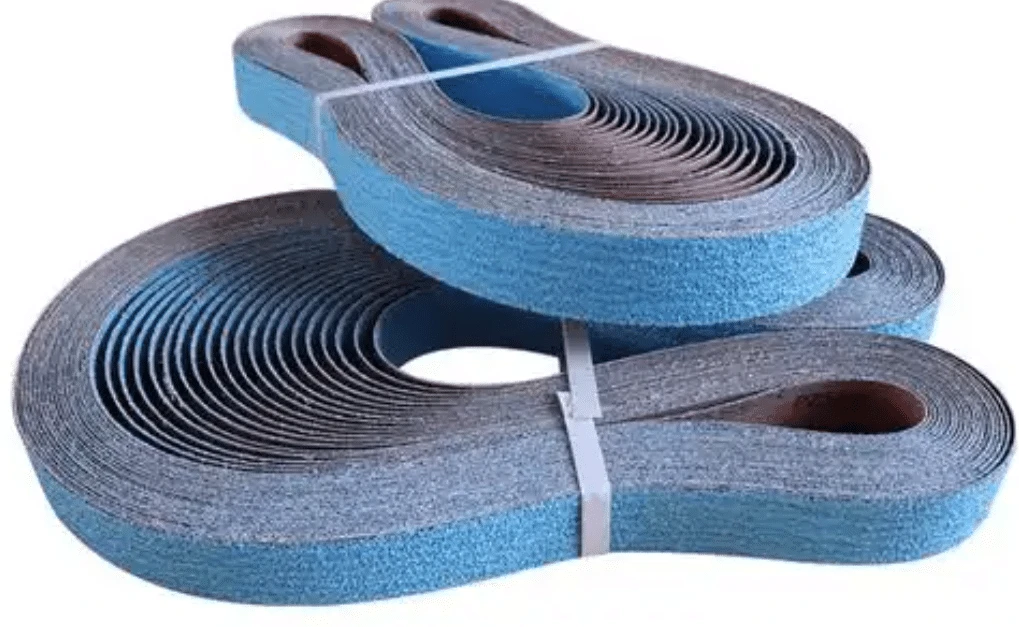
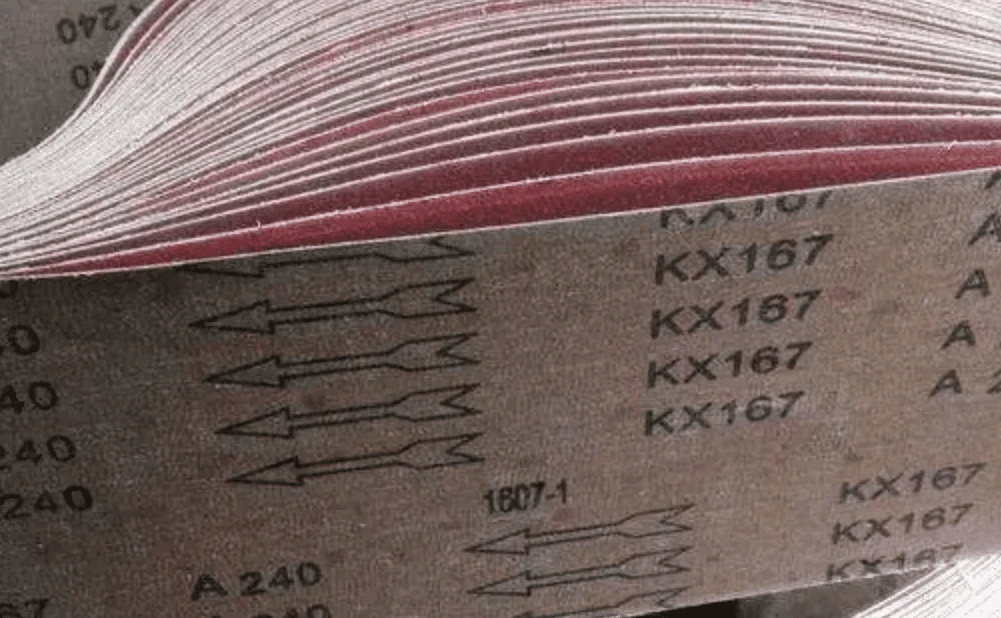
Fiber-reinforced abrasive belts are high-efficiency grinding tools that use high-strength fibers as the base material and are combined with abrasive layers through a special process. The fiber framework significantly enhances the tensile strength and tear resistance of the abrasive belts, making them suitable for high-load and long-duration operations. They perform exceptionally well in fields such as metals, wood, and composite materials. The fiber-reinforced structure effectively reduces the risk of belt breakage, extends service life, and maintains uniform grinding while improving processing efficiency and surface quality. This product combines flexibility and rigidity, and can be adapted to various grinding equipment, making it an ideal choice for enhancing grinding performance in precision processing and industrial manufacturing.
Among the sandpaper family, fiber-reinforced abrasive belts have become the new favorite in modern industrial processing fields due to their high efficiency and durability. These abrasive belts, which use fiber fabrics as the base material and have abrasive materials coated on the surface, demonstrate outstanding tensile strength and grinding efficiency, and have shown excellent performance in multiple fields such as metal processing, wood treatment, and leather grinding. This article will comprehensively analyze the charm of fiber-reinforced abrasive belts from five dimensions: material composition, manufacturing process, product characteristics, application advantages, and technological development trends.
I. The Ingenious Composition of Materials
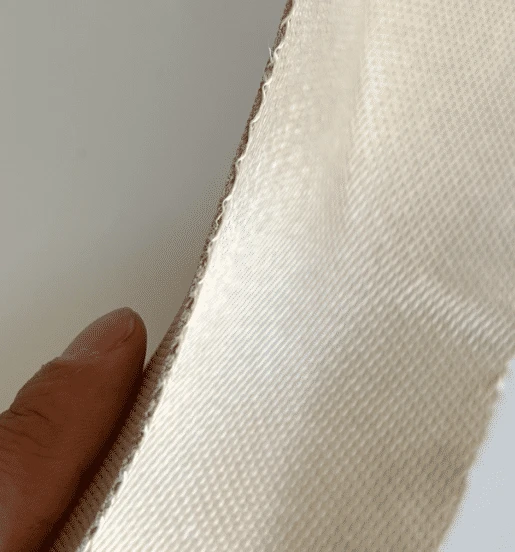
The performance foundation of fiber-reinforced abrasive belts lies in their carefully selected material composition. For the base material, high-strength fiber fabrics such as polyester, nylon, or aramid fibers are typically used. These fiber fabrics possess excellent tensile strength, wear resistance, and dimensional stability, enabling them to withstand the high-speed rotation and heavy loads during grinding operations.
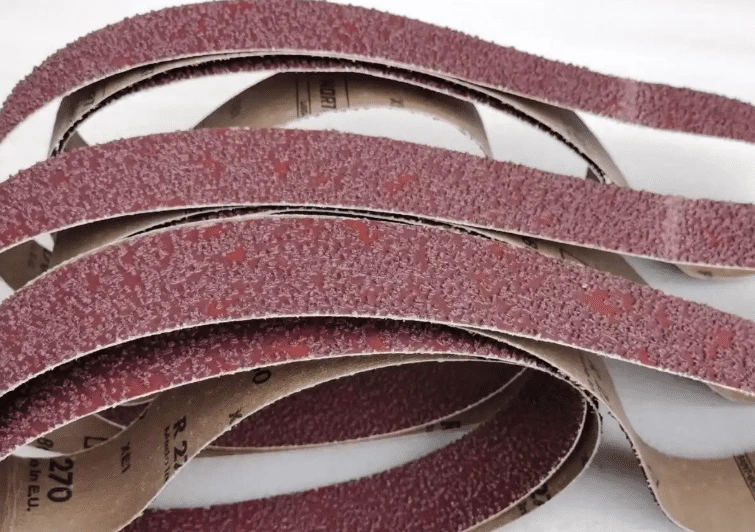
The abrasive layer is the core of the grinding belt, and high-performance abrasives such as aluminum oxide, silicon carbide or cubic boron nitride are usually selected. These abrasives have high hardness, good self-sharpening ability and thermal stability, and can maintain continuous cutting ability during the grinding process.
In terms of the binder, high-performance resins or rubbers are used as the bonding material to ensure a strong bond between the abrasive layer and the substrate. Meanwhile, by optimizing the binder's formula and process, a uniform distribution of the abrasive layer and controllable shedding can be achieved, thereby extending the service life of the abrasive belt.
II. Precise Control of Manufacturing Processes
1. Base material treatment: Pre-treatment of fiber fabrics, including cleaning, drying, and stretching, is carried out to enhance their surface activity and dimensional stability.
2. Gluing: A uniform layer of adhesive is applied to the surface of the base material to form a bonding layer. This step requires precise control of the amount and uniformity of the adhesive application to ensure a strong bond between the abrasive layer and the base material.
3. Abrasive implantation: Abrasives are evenly spread on the surface of the base material after gluing to form an abrasive layer. The abrasive implantation process is crucial to the performance of the abrasive belt and requires precise control of the abrasive particle size distribution, spreading density, and uniformity.
4. Curing: The adhesive is cured through heating or ultraviolet irradiation, etc., to firmly bond the abrasive layer to the base material. The curing process requires precise control of temperature, time, and curing method to ensure the performance and stability of the abrasive belt.
5. Post-treatment: The cured abrasive belt undergoes post-treatment processes such as trimming, cutting, and inspection to ensure its dimensional accuracy and appearance quality.
III. Multi-dimensional Product Features
High-efficiency Grinding: Fiber-reinforced abrasive belts possess excellent tensile strength and wear resistance, capable of withstanding high-speed rotation and heavy loads during grinding operations. Additionally, their abrasive layer features high hardness and good self-sharpening properties, maintaining consistent cutting ability and achieving efficient grinding.
Long Service Life: Due to the use of high-performance materials for both the base material and abrasive layer, along with precise manufacturing processes, the service life of fiber-reinforced abrasive belts is significantly longer than that of traditional sandpaper. During continuous operation, these belts maintain stable grinding performance, reducing replacement frequency and enhancing production efficiency.
Good Heat Dissipation: The base material and abrasive layer of fiber-reinforced abrasive belts have excellent heat dissipation channels, effectively dispersing the heat generated during grinding, preventing workpiece burn and abrasive belt wear.
Wide Adaptability: Fiber-reinforced abrasive belts can be customized with different abrasive grains and base materials to meet various grinding requirements, accommodating different materials and shapes of workpieces.
IV. In-depth Application Advantages
Metal processing: In the field of metal processing, fiber-reinforced abrasive belts can be used for deburring, grinding weld seams, polishing surfaces, and other operations. Their high-efficiency grinding and long service life characteristics can significantly improve the efficiency and quality of metal processing.
Wood processing: In the field of wood processing, fiber-reinforced abrasive belts can be used for sanding, deburring, and grinding. Their good heat dissipation and wide adaptability can meet the processing requirements of different wood materials.
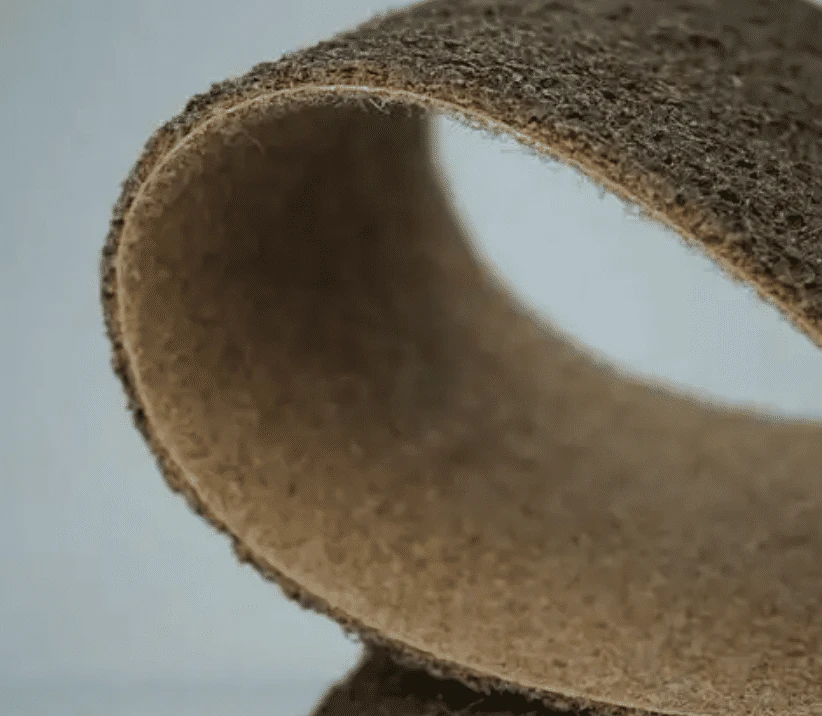
Leather grinding: In the leather processing field, fiber-reinforced abrasive belts can be used to grind the leather surface, remove blemishes, and improve the smoothness and texture of the leather. Their gentle grinding characteristics can prevent damage to the leather.
V. Technological Development Trends
With the continuous development of industrial technology, fiber-reinforced abrasive belts are also constantly innovating and upgrading. In the future, the technological development trends of fiber-reinforced abrasive belts will mainly be reflected in the following aspects:
Material innovation: Develop higher-performance and more environmentally friendly base materials and abrasive materials to enhance the grinding efficiency, service life and environmental performance of abrasive belts.
Process optimization: Optimize manufacturing processes to improve the dimensional accuracy and appearance quality of abrasive belts and reduce production costs.
Intelligent development: Integrate sensor and Internet of Things (IoT) technologies to achieve intelligent monitoring and management of abrasive belts, and enhance the automation and intelligence levels of grinding operations.
Send Inquiry