




Kraft paper and latex paper in the sandpaper industry
Apr 25, 2025
Leave a message
sandpaper
Latex paper and kraft paper in sandpaper
kraft paper
Kraft paper is made from sulfate wood pulp of coniferous trees and is produced on a long wire paper machine. It appears in yellowish-brown or bleached white.
Its tear length exceeds 6,000 meters, with high tear resistance and burst strength, as well as flexibility and environmental friendliness. The unbleached version is used for industrial packaging, while the bleached version (SBS) has a smooth surface and is suitable for high-end printing. It is widely used in food packaging, envelopes, and electronic laminating substrates (such as FPC/PCB).
Latex paper
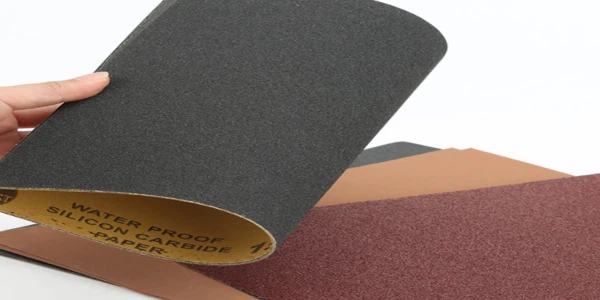
Latex paper is made by coating natural latex and its surface can be sized to enhance moisture resistance and ink absorbency.
It is flexible, wear-resistant, tear-resistant, and has excellent printing stability. It is suitable for moisture-proof packaging of books, magazines, food and medicine. In the industrial field, it is used as a substrate for electronic circuit boards and heat-conducting gaskets. In the medical field, it serves as a base material for breathable dressings. In the decorative field, it can simulate wood grain and leather texture.
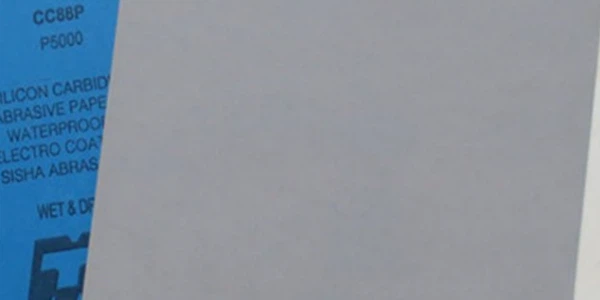
I. The Evolution of Kraft Paper: From Packaging Material to Industrial Base Material
1.1 Historical Origins
The history of kraft paper can be traced back to the chemical pulping technology revolution in the mid-19th century.
In 1857, Hutton invented the chemical pulping method, which involved high-pressure cooking of wood fibers in sodium hydroxide solution to produce "kraft pulp" with significantly enhanced strength for the first time.
In 1883, the maturation of the sulfate pulping process enabled the true industrial production of kraft paper. Early kraft paper was mainly used for salt packaging and quickly replaced traditional linen packaging due to its tear resistance and moisture-proof properties.
1.2 Material Properties
Fiber Structure: Predominantly made from softwood pulp, with fiber lengths ranging from 2 to 4 millimeters, providing the paper with high tensile strength.
Water Resistance: Unbleached kraft paper has a water absorption rate of less than 8%, making it suitable for use in humid environments.
Surface Treatment: A calendering process can be applied to achieve a smooth finish on one or both sides, meeting printing requirements.

1.3 Production Process
The modern production process of kraft paper consists of three stages: pulping, papermaking, and post-processing.
Pulping: Wood chips are cooked, washed and bleached to form pulp. The key parameter is the Kappa number (which controls the color of unbleached pulp).
Forming: Pulp is formed into a wet web on a long wire paper machine and then dewatered to 50% moisture content in the press section.
Post-processing: This includes supercalendering (to enhance smoothness), coating (to improve oil resistance), and other processes.
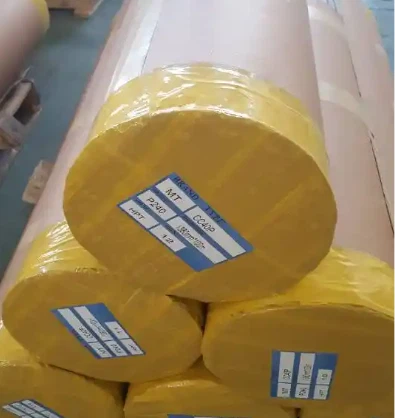
1.4 Application Fields
Packaging Materials: Food-grade kraft paper is used for packaging dry foods such as coffee beans and flour, meeting FDA standards.
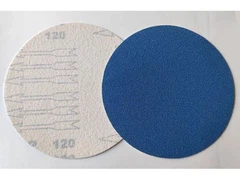
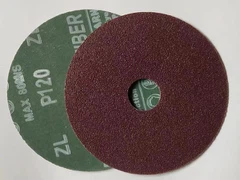
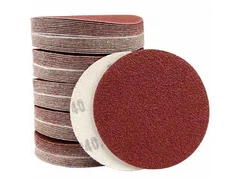
Industrial Base Materials: As the base paper for sandpaper, kraft paper with a weight of 120-150g/㎡, after being coated with latex, is made into water-resistant sandpaper.
Creative Applications: Washable kraft paper can be made into backpacks and wallets, and after special treatment, it can withstand more than 20 washes.
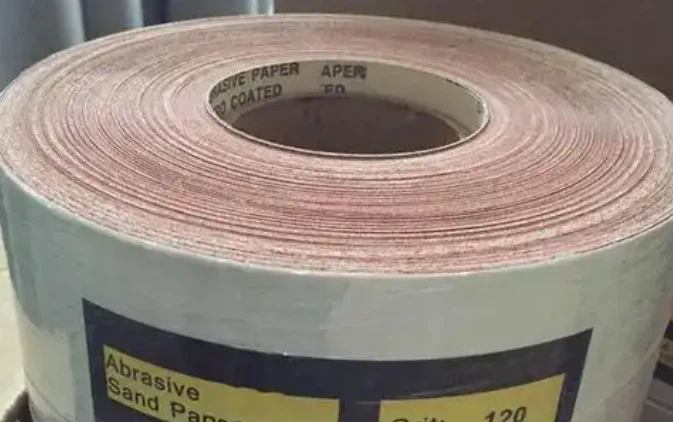
II. Latex Paper: The Industrial Evolution of Natural Rubber
2.1 Historical Development
Latex paper originated from the processing technology of natural rubber in the early 20th century. In the 1920s, Dunlop developed the latex foaming process, initially used in mattress production. In the 1950s, latex paper entered the printing field as a new type of coated substrate, and its flexibility and printability attracted industry attention.
In the 1920s, Dunlop developed the latex foaming process, initially used in mattress production.
In the 1950s, latex paper entered the printing field as a new type of coated substrate, and its flexibility and printability attracted industry attention.
2.2 Material Properties
Composition: Contains 15% - 30% natural latex, with calcium carbonate filler added to enhance stiffness.
Physical Properties: Elongation at break reaches 500%, and its abrasion resistance is three times better than that of synthetic paper.
Environmental Attributes: Biodegradable and does not produce toxic substances such as dioxins when burned.
2.3 Production Process
The core of latex paper production lies in the control of the coating process:
Substrate Preparation: Use 60-80g/㎡ virgin paper with high smoothness and dimensional stability.
Latex Coating: Apply using a knife coater, with a coating weight of 15-25g/㎡.
Drying and Curing: Dry at 120℃ with hot air to ensure complete cross-linking of the latex layer.
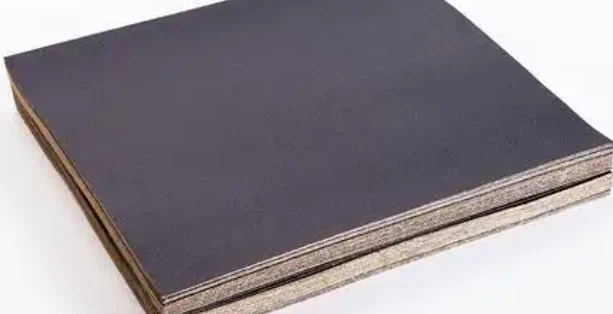
2.4 Application Areas
Printing and Packaging: Used for high-end cosmetic packaging boxes, allowing for processes such as hot stamping and UV printing.
Industrial Abrasives: Serves as the base material for sand belts. The flexibility of latex paper enables the sand belts to conform to curved surfaces during processing.
Medical Supplies: After sterilization, it is used for surgical dressings, offering better breathability than traditional gauze.

Send Inquiry