




How much do you know about brown corundum sandpaper from material to application?
Apr 29, 2025
Leave a message

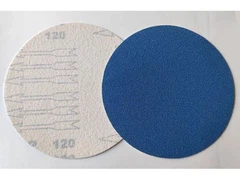
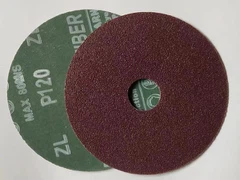
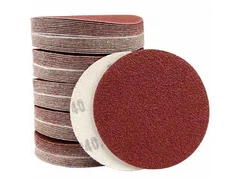
Brown corundum sandpaper is a highly efficient grinding tool with brown corundum (aluminum oxide) as the abrasive. It features high hardness, strong wear resistance, and excellent cutting force. The abrasive grains are sharp and durable, suitable for rough to medium grinding of metals, woods, plastics, and other materials. It can effectively remove burrs, oxide layers, and surface defects, and is widely used in mechanical manufacturing, automotive repair, furniture refurbishment, and other fields. The backing of the sandpaper is usually made of high-strength latex paper or cloth, which is tear-resistant and resistant to water and oil. It is suitable for both manual grinding and mechanical operations, significantly improving processing efficiency and surface finish. It is a cost-effective grinding consumable in both industrial and DIY scenarios.
I. Material Characteristics and Structural Analysis
The core material of brown corundum sandpaper is brown corundum, whose main component is aluminum oxide (Al₂O₃). It has a hardness second only to diamond, reaching a Mohs hardness of 9. This material is formed through high-temperature melting and crystallization, and it possesses extremely high wear resistance, corrosion resistance, and thermal stability. The structure of sandpaper typically consists of three parts: the base material, the adhesive, and the abrasive layer. Each part plays a significant role in determining its performance.
1. Base Material:
The base material serves as the support layer of sandpaper.
Common materials include latex paper, cloth, and composite materials.
Latex paper is flexible and tear-resistant, suitable for manual sanding and general mechanical sanding.
Cloth has higher strength and wear resistance, making it ideal for heavy-duty sanding and prolonged use.
Composite materials combine the advantages of latex paper and cloth, offering a wider range of applications.

2. Adhesive:
The adhesive's role is to firmly attach the abrasive to the base material.
Common adhesives include resin and animal glue.
Resin adhesives have excellent heat resistance and chemical resistance, making them suitable for sanding in high-temperature and corrosive environments.
Animal glue has good wetting and adhesion properties, ensuring even distribution of the abrasive.
3. Abrasive Layer:
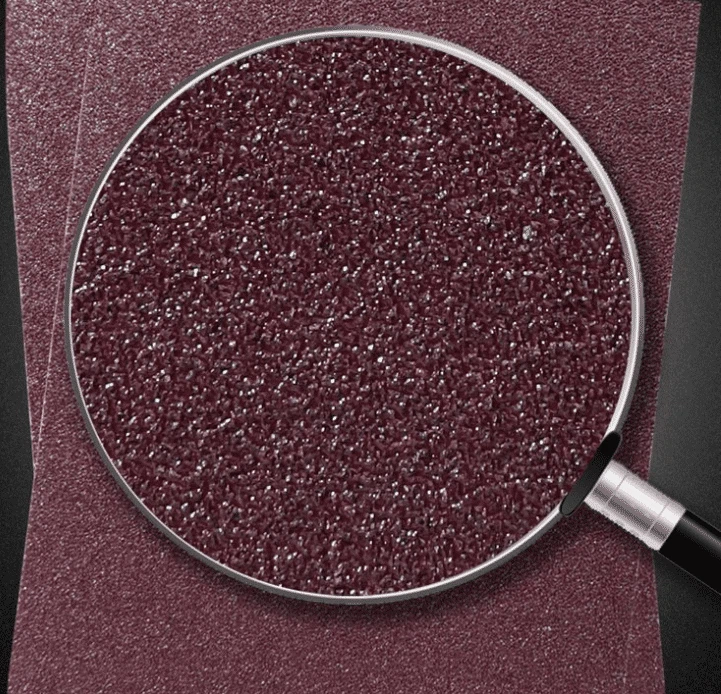
The abrasive layer is the key component of sandpaper, composed of brown corundum particles evenly distributed through electrostatic implantation.
The electrostatic implantation process ensures that the abrasive particles are vertically adhered to the base material, forming sharp cutting surfaces and enhancing sanding efficiency.
II. Manufacturing Process and Production Flow
The production of brown corundum sandpaper is a precise and complex process that requires multiple steps to produce the finished product.
1. Raw material processing:
Crush and screen brown corundum ore to obtain abrasive materials of different particle sizes.
Pre-treat the substrate, such as coating and drying, to ensure its surface is smooth and free of impurities.

2. Substrate coating:
Evenly coat the substrate with a binder to ensure it fully penetrates the substrate fibers.
Control the coating amount to ensure the binder can firmly adhere the abrasive materials without being excessive and making the sandpaper too hard.
3. Electrostatic implantation of abrasive:
Use an electrostatic field to make abrasive particles adhere perpendicularly to the substrate, forming a uniformly distributed abrasive layer.
The electrostatic implantation process ensures that abrasive particles are aligned in the same direction, improving grinding efficiency and sandpaper lifespan.
4. Curing and rewinding:
Subject the substrate coated with binder and abrasive to high-temperature curing to fully cure the binder and enhance the adhesion of abrasive materials.
After curing, the sandpaper undergoes post-processing procedures such as rewinding and cutting to produce finished products of different specifications and sizes.

III. Application Fields and Typical Scenarios
Brown corundum sandpaper, due to its excellent performance, is widely used in multiple fields. The following are some typical application scenarios.
1. Metal processing
Application: Removing the oxide layer, burrs, weld seams and other impurities on the metal surface to prepare for painting, electroplating or further processing.
Case: In the automotive manufacturing industry, after the body sheet metal is repaired, it needs to be sanded with sandpaper to a smooth surface to ensure the quality of the paint coating.
Characteristics: Metal processing has high requirements for the wear resistance, cutting force and service life of sandpaper. Brown corundum sandpaper can meet these demands.
2. Woodworking
Usage: Coarse and fine grinding of wood surfaces, removal of wood splinters and burrs, and improvement of paint adhesion.
Case: In furniture making, sandpaper is used to smooth wood for painting or veneering.
Characteristics: Woodworking has certain requirements for the flexibility and cutting force of sandpaper. Brown corundum sandpaper can ensure cutting efficiency while avoiding excessive damage to wood.
3. Artistic Creation
Application: In sculpture and model making, it is used for shaping details, removing excess materials, or surface treatment.
Example: Stone carvers use sandpaper to polish the surface of their works, presenting a fine texture and detailed patterns.
Characteristics: Artistic creation has high requirements for the selection of sandpaper grit and usage skills. Brown corundum sandpaper offers a variety of grit options to meet different creative needs.
4. Aerospace
Application: Precision processing and surface treatment of aerospace components, such as aircraft engine blades and turbine discs.
Case: During aircraft manufacturing, sandpaper is used to polish engine blades to ensure their surface finish and accuracy.
Characteristics: The aerospace industry has extremely high requirements for the performance of sandpaper. Brown fused alumina sandpaper, with its excellent wear resistance, cutting force and stability, has become the preferred material in this field.
5. Precision Instrument Manufacturing
Application: Processing and surface treatment of precision instrument components, such as optical lenses and semiconductor elements.
Case: In the manufacturing of optical lenses, sandpaper is used to polish the surface of the lenses to eliminate defects and enhance light transmission.
Characteristics: Precision instrument manufacturing has strict requirements for the uniformity of sandpaper grain size, cutting force, and surface quality. Brown fused alumina sandpaper can meet these high-precision processing demands.

IV. Usage Tips and Precautions
Proper use of brown corundum sandpaper not only enhances grinding efficiency but also prolongs the service life of the sandpaper.
1. Grain size selection:
Choose the appropriate sandpaper grain size based on processing requirements. Coarse grain sizes (such as 40# and 60#) are used for rapid material removal and rough grinding, while fine grain sizes (such as 2000# and 3000#) are used for fine grinding and polishing. Different grain sizes of sandpaper should be used in a gradual transition to avoid large jumps that may cause surface scratches.
2. Operating methods:
When hand grinding, maintain uniform pressure to avoid local overheating or excessive wear. When using mechanical grinding, control the rotational speed and feed rate to prevent sandpaper clogging or damage to the workpiece surface.
3. Safety precautions:
When grinding metal or wood, wear a dust mask and safety goggles to prevent inhalation of dust or eye injury from flying debris. In confined spaces or poorly ventilated environments, enhance ventilation measures.
4. Sandpaper maintenance:
After use, promptly clean the surface of the sandpaper to remove debris and impurities to prevent clogging of the abrasive particles. Store in a dry and cool place to prevent deformation or failure of the adhesive.
V. Historical Development and Technological Innovation
The history of brown fused alumina sandpaper can be traced back to the Industrial Revolution in the 19th century. With the continuous advancement of materials science and manufacturing processes, brown fused alumina sandpaper has undergone multiple technological innovations and upgrades.
Early sandpapers used natural sandstone as abrasive, which was inefficient and had a short lifespan. In the middle of the 19th century, artificial abrasives such as silicon carbide and aluminum oxide began to emerge, laying the foundation for the development of sandpaper.
At the beginning of the 20th century, the invention of brown fused alumina completely changed the landscape of the sandpaper industry. Brown fused alumina gradually became the main abrasive for sandpaper due to its excellent performance. The popularization of electrostatic coating technology further improved the uniformity of abrasive distribution and the service life of sandpaper.
With the increasing awareness of environmental protection, the development of environmentally friendly binders has become an important trend in the sandpaper industry. The application of new technologies such as nanotechnology and composite materials in sandpaper manufacturing has provided new possibilities for improving the performance and expanding the functions of sandpaper.
Brown corundum sandpaper, as an "invisible hero" in the industrial field, its development history has witnessed the progress of materials science and manufacturing technology. From metal processing to artistic creation, from aerospace to precision instrument manufacturing, its presence is everywhere. By deeply understanding its material properties, manufacturing processes, application fields and usage skills, we can not only improve processing efficiency and quality, but also extend the tool's lifespan and achieve cost optimization.
Send Inquiry