




Water-resistant Sandpaper Technology and Application
Apr 22, 2025
Leave a message
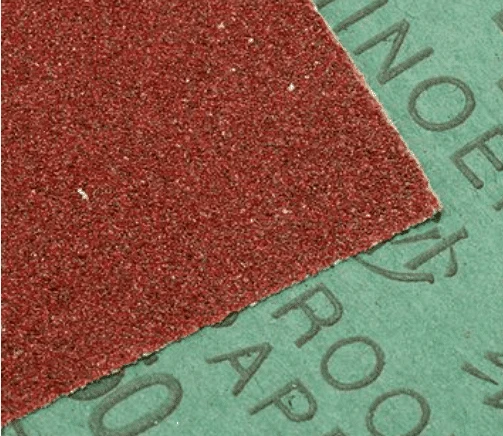
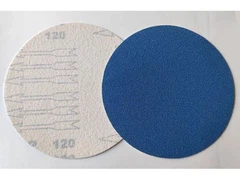
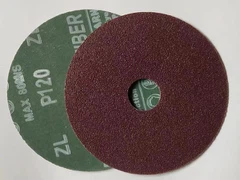
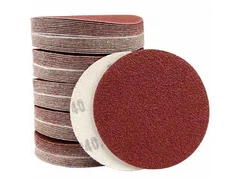
Water-resistant sandpaper, also known as water sandpaper, is a type of coated abrasive specifically designed for wet grinding processes. It uses water-resistant latex paper or waterproof-treated kraft paper as the base material and bonds aluminum oxide or silicon carbide abrasive grains firmly with resin adhesives to form sheet or roll structures. Its notable features include strong water resistance, allowing it to be soaked in water for long periods without the abrasive grains detaching; during wet grinding, debris is carried away by water flow, effectively preventing clogging and extending its lifespan; it covers a wide range of grit sizes from P60 to P3000, far exceeding ordinary dry sandpaper, and is particularly suitable for high-precision polishing; wet grinding reduces dust pollution, improves the working environment, and lowers the risk of explosion. It is widely used in automotive, woodworking, metalworking, and other fields, capable of processing wood, paint surfaces, stone, and other materials, and supports both water grinding and dry grinding modes, offering both high efficiency and cost-effectiveness.
I. Definitions and Core Characteristics
1.1 Basic Definitions
Waterproof sandpaper is a special coated abrasive designed for wet grinding. Essentially, it is formed by combining high-hardness abrasive with water-resistant base materials through a special process, creating sheet or roll-shaped tools with controllable grinding capabilities. According to the JB/T 7499-2006 standard, waterproof sandpaper must meet the performance requirement of maintaining a complete grinding structure when immersed, and its wet tensile strength must reach over 75% of its dry state .
Table 1 Comparative Table of Wet Performance Parameters of Water-resistant Sandpaper
| Parameter Item | Dry State Standard | Wet State Requirement | ||
| Tensile strength (kN/m) | ≥ 27.0 | ≥ 22.4 | ||
| Elongation (%) | ≥ 3.5 | ≥ 4.5 |
1.2 Core Features
(1) Wet-state stability: Through resin modification technology, the substrate maintains dimensional stability even after absorbing water, avoiding the problem of abrasive particle shedding caused by the expansion of traditional sandpaper when exposed to water.
(2) Self-cleaning effect: The continuous flushing of grinding debris by water medium extends the effective cutting life of the sandpaper by 40-60% compared to dry grinding.
(3) Temperature control: The wet grinding process reduces the accumulation of frictional heat, making it particularly suitable for the treatment of heat-sensitive materials such as epoxy coatings.
II. Material and Structural Analysis
2.1 Base Material Composition
(1) Water-resistant base paper: Made from long-fiber wood pulp combined with wet strength agents, its wet tensile index is ≥ 25 N·m/g (as per GB/T 465.2 measurement).
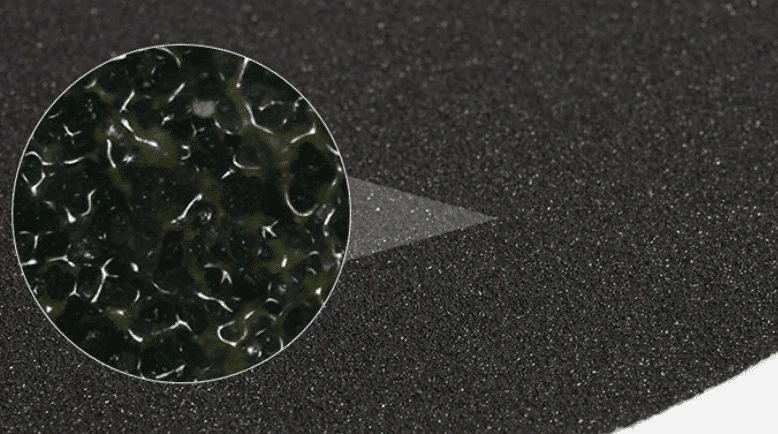
(2) Latex base material: High-end sandpaper adopts a three-layer composite structure (Figure 2):
Top layer: Polyester fiber mesh impregnated with resin, providing a wear-resistant framework
Middle layer: Micro-porous latex layer, achieving grinding swarf filtration
Bottom layer: High-density kraft paper, ensuring structural strength
2.2 Abrasive System
| Abrasive type | Hardness (Mohs) | Application range | Typical particle size range | |
| Silicon carbide (SiC) | 9.5 | Non-metal/wood/coatings | P80-P150 | |
| Alumina (Al₂O₃) | 9.0 | Metal/Plastic | P240-P200 | |
| Zirconia alumina (ZrAl₂O₃) | 8.5 | Superhard alloy / titanium alloy | P400-P250 |
2.3 Bonding Technology
Adopt the "gradient curing" process:
Pre-coated primer: Acrylate emulsion forms an anchoring layer
Main adhesive layer: Epoxy resin + phenolic resin composite system, cross-linked and cured at 120°C
Surface modification: Fluorocarbon coating reduces the adhesion of grinding debris (contact angle > 110°)
III. Decoding the Manufacturing Process
3.1 Key Production Flows
(1) Pre-treatment of Base Materials:
Corona treatment: Make the dyne value of the paper surface ≥ 50 mN/m
Coating base glue: Control the thickness tolerance within ±2 μm
(2) Sanding process:
Electrostatic sanding: Achieve a sand grain standing rate of over 95%
Vacuum adsorption: Ensure the CV value of abrasive distribution is less than 5%
(3) Post-curing process:
Three-stage oven: Pre-curing at 80℃ → Main curing at 120℃ → Tempering at 90℃
3.2 Quality Control Points
(1) Dynamic Shear Test: According to GB/T 7707 standard, the shear strength of the sandpaper at a rate of 25mm/min should be ≥ 12N/cm.
(2) Water Resistance Test: As per JB/T 7499-2006, after 5 dry-wet cycles, the abrasive particle shedding rate should be < 3%.
(3) Grinding Efficiency Test: Use a standard test plate (Shore hardness 80A), and record the material removal per unit area (g/cm²).
IV. Performance Evaluation System
4.1 Basic Performance Indicators
Grit Number: In accordance with the GB/T 9258 standard, the number of abrasive grains per square centimeter follows a geometric series distribution.
Anti-clogging Property: Through a modified phenolic resin system, the pore clogging rate of the sandpaper when grinding oil-based coatings is less than 15%.
Flexibility: As determined by GB/T 12967.6, the sandpaper can be bent to a φ10mm cylinder without cracking.
4.2 Professional Testing Methods
(1) Cutting Force Test:
Equipment: CETOL M3 Friction and Wear Testing Machine
Conditions: 10N normal pressure, 200 rpm rotational speed
Index: Material removal volume per unit time (mm³/min)
(2) Surface roughness analysis:
Instrument: MarSurf M400 Roughness Tester
Parameter: Repeatability error of Ra value < 0.01 μm
V. Typical Application Scenarios
5.1 Automotive Maintenance Field
Paint surface repair: Use P1000-P2000 sandpaper in conjunction with water grinding pads to achieve an orange peel removal rate of over 90%.
Plastic part grinding: Use silicon carbide sandpaper to treat bumpers and avoid scratching the base material.
5.2 Wood Processing Industry
Solid wood furniture: P240-P400 sandpaper is used for smoothing wood grain.
Veneer materials: P600-P800 sandpaper in combination with water-based putty ensures seamless splicing.
5.3 Mold Manufacturing Field
Precision Casting: Utilizing zirconia alumina sandpaper to treat the mold cavity, the dimensional accuracy is improved by 0.02mm.
Polishing Process: In conjunction with diamond grinding paste, a mirror-like surface (Ra < 0.05μm) is achieved.
Send Inquiry