




The History, Classification and Technology of Sandpaper Abrasives
Apr 18, 2025
Leave a message
Sandpaper abrasive
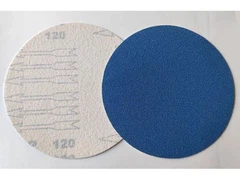
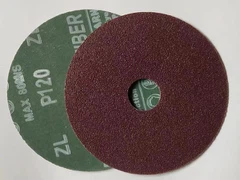
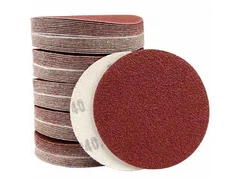
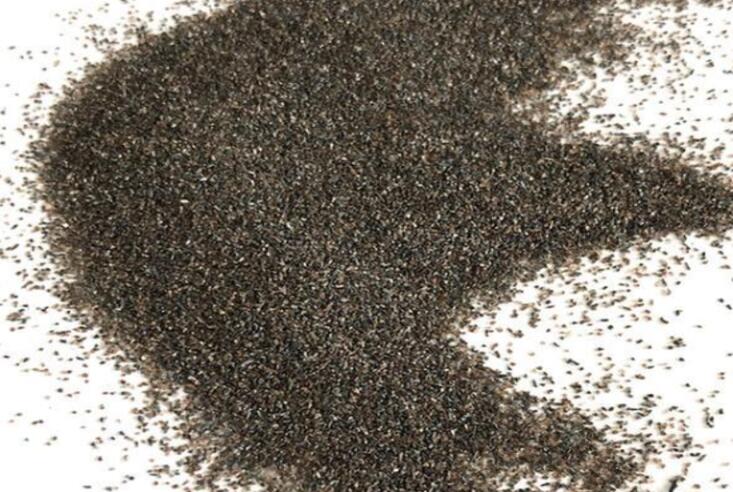
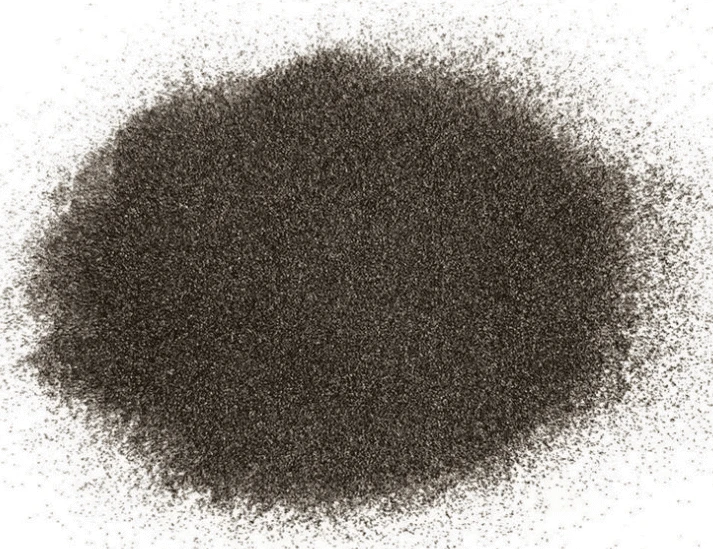
The abrasive of sandpaper is the grinding material on the sandpaper, which is used for grinding and polishing the surface of objects. Common abrasives include natural or synthetic materials such as alumina, silicon carbide, brown corundum, etc. Sandpaper abrasives are widely used in fields such as woodworking, metal processing, and automotive repair, and can be used to remove rust, paint, and smooth surfaces. By material, there are alumina sandpaper, silicon carbide sandpaper, etc.; by application, there are dry grinding sandpaper, wet grinding sandpaper, etc.; by grit size, there are coarse sandpaper, fine sandpaper, and other types. Through its grinding effect, the abrasive of sandpaper helps achieve fine processing and surface treatment of various materials.
I. Historical Evolution of Abrasive Paper
As one of the earliest tool innovations of mankind, abrasive paper can be traced back to 13th-century China. According to the "History of the Yuan Dynasty", artisans in the Yuan Dynasty had already known how to mix crushed shells with natural tree sap and attach them to the surface of parchment to form a primitive grinding material. This "proto-abrasive paper" was mainly used for polishing lacquerware, demonstrating the wisdom of ancient Chinese artisans in the composite application of materials.
The Industrial Revolution brought about a leap in sandpaper technology:
In 1830, John Goodyear of Birmingham, UK, mixed quartz sand with linseed oil to create the first commercial sandpaper and established a standardized production process. The Minnesota Mining and Manufacturing Company (3M), founded in 1902, was initially established to develop corundum mines but unexpectedly transformed into a sandpaper giant.
In 1921, it invented the waterproof sandpaper Wetordry, which used a special resin process to maintain the adhesion of abrasive materials underwater, marking a milestone in automotive painting technology. During World War II, sandpaper technology was further refined. German engineers developed super-precision sandpaper (with a grit size of P2000 and above), used for grinding military optical instruments, achieving micron-level precision.
Contemporary sandpaper technology has surpassed traditional understanding:
3M's Cubitron II ceramic abrasive technology uses precisely structured ceramic particles, which have a lifespan three times longer than traditional aluminum oxide abrasives.
The nano-scale diamond sandpaper developed by Japan's Noritake Company can achieve mirror polishing of hard alloys, with a surface roughness of less than Ra 0.02 μm.
II. Scientific Classification: The Precise Architecture of Abrasive Systems
Modern abrasive systems for sandpaper exhibit multi-dimensional classification characteristics:
(1) Material Dimension
Classification of Abrasives
| Abrasive type | composition | typical application | characteristic advantages |
| Alumina series | Al₂O₃ ≥ 95% | wood rough grinding / metal pretreatment | high hardness and low cost |
| Silicon carbide series | SiC ≥ 92% | Wet grinding for metal and stone polishing | Chemically inert with good thermal conductivity |
| Zirconia alumina series | ZrO₂ + Al₂O₃ composite | automotive paint surface grinding | strong self-sharpening and high wear resistance |
| Ceramic abrasives | sintered Al₂O₃-ZrO₂ ceramics | precision mold processing | good shape retention and stable cutting force |
| diamond series | artificial diamond particles | hard alloy grinding | extremely high hardness and ultra-fine particle size |
(II) Functional Dimensions
Dry abrasive paper: Utilizes electrostatic implantation technology, with 20-30% porosity maintained between abrasive particles and equipped with an anti-static coating. A typical product is 3M 236U dry abrasive paper, suitable for grinding metal welds.
Wet abrasive paper: Employs a latex paper substrate, with abrasive density increased by 40%, and is used in conjunction with lubricating and cooling fluids. Japanese NCA wet abrasive paper holds over 65% market share in the mold polishing sector.
Weather-resistant abrasive paper: Incorporates epoxy resin in the substrate, suitable for operating environments ranging from -40°C to 120°C. German Hermes weather-resistant abrasive paper is used in the maintenance of polar research equipment.
(III) Grading Standards
Adopts a dual-track classification system:
CAMI standard (Coated Abrasives Manufacturers Institute of the United States): The grit range is 24-1200#, with each grade increment corresponding to a halving of the particle size.
FEPA standard (European Federation of Abrasives): P grading system, where P400 corresponds to CAMI 320#, and is more suitable for precision processing scenarios.
Innovative special grit sizes:3M Pyramid Sandpaper features a three-layer structure. The bottom layer with coarse abrasive (P80) quickly removes flaws, the middle layer (P180) smoothly transitions, and the top layer (P320) provides ultra-fine polishing. A single operation can complete the entire process from rough grinding to fine polishing.
III. Process Decryption: The Precision Engineering of Sandpaper Manufacturing
(1) Base Material Preparation
Paper Base Treatment: Special kraft paper with a weight of 80-150g/㎡ is used and subjected to corona treatment to achieve a surface tension of 42 dynes/cm.
Coating of Primer: Modified acrylic resin is applied with a coating amount controlled at 25-35g/㎡ to ensure a peel strength of ≥1.2N/cm.
(2) Abrasive Composite
Electrostatic Sand Implantation: In an environment with a humidity of 65% ± 5% and a temperature of 25℃ ± 2℃, abrasive particles are arranged directionally through a 30-50kV high-voltage electric field.
Multi-layer Curing: A stepwise temperature increase process is adopted. Firstly, pre-curing is carried out at 80℃ for 5 minutes, then main curing is conducted at 120℃ for 15 minutes to ensure that the resin crosslinking degree is above 85%.
(3) Post-treatment Process
Flexibility Treatment: Through a three-roll calender, the bending strength of the sandpaper is controlled at ≤3.5N·m to meet the requirements of curved surface grinding.
Laser Slitting: A UV laser cutting system is used with a cutting seam accuracy of ±0.1mm to avoid burrs caused by traditional mechanical cutting.
IV. Quality Control: Stringent Standards of the Inspection System
The inspection of sandpaper must pass through four core indicators:
(1) Physical Properties
Tensile strength: According to the GB/T 7498 standard, the longitudinal tensile strength of the sandpaper is ≥ 40N/25mm, and the transverse tensile strength is ≥ 25N/25mm.
Peel strength: Using the 90° peel method, the test value is ≥ 0.8N/cm.
(2) Grinding Performance
Material removal rate (MRR): On a standard test piece (45# steel), when ground for 5 minutes at a pressure of 20kPa, the MRR of high-quality sandpaper is ≥ 0.3g/min.
Surface roughness: Using the MarSurf roughness meter, the Ra value control accuracy is ± 0.02μm.
(3) Durability Test
Life test: After continuous grinding of an area of 10m², the abrasive particle shedding rate is ≤ 8%.
Water resistance: After 24 hours of soaking in water, the tensile strength retention rate of water-resistant sandpaper is ≥ 85%.
(4) Environmental Protection Indicators
VOC detection: According to the HJ/T 397 standard, the total volatile organic compounds are ≤ 15g/kg.
Heavy metal detection: Using the ICP-MS method, the content of harmful elements such as lead and cadmium is ≤ 10ppm.

Send Inquiry