






Sandbelts And Their Classification
Feb 17, 2024
Leave a message
Belt grinding is a form of coated abrasive tool (commonly known as sandpaper, sandcloth) grinding, which was limited to manual operation as early as 1760. It was not until 1900 to 1910 that the era of mechanical use of sandpaper and sandcloth entered, and it was applied in the wood industry in a circular belt shape. This mechanical grinding method using circular belt sandcloth was the prototype of sandbelt grinding. After 1930, belt grinding gradually developed towards metal processing. During the World War, the United States was the first to use belt grinding in weapon manufacturing, achieving significant results. In the early 1950s, the emergence of electrostatic sand planting methods pushed belt grinding to a new stage, and the application of belt grinding gradually became widespread. Later, Europe and Japan also carried out research and application of belt grinding technology, and belt grinding technology gradually developed into an independent processing technology field with a complete range of categories and a relatively complete technical system.
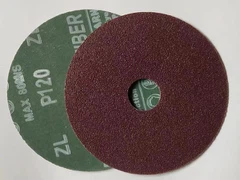
Composition of sanding belt: Sanding belt is a strip tool made by bonding abrasives onto flexible materials such as paper and cloth using binders, which can be used for grinding and polishing. It is a main form of coated abrasive tools. Its basic components are: substrate, abrasive, and binder, collectively referred to as the three elements of sand belt composition.
Classification of abrasive belts: Due to the differences in the three major components and various characteristic factors of abrasive belts, they can be classified into many varieties based on different grinding objects, grinding conditions, and grinding requirements.
Send Inquiry