




What are the abrasives and what are they for
Aug 24, 2024
Leave a message
An abrasive is a material of a certain hardness and density that allows other materials to be processed by removing the material itself. For example, one of the most common operations that can be done with abrasives is the polishing of a surface or the polishing of the same. They can also be used for many other purposes.
Abrasives are classified according to hardness, grain size, and abrasive material. Each of these variables affects the final result. Choosing the right abrasive is essential to achieve the desired result.
What they are made of
Abrasives are of natural or synthetic origin. They are distinguished mainly by their degree of hardness. It is said that one material can abrade another when one touches the other at their contact. Their degree of hardness is measured using special scales (Knopp, Mohs, etc).
The hardest abrasive material present in nature is the diamond. There are also other materials of both natural and synthetic origin, such as silicon carbide, corundum, and zirconium. These do not reach the same hardness as the diamond, but they are very close to it.
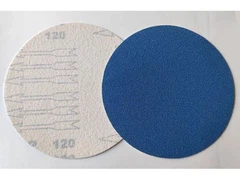
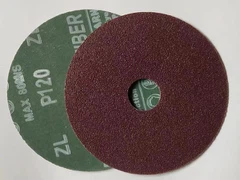
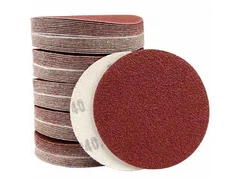
To make an abrasive, a support is needed to adhere the abrasive powder. The most used supports are paper or canvas. Resin or glue is then used to fix the abrasive. The main abrasive tools are made this way. Examples are abrasive paper sheets (also known as sandpaper), abrasive strips, and more. To create complex instruments such as discs and flap wheels, slightly more complex procedures are required which involve the use of industrial machinery.


Their uses and how to use them
Abrasives are mainly used in industrial processing. They are particularly important in the metallurgical and automotive industries. Many common items are made using abrasives. Try to think of the body of a car. The parts that make up the car are welded together, creating burrs at the metal joints. Removing welding burrs is an operation performed by using abrasives.
On the other hand, craftsmen and professionals also use abrasives to perform certain operations. For example, carpenters and woodworkers use abrasives to sand and finish the surface of parquet floors. In addition, many craftsmen artists use abrasives to create furniture or works of art. Artists use abrasives to shape and cut stainless steel. With the right tools, you can create extraordinary works of art. Abrasives are the ideal means to perfect these works. With the help of abrasives, you can give the finished product a flawless surface and obtain a glossy or matte surface according to your needs.
Shape, texture, and size
Different abrasives correspond to different types of processing, so there are grinding discs, grinding wheels, grinding wheels, knives, and various files. They mainly differ in shape, size, and grit.
Choosing the right abrasive shape is essential for processing the surface. Using the most suitable abrasive helps to achieve the desired effect. For example, both flat and conical abrasive discs can be used for flat surfaces. The former provides more aggressive grinding on narrow surfaces, while the latter allows you to work more precisely on larger surfaces. For corners or odd-shaped surfaces, cup-shaped abrasives are recommended.
The grit of the abrasive affects the cleaning speed and the pattern produced. Abrasives with grit between 8 and 16 are generally very coarse. They are suitable for creating deep patterns on the surface. Abrasives with grit between 20 and 40 (medium grit) are suitable for general use and a variety of applications. Finally, abrasives with a grit above 120 are fine-grained abrasives and are mainly used for finishing.
They are also available in a variety of sizes to suit the instruments you have and the work that must be performed.
Send Inquiry