




Unveiling the Industry Secrets of Velcro Discs
Apr 02, 2025
Leave a message
Velcro Discs
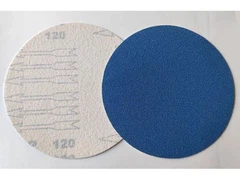
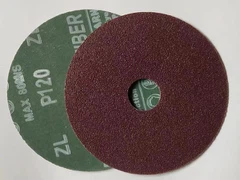
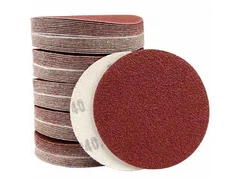
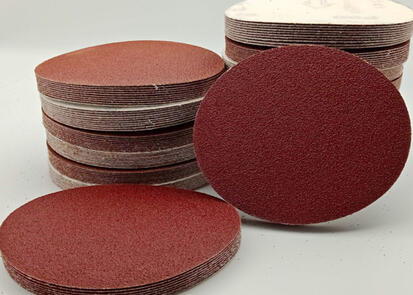
The Velcro disc is a kind of circular grinding tool that combines sandpaper and Velcro. Usually, double-sided adhesive tape is stuck on a roll of sandpaper or it goes through a flocked or velveteen treatment. Then it's cut into a circle. The back has Velcro, so it's easy to stick onto all kinds of grinding equipment, like pneumatic grinders and wall sanders. This kind of Velcro disc sandpaper can be used for grinding and polishing many materials, like metal, wood, and plastic. It's easy to use and you can replace it quickly. It's widely used in areas such as car making, furniture processing, and handling metal products.
The basics and structure of the Velcro disc
Basic Definition
The Velcro disc, just as its name implies, is an innovative product that combines Velcro technology with a disc shape. Velcro, also called hook-and-loop fastener, is made up of two parts: the hook structure and the loop structure. It can be firmly fixed by the interlocking of the hook structure and the loop structure. For the Velcro disc, based on this, it's designed in a disc shape to be used more conveniently in different application scenarios.
Structural Principle
The structural principle of the Velcro disc mainly depends on the interlocking mechanism of the hook structure and the loop structure. Specifically, the hook structure is usually on one side of the disc and is made up of many tiny hook-shaped protrusions. The loop structure is on the other side of the disc and is composed of many fine loops. When the hook structure and the loop structure interlock with each other, a firm fixation can be achieved through the force of friction.
To understand the structural principle of the Velcro disc more intuitively, here is a microscopic diagram of the hook and loop structure of the Velcro disc:

From the picture, you can see that the hook-shaped structure and the loop structure show a tight interlocking state under the microscope, which ensures the firm fixing performance of the Velcro disc.
The technical advantages and application fields of Velcro discs
Technical advantages
Quick replacement: The Velcro disc uses the Velcro fixing method, making it way more convenient to replace the disc. Just give it a gentle tear and stick, and the disc replacement is done, which greatly boosts work efficiency.
Stable and reliable: The hook structure and the loop structure of the Velcro disc interlock with each other, creating a firm fixation effect. Even in working environments with high-speed rotation or intense vibration, it can make sure the disc won't fall off.
Diverse choices: Based on different application scenarios and demands, Velcro discs can be picked in different materials, specifications, and performances. For instance, in the metal processing field, you can choose Velcro discs with high strength and good wear resistance; in the wood processing field, you can go for Velcro discs with better elasticity and adaptability.
Application fields
Metal processing: In processes like metal surface treatment, deburring, and weld grinding, the Velcro discs show high efficiency and convenience. By changing discs of different grits and materials, the processing needs of various metal workpieces can be satisfied.
Wood processing: In wood grinding, polishing, and carving processes, the Velcro discs also play a major role. Their good elasticity and adaptability allow the discs to fit closely to the wood surface and achieve fine processing.
Concrete construction: In grinding, polishing, and repairing concrete surfaces, the Velcro discs also display unique advantages. Their firm fixation and efficient grinding effect significantly improve the quality of the concrete surface.
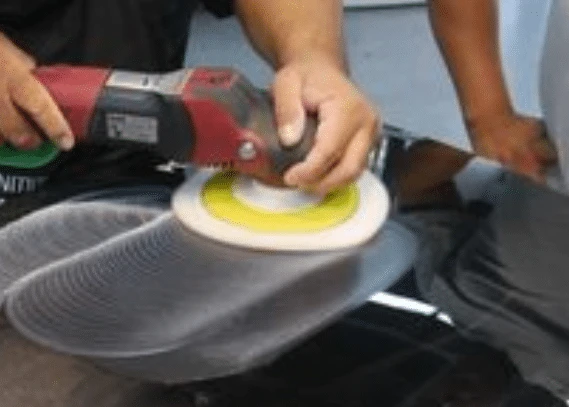
Velcro discs are widely used in industrial polishing equipment. Thanks to their efficient grinding effect, the surface quality of workpieces is significantly improved.
The History and Development of Velcro Discs
Origin: The Invention of Velcro
The invention of Velcro came from a random observation in nature. Back in 1941, when the Swiss engineer George de Mestral was hunting, he noticed that the seeds of burdock stuck to his clothes and his dog's fur. Under a microscope, he found that the surface of the seeds was full of hook-like structures that could firmly attach to the fabric fibers. Inspired by this, he spent several years doing research and development. In 1948, he successfully invented nylon Velcro. At first, it was named "Velcro" (a combination of the French words "velour" and "hook" ). Velcro is made up of a hook side (HOOK) and a loop side (LOOP). You just need to press it lightly to stick them together, and you can pull them apart to separate. It can be reused tens of thousands of times.
Technological Evolution: From Basic to Diverse
Material Improvements
Early Velcro was made of pure cotton, but it lacked durability. Later, nylon was adopted, significantly enhancing its strength and durability. With technological advancements, various types emerged, such as self-adhesive Velcro (with a backing adhesive for smooth surfaces) and cable tie Velcro (for organizing wires).
Diverse Shapes
Velcro initially came in the form of strips, but as its application scenarios expanded, its shapes gradually became more diverse. The emergence of circular Velcro is related to the following demands:
Magic tape disc
Velcro initially came in the form of strips, but as its application scenarios expanded, its shapes gradually became more diverse.
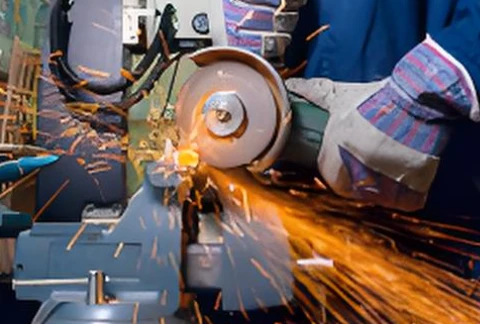
Industrial grinding equipment
The round disc-shaped Velcro can provide a uniform force-bearing surface for quickly fixing grinding discs and grinding plates.
Grinding and polishing equipment: The circular hook-and-loop fastener connects the grinding discs and grinding plates, ensuring stability and no detachment during high-speed rotation.
Fixing electronic products: In devices of brands such as Dell and Samsung, hook-and-loop fastener cable ties are used to organize internal cables.

Toy design
Such as Velcro ball darts, the round disc shape is convenient for holding and throwing.
Magic tape ball dart board: The surface of the disc is covered with velvet, and there are hook holes on the edge for easy carrying. Children can safely throw magic tape balls to exercise their coordination skills.
Outdoor sports equipment: Such as detachable backpack accessories, which can quickly fix water bottles, tool bags, etc. through the magic tape on the disc.
Medical rehabilitation equipment
Used for fixing support devices, the round disc shape can adapt to the arc of joints.
Wound fixation: The round Velcro can be cut into the desired shape to replace traditional bandages and fit joints or irregular wounds.
Rehabilitation equipment: Such as knee joint braces, the tightness can be adjusted through Velcro to adapt to the patient's range of motion.
The development trend of Velcro discs
Material Innovation: In the future, Velcro discs will focus more on material innovation. Through developing new polymer materials and nanomaterials, the fixing performance, wear resistance and adaptability of Velcro discs will be improved.
Process Improvement: By making the production process and manufacturing flow better, the production efficiency and quality stability of Velcro discs will be raised. For example, using advanced pressing techniques and heat treatment processes can make the discs stronger and more tough.
Intelligent Development: With the coming of the Industry 4.0 era, Velcro discs will develop in an intelligent way. By integrating sensors and control systems, we can monitor and control the working state of the discs in real time and intelligently.
The industrial chain of Velcro discs
Upstream industry
The upstream industries of the Velcro discs mainly consist of raw material suppliers and equipment manufacturers. Raw material suppliers offer the base materials for the Velcro (like nylon, polyester fiber, and so on) and abrasives (such as alumina, silicon carbide, and the like). Equipment manufacturers provide the production equipment for the discs (like pressing machines, heat treatment equipment, and the like).
Downstream industries
The downstream industries of the Velcro discs mainly include enterprises in areas like metal processing, wood processing, concrete construction, and so on. These enterprises are the main consumers of Velcro discs. Changes in their demands directly affect the supply and demand relationship and price trend in the Velcro disc market.
Integration of the industrial chain
With the increase in market competition and changes in customer demands, the Velcro disc industry chain shows a trend of integration. Some large manufacturers have started to extend upstream by building their own or buying raw material suppliers to make sure of a stable supply and quality control of raw materials. At the same time, they are also extending downstream by offering overall solutions and technical services to increase customer stickiness.
Maintenance of Velcro discs
The performance and lifespan of the Velcro disc, as an efficient and convenient fastening solution, are directly influenced by daily maintenance and care.
Cleaning Methods
When cleaning daily, you can use a hard brush or a wire brush to gently brush off the dust and fluff on the hook surface. For stubborn stains, you can use a cotton swab dipped in medical alcohol, acetone or nail polish remover to wipe the local area. If there are remaining glue marks, you can set the hair dryer to the hot air mode. Wait for the glue to soften and then slowly pull and remove it. For the Velcro on soft materials like down jackets, you can first use a conical needle to pick out the embedded fluff, then use a brush to clean the dust, and finally dip the brush in cleaning liquid and gently brush the loop surface.
Usage Precautions
When using the Velcro disc, make sure the sticking surface is clean, dry, and without oil or dust. When taking it off, pull it vertically gently to avoid damaging the hook surface by pulling sideways. At the same time, control the number of times it's opened and closed to avoid unnecessary wear. Besides, try to avoid using the Velcro disc in high-temperature and humid environments to prevent the glue from aging and losing effect.
Storage Tips
The Velcro discs should be stored in a dry, away-from-light and cool place. It's suggested to store them in sealed bags or moisture-proof boxes to prevent moisture from getting in. At the same time, they should be placed flat to avoid curling and to prevent deformation caused by heavy pressure. Check the Velcro discs regularly. If you find any signs of getting moist or aging, deal with them in time.
Tool Recommendations
To make cleaning and maintenance more convenient, you can prepare some practical tools, such as hard brushes, wire brushes, toothpicks, hair dryers, essential balm, alcohol, acetone and so on. Besides, you can also prepare some 3M strong Velcro, utility knives, needles and threads, etc., so that you can replace or repair the components when necessary.
<iframe width="560" height="315" src="https://youtube.com/shorts/C3H8moNTdTg?si=Hyh2hCCmxWLE3swF" frameborder="0" allowfullscreen></iframe>
Everything You Need to Know
The Velcro disc, as an innovative application of Velcro technology, has demonstrated broad application prospects in the industrial field in recent years.
What are the application advantages of Velcro discs in the sandpaper industry?
Velcro discs have significant advantages in the sandpaper industry. They enable the quick replacement of sandpaper without the need for any tools, greatly enhancing the grinding efficiency. Compared with traditional fixation methods, Velcro discs ensure uniform contact between the sandpaper and the grinding surface, significantly improving the grinding quality. Moreover, their adjustable adhesive force design allows Velcro discs to adapt to the needs of different types of sandpaper, whether for rough grinding or fine grinding, providing stable fixation. More importantly, the use of Velcro discs reduces surface damage caused by unstable sandpaper fixation, effectively increasing the yield rate.
What are the special requirements for the materials of Velcro discs in the sandpaper industry?
The sandpaper industry has strict and specific requirements for the materials of Velcro discs. Due to the high temperatures and strong friction generated during the grinding process, the materials of Velcro discs must have high wear resistance and tear resistance to ensure stability during long-term use. At the same time, the materials must also have excellent chemical corrosion resistance to resist the erosion of chemical reagents that may be encountered during the grinding process. In addition, the materials of Velcro discs need to maintain a stable adhesive force and remain consistent in performance under different temperatures and humidity conditions to ensure that the sandpaper is always securely fixed. With the increasing awareness of environmental protection, the sandpaper industry is also paying more and more attention to the environmental friendliness of Velcro disc materials and tends to choose environmentally friendly materials that are in line with the sustainable development trend.
How does the Velcro disc affect the production cost of the sandpaper industry?
The Velcro disc has a significant impact on the production cost of the sandpaper industry. Although there is an initial investment in Velcro disc equipment and special sandpaper, in the long run, this investment can bring about significant savings. The use of Velcro discs reduces the time for sandpaper replacement, lowers material waste, and improves grinding efficiency, thereby reducing overall production costs. Moreover, as Velcro discs reduce repetitive labor caused by sandpaper detachment, they also lower labor costs. More importantly, Velcro discs enhance grinding quality, reduce the rate of defective products, and further cut costs.
What are the future development trends of the hook-and-loop discs in the sandpaper industry?
In the future, the hook-and-loop discs in the sandpaper industry will develop towards intelligence and environmental friendliness. On the one hand, the hook-and-loop discs will integrate sensors and monitoring systems to achieve real-time monitoring of the wear state of the sandpaper and automatic replacement prompts, further enhancing the automation and intelligence level of the grinding process. On the other hand, with the continuous progress of materials science, the hook-and-loop discs will adopt more environmentally friendly and durable materials to meet the dual demands of the sandpaper industry for sustainability and efficiency. Additionally, there is a possibility of developing hook-and-loop discs with self-adaptive adhesive force adjustment functions, which can automatically adjust the adhesive force according to the changes in the grinding surface, further improving the grinding quality.
Send Inquiry