




Types and uses of sandpaper
Aug 24, 2024
Leave a message
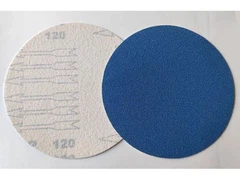
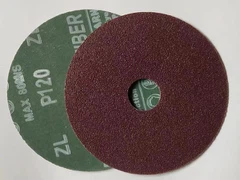
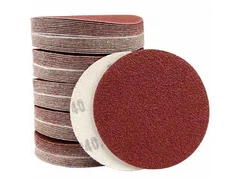
Sandpaper is widely used in various industries, including mobile phones, automobiles, wood products, various mold models, etc. Sandpaper also plays an important role in the coating process. Sandpaper is generally divided into dry grinding paper, wet grinding paper, and sponge grinding paper. They are all made by bonding different abrasives to the grinding paper substrate with adhesives.
Sponge sandpaper
Sponge sandpaper is the main tool in the grinding process. It is used to polish smooth parts and can be made of a variety of materials. Sponge sandpaper has the characteristics of high production efficiency, good surface quality of processed products, and low production cost.
Therefore, it is widely used in furniture production. The research on the surface quality of furniture products is closely related to sanding technology.
Dry grinding paper
Dry grinding paper uses synthetic resin as an adhesive to bond silicon carbide abrasives to latex paper and is coated with an antistatic coating. It is a high-end product with the advantages of anti-clogging, anti-static, good flexibility, and high wear resistance.
Its particle size varies and is suitable for grinding metal surfaces, wooden surfaces, putty, and paint. It generally uses special kraft paper latex paper, and natural resin, and synthetic resin as adhesives.
It is made of advanced high-voltage electrostatic sanding technology, has the characteristics of strong grinding force, and not easy to clog, and is suitable for dry sanding. Dry grinding paper, also known as dry sandpaper, has large gaps between sand particles, and the debris generated during grinding is large. Due to the large gaps, the debris will fall off by itself during use, so it does not need to be used with water.
Dry grinding paper is widely used in woodworking, stone processing, precision mold polishing, synthetic material processing, and other industries, and is widely used in furniture, decoration, and other industries.
Use of dry sandpaper during wood wax oil construction
During the construction of wood wax oil, we often talk about the different sizes of sandpaper used for sanding wood. Here we are talking about dry sandpaper, not wet sandpaper. The auxiliary materials needed in the construction of wood wax oil are water-resistant sandpaper, animal glue, and composite glue for the bottom layer, and brown corundum for abrasives. It is suitable for wood surface treatment and wall decoration. Wet sandpaper
Wet sandpaper is also called water sandpaper or water-resistant sandpaper. It can be used for water sanding. The abrasive of water sandpaper is generally silicon carbide, and the paper base is generally kraft paper. There are also high-end products, such as imported 3M water-resistant sandpaper. The paper base is often latex paper, which has good flexibility and stronger adhesion to the abrasive surface, making the sandpaper more durable, the particles more uniform, and the polishing effect more superior.
The gap between the abrasive particles of water sandpaper is smaller than that of dry sandpaper, and the debris generated during sanding is also less. When adding water, the debris will flow out with the water, effectively maintaining the sharpness of the sandpaper surface during use.
Water abrasive paper is widely used in stone polishing, hardware processing, mold processing, wall atomization dust removal and grinding, car body grinding, rust removal, paint removal, and other industries.
Uses of water sandpaper in daily life
Water sandpaper also plays a significant role in daily life. It can be used to grind the teeth of the comb to make the comb smooth. For some combs with too sharp teeth, water sandpaper can be used to grind them to make the comb smooth and delicate.
Water sandpaper can also be used for painting. Oil pastels can be painted on water sandpaper. The rough surface of sandpaper can better highlight the gorgeous and delicate colors of oil pastels.
Use water sandpaper to carefully polish the wiper rubber sheet, especially the scratches on the glass, to restore the wiper to its original state.
Common misunderstandings in the use of sandpaper
Using old sandpaper is equivalent to using sandpaper with a higher particle size
When the sandpaper is old, the cutting force will decrease and the heat will increase. If you feel that the grinding speed is too slow, you can switch to new sandpaper or switch to a lower grade of sandpaper. The harder you press the sandpaper, the faster you sand
Increasing the pressure will only increase the wear of the sandpaper and the heat generated, and may even burn the wood. Generally, sanding only requires very light pressure, allowing the sandpaper and the object being sanded to work together, which not only saves effort but also prolongs the life of the sandpaper, and the speed is not slow at all.
Use only one type of sandpaper until the end
Many beginners only buy sandpaper of one grit size, which is very weak.
Sanding is a tedious and boring process
If you feel this way, it is usually because there is no obvious progress in the sanding process, indicating that the grit of the sandpaper is too high or too old, and the new sandpaper needs to be replaced.
Send Inquiry