




The development and application of abrasives and grinding tools
Jan 13, 2025
Leave a message
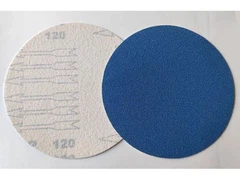
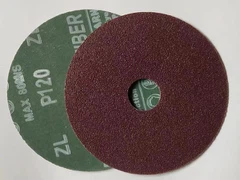
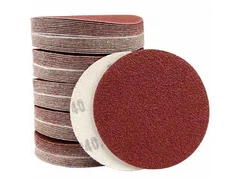
Abrasive tools are tools used for grinding, lapping and polishing. Most abrasive tools are artificial tools made of abrasives and binders, and there are also natural abrasive tools directly processed from natural minerals. In addition to being widely used in machinery manufacturing and other metal processing industries, abrasive tools are also used in food processing, papermaking industry and the processing of non-metallic materials such as ceramics, glass, stone, plastic, rubber, and wood. During the use of abrasive tools, when the abrasive grains are blunt, due to partial fragmentation of the abrasive grains themselves or breakage of the binder, the abrasive grains partially or completely fall off the abrasive tool, and the abrasive on the working surface of the abrasive tool continuously appears new cutting edges, or continuously exposes new sharp abrasive grains, so that the abrasive tool can maintain cutting performance for a certain period of time. This self-sharpening property of abrasive tools is a prominent feature of abrasive tools compared with general cutting tools.
As early as the Neolithic Age, humans had already begun to use natural grinding stones to process stone knives, stone axes, bone tools, horn tools, and tooth tools. In 1872, ceramic grinding wheels made of natural abrasives and clay appeared in the United States. Around 1900, artificial abrasives came into being, and various grinding tools made of artificial abrasives were produced one after another, creating conditions for the rapid development of grinding and grinding machines. Since then, the proportion of natural grinding tools in grinding tools has gradually decreased.
Abrasives are classified into two categories according to their raw material sources: natural abrasives and artificial abrasives. The only natural abrasive commonly used in the machinery industry is oilstone. Artificial abrasives are classified into five categories according to their basic shapes and structural characteristics: grinding wheels, grinding heads, oilstones, sand tiles (collectively referred to as bonded abrasives) and coated abrasives. In addition, abrasives are also customarily classified as a type of abrasives.
Bonded abrasives can be divided into common abrasive bonded abrasives and super-hard abrasive bonded abrasives according to the abrasives used. The former is made of common abrasives such as corundum and silicon carbide, while the latter is made of super-hard abrasives such as diamond and cubic boron nitride. In addition, there are some special varieties, such as sintered corundum abrasives.
Ordinary abrasive bonded abrasives are abrasives that are bonded by a binder to form a certain shape and have a certain strength. They are generally composed of abrasives, binders and pores, which are often called the three elements of bonded abrasives.
Abrasives play a cutting role in the grinding tool. The binder is the material that consolidates the loose abrasive into the grinding tool. There are two types: inorganic and organic. Inorganic binders include ceramics, magnesia and sodium silicate, etc.; organic binders include resins, rubber and shellac, etc. Among them, ceramics, resins and rubber binders are the most commonly used.
During grinding, the pores can contain and remove the chips, and can also hold coolant, which helps to dissipate the grinding heat. To meet certain special processing requirements, the pores can also be impregnated with certain fillers, such as sulfur and paraffin, to improve the performance of the abrasive tool. This filler is also called the fourth element of the abrasive tool.
The items that indicate the characteristics of ordinary abrasive bonded abrasive tools include: shape, size of abrasive, particle size, hardness, structure, backing, backing glue and bonding agent. The hardness of abrasive tools refers to the difficulty of abrasive grains falling off from the surface of abrasive tools under the action of external force, which reflects the strength of bonding agent to hold abrasive grains.
The hardness of the abrasive tool mainly depends on the amount of binder added and the density of the abrasive tool. If the abrasive particles fall off easily, it means the abrasive tool has low hardness; otherwise, it means the hardness is high. The hardness level is generally divided into seven major levels: super soft, soft, medium soft, medium, medium hard, hard and super hard. These levels can be further divided into several small levels. The methods for measuring the hardness of abrasive tools are the hand cone method, the mechanical cone method, the Rockwell hardness tester method and the sandblasting hardness tester method.
The hardness of the grinding tool has a corresponding relationship with its dynamic elastic modulus, which is conducive to using the audio method to measure the dynamic elastic modulus of the grinding tool to express the hardness of the grinding tool. In the grinding process, if the material hardness of the workpiece is high, a grinding tool with low hardness is generally selected; otherwise, a grinding tool with high hardness is selected.
The microstructure of abrasive tools can be roughly divided into three categories: tight, medium and loose. Each category can be further divided into several levels, which are distinguished by microstructure numbers. The larger the microstructure number of the abrasive tool, the smaller the volume percentage of the abrasive in the abrasive tool, the wider the gap between the abrasive grains, and the looser the microstructure. Conversely, the smaller the microstructure number, the tighter the microstructure. Abrasive tools with loose microstructures are not easy to passivate during use, generate less heat during the grinding process, and can reduce the heat deformation and burns of the workpiece. Abrasive grains of abrasive tools with tight microstructures are not easy to fall off, which is conducive to maintaining the geometric shape of the abrasive tool. The microstructure of the abrasive tool is only controlled according to the abrasive tool formula during manufacturing and is generally not measured.
Send Inquiry