


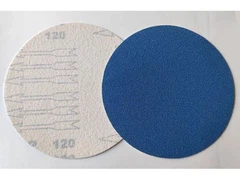
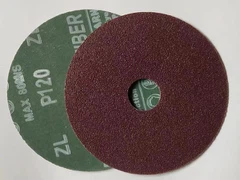
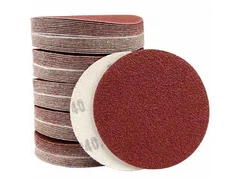


silicon carbide VS aluminum oxide
Jul 24, 2024
Leave a message
Choosing the correct sandpaper/abrasive can make the sanding/grinding process less time-consuming by smoothing the surface faster. You can improve the surface finish by using specific abrasives, techniques, and pressures, depending on the material. The right abrasives will reduce friction and heat, letting you preserve the abrasive longer and avoid burning the material.
What Are Aluminum Oxide Abrasives Used For?
Aluminum oxide sandpaper is the most widely used grain because it works very well on most metals, wood, and painted surfaces. The material is durable and cheaper to produce than most of the alternatives as well.
Aluminum oxide abrasives do come in different colors. You can find brown, white, and pink aluminum oxides, with brown being the most common.
White and pink will wear down faster, but they produce a smoother finish. These two aluminum oxides compare most to silicon carbide. You can find white aluminum oxide in coarse through fine textures. It works best on wood and lacquers as it produces less heat. You can also use white grains between finishing coats on wood. Pink aluminum oxide comes in coarse through fine textures, and you can use it on softer woods.
Brown aluminum oxide lasts longer since its grains break down far slower than the pink and white varieties. You can find it in coarse through micro-grit textures, and it can sand high-hardness materials like metals, drywall, fiberglass, wood, and painted surfaces. While the surface finish does not look as smooth as pink or white, you can more affordably and quickly grind your object with brown aluminum oxide.
You can find friable, semi-friable, regular, and heavy-duty aluminum oxides. Instead of dulling down, friable abrasive grains break to re-sharpen when used, constantly exposing sharp edges. Coarser grits can remove metal stock by letting the grains re-sharpen this way, while the smaller grains can finish metal surfaces.
Brown aluminum oxide is semi-friable. The grains will break and re-sharpen, but they take more use to break. The benefit of this is a longer lasting abrasive.
If you are using aluminum oxide sanding belts, you will find open, closed, and flexible closed coats. An open coat works best on soft metals and woods because of its 60% - 65% grain coverage.
Closed coats cover 90% - 95% of the belt surface, making these coatings the most appropriate for hard non-ferrous and ferrous metals. Lastly, a flexible closed coat sanding belt applies to recessed and curved surfaces on harder woods and metals.
You can only use aluminum oxide sanding belts for dry operations. If you plan to use a metal grinding wheel, you can utilize aluminum oxide on materials with high tensile strengths, like stainless steel and high tensile bronze and aluminum alloys.
What Are Silicon Carbide Abrasives Used For?
Silicon carbide sandpaper is the hardest and sharpest common abrasive, but it lacks durability due to its brittleness. Also, the narrow particle size wears down faster. The grains are razor-sharp so that they can sand metal, marble, glass, stone, cork, medium-density fiberboard, and plastic with minimal pressure. However, they struggle to sand harder metals and wood.
Silicon carbide works well on rough surfaces and for polishing. It is more friable than aluminum oxide, and you can use it in wet sanding operations. You can polish parts in automotive applications, remove rust, refinish wood floors, deburr metal, smooth glass edges, and sand between finishing coats.
Most people use silicon carbide sandpaper in conjunction with aluminum oxide. People will perform a rough sanding with aluminum oxide abrasives and finish off the project with silicon carbide. That way, you can produce a smooth surface finish without wearing down your sandpaper.
You can find friable (green) and regular (black) silicon carbide, with the friable being purer and harder yet more brittle than the regular variety.
Black silicon carbide can grind non-ferrous metals, ceramics, and hard nonmetals, while the green option works best for polishing purposes. However, it is not recommended to grind steel with silicon carbide.
Silicon carbide sanding belts work well on harder materials like wood finishes, stone, metal, paint, and softer ones like rubber, glass, and plastic. The grains will microfracture with repeated use (friability), making them unsuitable for softwood as they will not sharpen the edge. These belts have a closed coat with optimal grain coverage, so you can apply grain to a hard material or finish the surface with sealers or lacquers.
The grinding wheels and sanding discs work well on materials like cast iron, aluminum, and cemented carbide. If your project involves a nonmetallic or low tensile strength material, you will want to use silicon carbide rather than aluminum oxide.
Send Inquiry