




Knowledge of application materials and processes for cutting grinding wheels
May 05, 2025
Leave a message
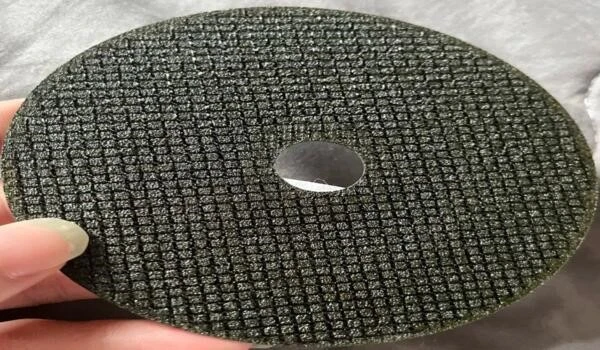
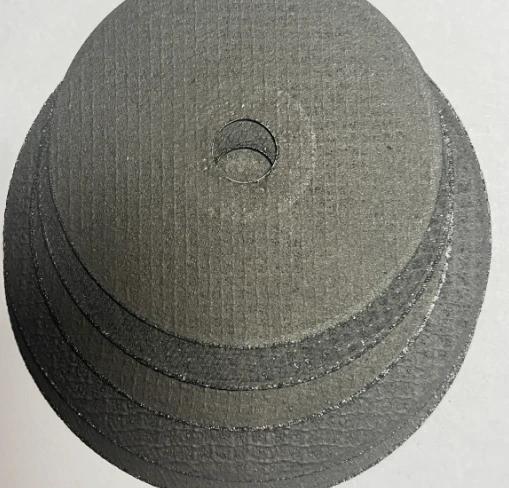
Cutting grinding wheels
Cutting grinding wheels are abrasive tools used for cutting hard materials such as metals and stones. They are made by pressing abrasives (such as alumina and silicon carbide) and binders (resin, ceramic or metal) at high temperatures. With sharp edges, they achieve efficient cutting through high-speed rotation and are widely used in mechanical processing, building decoration and other fields. Common types include resin cutting discs (suitable for metals) and diamond cutting discs (for hard materials). When using them, it is necessary to pay attention to matching the rotational speed, taking protective measures and avoiding side pressure to ensure safety and extend their lifespan.
I. Basic Understanding of Cutting Grinding Wheels
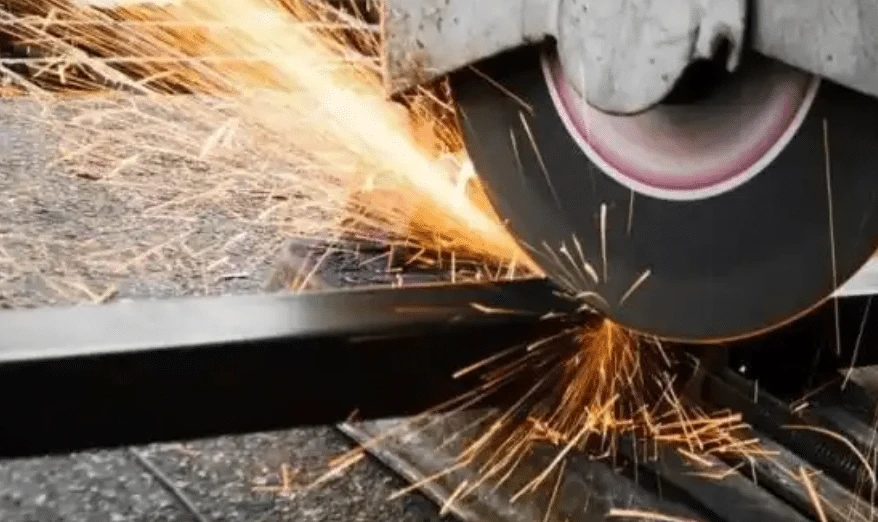
Cutting grinding wheels, as indispensable grinding tools in modern industrial processing, have a core structure composed of abrasive, binder, and pores. In the field of architectural decoration, single-speed and dual-speed grinding wheel cutting machines drive thin grinding wheels through electric motors, enabling rapid and precise cutting of metal profiles. Taking the J3GY-LD-400A cutting machine as an example, its 400mm diameter grinding wheel, operating at 2800r/min, can easily cut 100×100×10mm angle steel and φ50mm round steel, with a verticality of the cutting surface reaching a precision standard of 0.3mm/m.
II. Historical Development of Cutting Grinding Wheels
1.The Germination Period: The Primitive Application of Natural Abrasives (From Prehistoric Times to the 18th Century)
The Dawn of Grinding in the Stone Age
Humans began to use natural stone tools for grinding in the matriarchal society period, such as stone axes and bone tools made by rubbing stones against each other, which were used for hunting, farming, and daily life.
China had mastered the processing technology of natural grinding stones in the Neolithic Age. For instance, the 6,000-year-old stone mortars and pestles unearthed at the Banpo Site in Shaanxi Province, as well as the finely ground jade discs from the Shang Dynasty, demonstrated the advanced level of ancient grinding techniques.
The Prototypes of Ancient Mechanical Grinding Tools
The Water Mill of the Northern Wei Dynasty: The water mill invented by Cui Liang for grain processing marked the initial step towards the mechanization of grinding technology.
The Multi-Disc Stone Mill of the Jin Dynasty: Liu Jingxuan's creation of an eight-disc natural stone grinding mill improved processing efficiency.
The Coated Abrasives of the Yuan Dynasty: Chinese people first used natural tree gum to attach shell powder to parchment to make friction tools, almost simultaneously with the Italians along the Mediterranean coast who used similar techniques.
2.The Limitations and Breakthroughs of Natural Abrasives during the Industrial Revolution (Late 18th Century to Late 19th Century)
Limitations of Natural Abrasives
With the development of industry, natural abrasives such as corundum and topaz were found to be insufficient due to their limited production and unstable quality, making it difficult to meet the demands for processing high-hardness materials.
The Birth of Synthetic Abrasives
In 1893, E.G. Acheson of the Carborundum Company in the United States invented silicon carbide (SiC) synthetic abrasive using an electric resistance furnace, marking the first synthetic abrasive in human history.
Subsequently, synthetic corundum abrasive was introduced, ending the reliance on natural abrasives and providing industry with cheap, stable, and high-yield grinding tools.
3.Modernization Transformation: The Popularization of Synthetic Abrasives and Technological Innovation (Early 20th Century to Mid-20th Century)
The Rise of Ceramic Grinding Wheels
In 1877, the Norton Company in the United States first used natural abrasives to manufacture ceramic grinding wheels, significantly enhancing processing accuracy and efficiency.
Ceramic grinding wheels are composed of ceramic particles and binders, suitable for high-speed and heavy-duty grinding applications.
The Application of Resin and Metal Bonding Agents
Resin bonding agents, due to their high flexibility and rapid grain renewal, gradually became mainstream, especially for soft material processing.
Metal bonding agent grinding wheels, with their strong wear resistance, are used in high-precision processing fields.
4.The Era of High Performance: Breakthroughs and Applications of Superhard Materials (Mid-20th Century to Present)
The Revolution of Superhard Abrasives
Diamond Grinding Wheels: As the hardest material, diamond grinding wheels are widely used in electronics, medical devices, and other fields. Their excellent hardness can extend the life of cutting tools and increase the material removal rate.
Cubic Boron Nitride (CBN) Grinding Wheels: Suitable for grinding ferrous materials such as hardened steel and cast iron, they are of significant value in the aerospace and automotive industries.
Design of Structured Grinding Wheels
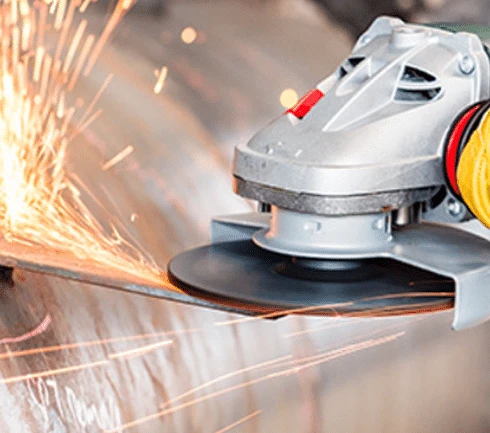
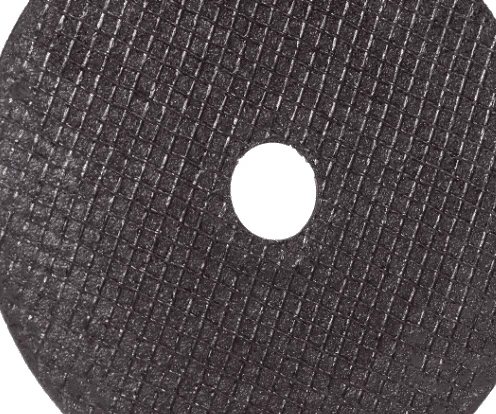
To address the problems of high grinding force and high temperature in traditional grinding wheels, structured grinding wheels (such as those with grooved or perforated surfaces) have been proposed.
By optimizing the structural design, structured grinding wheels reduce grinding force, lower temperature, and significantly improve the surface quality of workpieces.
III. Precision Manufacturing Processes
The performance of grinding wheels is determined by three key factors: abrasive characteristics, grit size ratio, and bond type. Resin-bonded grinding wheels (B) dominate in the processing of hard alloys due to their excellent self-sharpening properties; while metal-bonded grinding wheels (M) are suitable for heavy-duty grinding thanks to their superior wear resistance. The choice of grit size directly affects the surface roughness of the processed material; for instance, W20 micro-grit grinding wheels can achieve a mirror finish with a surface roughness of Ra0.2μm.
IV. Safety Operation Specification System
Installation and Inspection: Gently tap the side of the grinding wheel with a nylon hammer. A clear sound indicates no cracks. The diameter of the chuck must be no less than one-third of the grinding wheel, and a 2mm thick soft pad must be installed.
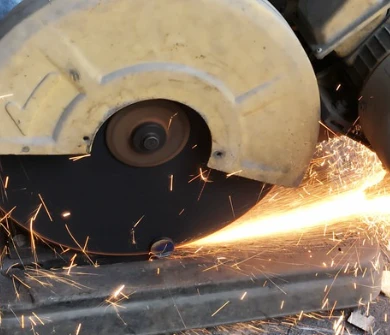
Protective Devices: The opening angle of the protective cover should be no more than 125°. The width of the chip guard should exceed the outer circle of the grinding wheel by 20mm. The gap between the adjustable bracket and the workpiece should be no more than 3mm.
Operation Taboos: Side grinding is prohibited. Operating directly in front of the grinding wheel is prohibited. Using damp grinding wheels is prohibited.
V. Key Points for Maintenance and Care
Daily Inspection: Before use, ensure that the grinding wheel has no radial cracks (detection by dye penetrant method), and the operating noise is ≤ 85 dB.
Dressing Cycle: Resin grinding wheels need to be dressed with a diamond pen after processing 500 pieces. For metal grinding wheels, electrolytic in-process dressing is recommended.
Storage Specifications: Store in an environment with a relative humidity of ≤ 60%, stand vertically to prevent deformation, and keep rubber grinding wheels away from oily substances.
Send Inquiry