




In wood sanding, metal polishing or paint surface treatment, how does the selection of latex paper sandpaper grit (such as P80, P120) affect surface roughness and the effect of subsequent processes?
Mar 19, 2025
Leave a message
Wood polishing
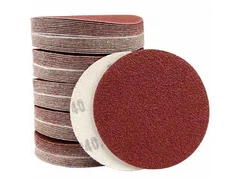
P80 sandpaper: This is coarse sandpaper. The abrasive particles are big and it has a strong grinding force. It's good for getting rid of big flaws, old coatings, or deep scratches on the wood surface. When you use P80 sandpaper to grind, the wood surface will be pretty rough, but it can take off the uneven parts well and get things ready for more detailed grinding later.
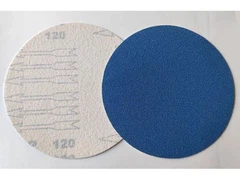
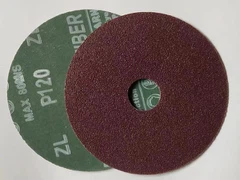
P120 sandpaper: The abrasive particles of P120 are smaller than P80 and the grinding force is okay. When grinding wood, P120 is often used after the initial grinding. It can take away the obvious scratches left by P80 and make the wood surface smoother. But compared to even finer sandpaper, the surface after using P120 will still be a bit rough.
Metal polishing
P80 sandpaper: At the beginning of metal polishing, P80 can be used to quickly remove rust, oxide layers, or deep scratches on the metal surface. But because the abrasive particles are big, the metal surface after grinding with P80 will be quite rough and you need to use finer sandpaper to deal with it later.
P120 sandpaper: In the process of metal polishing, P120 is usually used to make the surface better after using P80. It can get rid of the scratches left by P80 and make the metal surface smoother. But to get a mirror-like effect, you still need to use even finer sandpaper like P240, P320 and so on for more grinding and polishing.
Paint surface treatment
P80 sandpaper: In paint surface treatment, P80 is usually not used to directly grind the paint surface. The abrasive particles are too big and they can easily hurt the paint. But in some cases, like when you need to take off the old paint layer or do deep grinding, you might use it carefully.
P120 sandpaper: P120 is more often used in paint surface treatment. It can be used to get rid of small scratches, flaws or do the initial grinding on the paint surface. After grinding with P120, the paint surface will be relatively smooth, but you still need to use even finer sandpaper like P240, P320 and so on for more grinding and polishing to get a better shine and smoothness.
The choice of the grit size of latex paper sandpaper directly affects the surface roughness and the effect of the following processes. When you're doing wood grinding, metal polishing or paint surface treatment, you should pick the right grit size of the sandpaper based on your specific needs and goals. Generally speaking, coarse sandpaper like P80 is used to take away big flaws and scratches, medium sandpaper like P120 is for making things better, and fine sandpaper like P240, P320 and so on is for the final grinding and polishing. By using different grit sizes of sandpaper in a reasonable way, you can get the ideal surface roughness and process effect.
Wood polishing
P80 sandpaper: This is coarse sandpaper. The abrasive particles are big and it has a strong grinding force. It's good for getting rid of big flaws, old coatings, or deep scratches on the wood surface. When you use P80 sandpaper to grind, the wood surface will be pretty rough, but it can take off the uneven parts well and get things ready for more detailed grinding later.
P120 sandpaper: The abrasive particles of P120 are smaller than P80 and the grinding force is okay. When grinding wood, P120 is often used after the initial grinding. It can take away the obvious scratches left by P80 and make the wood surface smoother. But compared to even finer sandpaper, the surface after using P120 will still be a bit rough.
Metal polishing
P80 sandpaper: At the beginning of metal polishing, P80 can be used to quickly remove rust, oxide layers, or deep scratches on the metal surface. But because the abrasive particles are big, the metal surface after grinding with P80 will be quite rough and you need to use finer sandpaper to deal with it later.
P120 sandpaper: In the process of metal polishing, P120 is usually used to make the surface better after using P80. It can get rid of the scratches left by P80 and make the metal surface smoother. But to get a mirror-like effect, you still need to use even finer sandpaper like P240, P320 and so on for more grinding and polishing.
Paint surface treatment
P80 sandpaper: In paint surface treatment, P80 is usually not used to directly grind the paint surface. The abrasive particles are too big and they can easily hurt the paint. But in some cases, like when you need to take off the old paint layer or do deep grinding, you might use it carefully.
P120 sandpaper: P120 is more often used in paint surface treatment. It can be used to get rid of small scratches, flaws or do the initial grinding on the paint surface. After grinding with P120, the paint surface will be relatively smooth, but you still need to use even finer sandpaper like P240, P320 and so on for more grinding and polishing to get a better shine and smoothness.
The choice of the grit size of latex paper sandpaper directly affects the surface roughness and the effect of the following processes. When you're doing wood grinding, metal polishing or paint surface treatment, you should pick the right grit size of the sandpaper based on your specific needs and goals. Generally speaking, coarse sandpaper like P80 is used to take away big flaws and scratches, medium sandpaper like P120 is for making things better, and fine sandpaper like P240, P320 and so on is for the final grinding and polishing. By using different grit sizes of sandpaper in a reasonable way, you can get the ideal surface roughness and process effect.
Send Inquiry