




How to Choose Sandpaper Base Paper
Jun 24, 2025
Leave a message
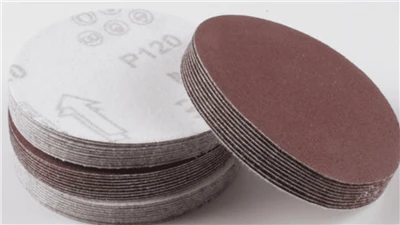
The base material, abrasive and binder are the three essential elements of coated abrasives. Among them, the base paper is the most widely used and largest consumed material. Base paper is mainly used to produce water-resistant sandpaper, dry grinding sandpaper, wood sandpaper, paper-based abrasive belts, etc. In the manufacturing process of coated abrasives, the quality of the base material directly affects the product quality. Due to the significant differences in manufacturing equipment and processes among various enterprises, choosing the appropriate base paper is of great help in stabilizing product quality.
I. Current Situation of the Raw Paper Manufacturing Industry
As a specialized industrial consumable, abrasive paper raw material has long been constrained by a limited market size and low annual domestic demand due to its highly specialized application fields. However, with the accelerated transformation of China's manufacturing industry towards high-end, this niche sector has shown a significant growth trend in recent years. Nevertheless, due to the high technical barriers and cost control requirements of the products, the overall profit margin of the industry remains relatively limited. Currently, the domestic industrial chain has established a relatively complete raw paper supply system, which basically meets the raw material procurement needs of conventional abrasive paper manufacturing enterprises. Particularly in the fields of heavy-duty abrasive belt paper and latex paper, domestic production has achieved breakthroughs, with some product performances reaching the standards for import substitution. However, in the production of high-end categories such as ultra-precision grinding abrasive paper raw material and super-heavy-duty paper-based abrasive belt substrates, domestic enterprises still have a phased gap with international advanced levels in terms of the precision of process equipment and manufacturing stability, which has hindered the domestication process of high-end products. To break through the technological bottleneck, the industry urgently needs to strengthen the collaborative innovation mechanism among industry, academia, and research, and drive the systematic improvement of the independent supply capacity of high-end abrasive material substrates through the dual wheels of key equipment upgrading and manufacturing process innovation.
II. Misunderstandings in Base Material Selection
1. Differences in Paper for Coarse and Fine Sandpapers
Coarse-grit sandpapers require higher basis weight paper, while fine-grit sandpapers need lower basis weight paper. Fine-grit sandpapers, due to their smaller abrasive grains and less adhesive, have extremely high requirements for paper smoothness, especially avoiding paper fuzz. The requirements for coarse-grit sandpapers are relatively loose.
2. Principles for Selecting Adhesives
Adhesives should be selected based on the grade of the base paper: epoxy resin for grade A paper (used for transparent silicon carbide sandpapers), alkyd resin for grade B paper (used for ordinary water-resistant sandpapers), and epoxy or phenolic resin for latex paper (used for dry grinding super-coated sandpapers). Some enterprises use alkyd or urea-formaldehyde resin in grade A paper and latex paper to reduce costs, but attention should be paid to process compatibility; otherwise, it may lead to cracking and delamination.
3. Identifying the Front and Back of Base Paper
Base paper has a front and back side: the side in contact with the papermaking wire is the back, and the other side is the front (smoother). The front and back can be identified by folding to observe the difference in paper structure or by drying and observing the curling direction (curling inward indicates the back).
4. Control of Heat Resistance Performance
Ordinary water-resistant sandpapers can withstand temperatures of 70-80°C, while grade A paper treated with rosin adhesive becomes brittle at temperatures over 100°C. Grade A paper treated with modified sizing can withstand temperatures up to 120°C. Strict temperature control is necessary during production to prevent base material deterioration.
5. Misunderstandings in the Use of Additives
Excessive chemical additives may increase paper tensile strength but hinder resin penetration. Comprehensive testing of indicators such as basis weight, density, folding endurance, and water absorption is required, rather than solely pursuing high tensile strength values.

III. Requirements for Sandpaper Base Materials
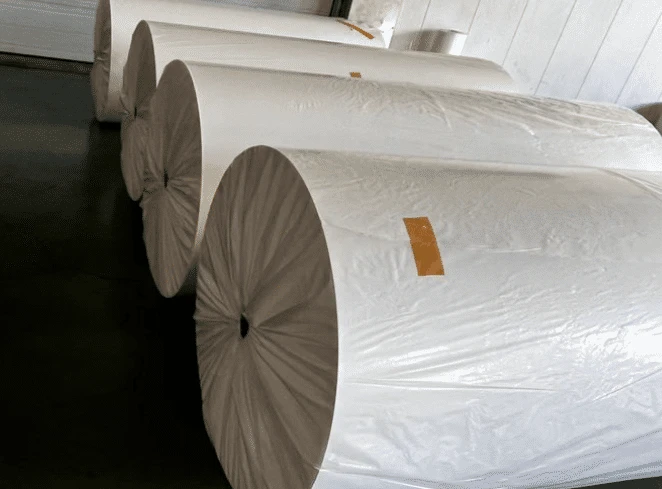
1. The appearance quality of the base paper must meet the following requirements: The color should remain stable between batches, especially for natural color paper, color difference should be strictly controlled to avoid problems in trademark printing; the surface should be clean without wrinkles, holes, or other defects, and for colored paper, spots should be completely avoided; the paper surface should be flat with slight felt marks, and the basis weight and thickness should be uniform in the transverse direction to prevent production deviation; the edge of the large roll should be neat without damage, the paper core tube should be intact and meet the hardness standard, and the weight of a single roll is recommended to be controlled within the range of 300-600kg.
2. In terms of internal quality: 100% sulfate softwood pulp must be used for production, and composite paper is strictly prohibited; the appropriate basis weight should be selected according to the type of sandpaper, light weight paper for fine-grit sandpaper and heavy weight paper for coarse-grit sandpaper; the density should be balanced to ensure both strength and flexibility; the water absorption should be controlled to prevent moisture-induced deformation, and the base paper for water-resistant sandpaper should have high water resistance; the fiber distribution should be uniform, and the uniformity requirement for transparent sandpaper is extremely high; although the base paper for ultra-precision grinding sandpaper and heavy-duty sand belts still relies on imports, the base paper for circular grinding discs and low-grade paper belts has been successfully replaced by domestic products.
Send Inquiry