




Sandpaper Application Tips and Little-Known Facts
Jun 18, 2025
Leave a message
1. Sandpaper grit size
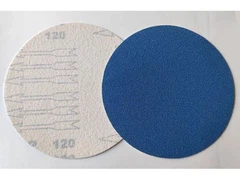
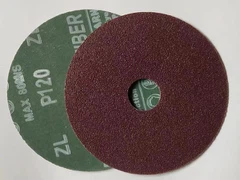
When it comes to sandpaper grit size, the first thought that comes to mind is "the higher the grit size, the finer it is." This is correct, but the secrets behind sandpaper grit size are not limited to this. Did you know that the grit size of sandpaper is actually a rough indicator? For example, for 120-grit sandpaper, the nominal particle size might be 125 microns, but in actual use, the particle size range could be from 90 microns to 160 microns. Therefore, when choosing sandpaper, you can't just look at the grit size; you also need to consider its particle size distribution curve.
Also, the grit size of sandpaper is related to the thickness of the base material. For thick base material sandpaper, the actual amount of abrasive in contact with the workpiece will be less at the same grit size. Therefore, when grinding hard materials, it is best to choose sandpaper with a thin base material, as this provides stronger cutting force.

II. Tips for Using Sandpaper
Using sandpaper is not as simple as just picking it up and grinding. Professional players all pay attention to techniques and craftsmanship. For instance, pressure control is not about applying as much as possible. If you grind too hard, the sandpaper will become dull more easily and the surface of the workpiece may get scratched. Generally speaking, when grinding metal, the pressure should be controlled between 0.1 and 0.12 megapascals for the best results.
There is also the issue of the grinding path. Straight grinding is prone to leaving streaks, so professional players prefer spiral or figure-eight paths. This way, the surface is smoother and the efficiency is higher. Additionally, cooling and lubrication are very important. When dry grinding, as the workpiece temperature rises, the sandpaper tends to become dull. Therefore, it is best to add some lubricant or rinse with water while grinding to lower the temperature.

III. Little-known Facts about Sandpaper
Did you know that sandpaper also has a shelf life? Unopened sandpaper, if stored in a dry place for two or three years, will have its abrasive material oxidize due to moisture absorption, and its cutting power will decline. Therefore, don't stock up too much on sandpaper when you buy it. Purchase fresh ones when you run out.
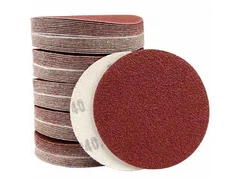
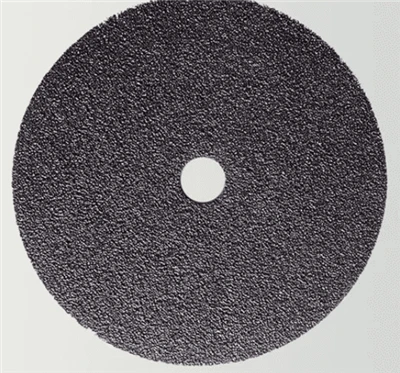
Also, the color of sandpaper is not randomly dyed. The colored sandpaper on the market is often just a brand identifier and has nothing to do with performance. However, some special sandpapers use color to distinguish their uses. For instance, black sandpaper is usually made of silicon carbide and is suitable for grinding non-ferrous metals; red sandpaper is made of ceramic abrasives and is suitable for grinding high-temperature alloys; blue sandpaper is made of diamond and is suitable for grinding super-hard materials.
The most amazing thing is that sandpaper can be used on the reverse side as well. Some sandpapers can be used on both sides for grinding. When the back side is used as the grinding surface, the resulting surface is actually smoother and the deformation of the workpiece is smaller. This technique is often employed in the polishing of optical lenses.
IV. How to Use Sandpaper in Professional Fields?
The application of sandpaper in professional fields is even more meticulous. For instance, in the aerospace industry, when grinding titanium alloy blades, a "gradient grit sandpaper" is used. This type of sandpaper integrates all grit sizes from coarse to fine on a single sheet, making it extremely convenient to use.
When manufacturing semiconductors, when grinding the back of the wafer, a type of "self-truing sandpaper" is used. This sandpaper constantly exposes new cutting edges during the grinding process, so its lifespan is particularly long.
When restoring cultural relics, when removing rust from bronze wares, a "pulsed grinding method" is often used. This involves using ultra-fine sandpaper in conjunction with a vibration table, grinding for a while and then pausing for a while. This way, it can remove the rust while preserving the original patina.

V. Have You Fallen into These Misconceptions?
Finally, let's clear up a few misconceptions about sandpaper. The first one is that "the more expensive the sandpaper, the better." In fact, the selection of sandpaper is more important than its price. For ordinary wood sanding, mid-range sandpaper is sufficient, and there's no need to buy high-end ones.
The second misconception is that "the grit size must be upgraded continuously." In fact, sometimes skipping a few grit sizes can actually result in a smoother finish. This is because the scratches left by the previous sandpaper can sometimes be naturally filled by the subsequent sandpaper.
The third misconception is that "sandpaper can be reused after being washed with water". In fact, although washing sandpaper with water is economical, its cutting force will be greatly reduced after a few uses. Moreover, water washing can easily cause metal ions to adhere to the sandpaper, thereby contaminating the workpiece. Therefore, in professional fields, sandpaper is generally not washed with water.
Send Inquiry