




Aluminum oxide sandpaper hook and loop sanding discs
May 09, 2025
Leave a message
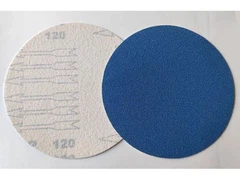
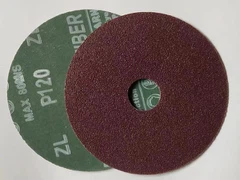
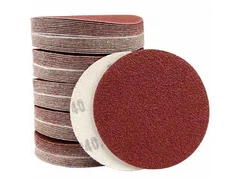
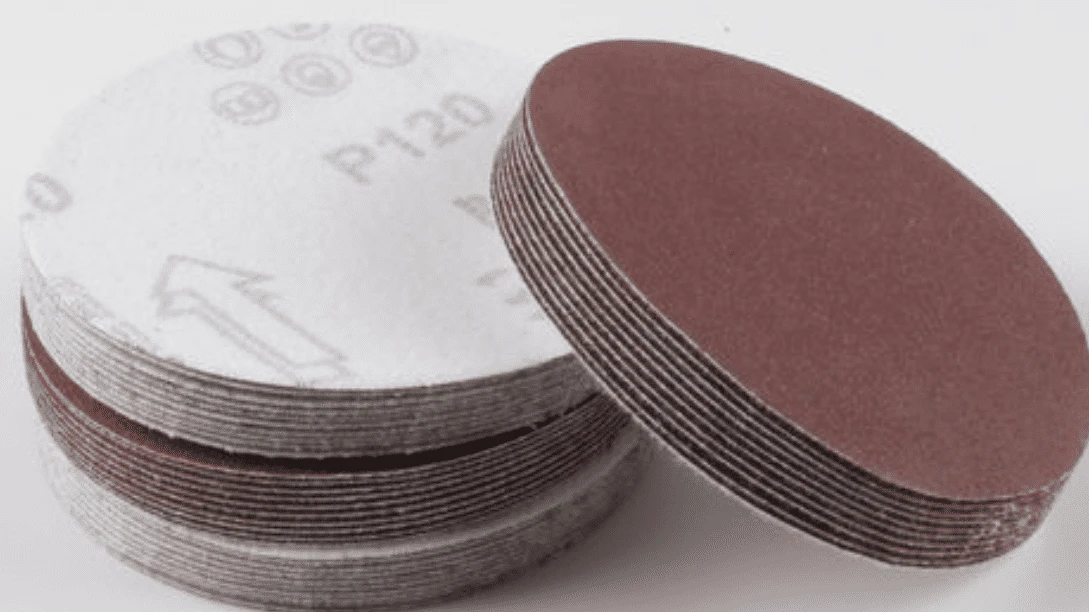
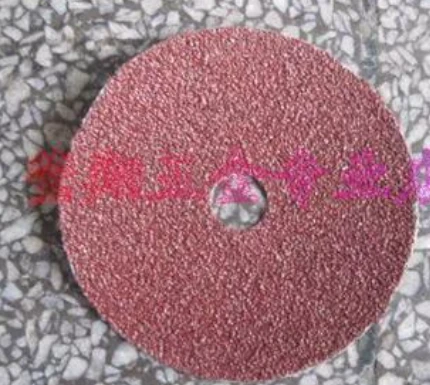
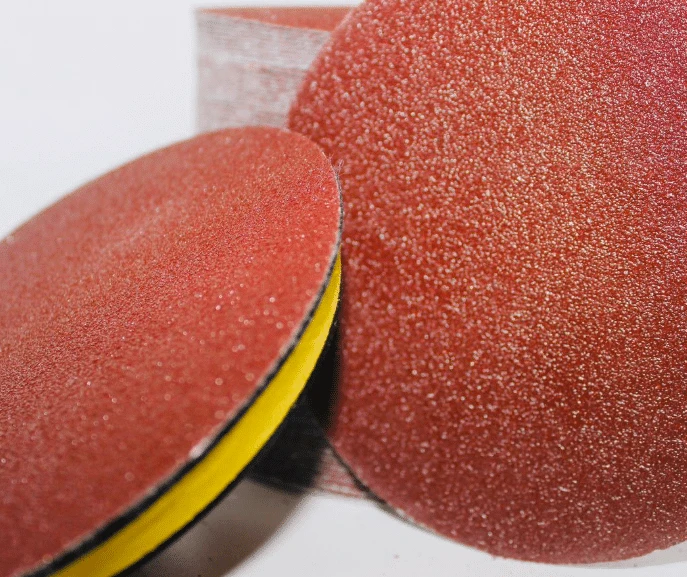
Aluminum oxide sandpaper hook and loop abrasive discs are made of high-quality aluminum oxide abrasive materials, featuring high hardness and strong wear resistance. They are suitable for fine grinding and polishing of various materials such as metals, woods, and coatings. The back of the discs is designed with hook and loop fasteners, allowing for quick sandpaper replacement, enhancing work efficiency and reducing usage costs. The product has uniform particle size, sharp and durable abrasive surface, effectively removing burrs, rust, and surface defects. It is widely used in mechanical processing, automotive repair, and DIY fields, being an efficient and convenient sanding tool.
I. Material System and Structural Characteristics
The technical foundation of aluminum oxide sandpaper hook and loop abrasive sheets is built on a multi-material composite system.
The base material layer is typically made of high-density kraft paper or polyester film composite materials. This choice is not arbitrary but is based on strict considerations of material performance. High-density kraft paper, with its excellent tensile strength (usually ≥ 150N/cm) and tear resistance (≥ 8N/mm), provides a solid foundation for the sandpaper. Polyester film composite materials, on the other hand, are used for their good dimensional stability and chemical resistance, suitable for specific working conditions. To further enhance the performance of the base material, some high-end products undergo special silanization treatment, controlling the surface tension of the base material between 32-38mN/m. This not only ensures the adhesion of the abrasive layer but also endows the product with excellent moisture resistance.
The abrasive layer, as the core functional layer of sandpaper, typically uses fused white alumina (WA) or brown alumina (A) as the main material. These alumina particles, after high-temperature sintering, form a polycrystalline structure, endowing the sandpaper with excellent hardness and wear resistance. XRD analysis shows that in high-quality sandpaper, the content of the α-Al₂O₃ phase in the abrasive layer can reach over 92%, with grain sizes concentrated in the 0.5-3 μm range. This microstructure ensures the cutting efficiency and surface finish of the sandpaper. The particle size distribution of the abrasive layer strictly adheres to the FEPA standard, ranging from P80 to P2000. For sandpapers of different grit sizes, the particle size concentration (D90/D10) is strictly controlled within 1.5, ensuring consistent and repeatable grinding marks.
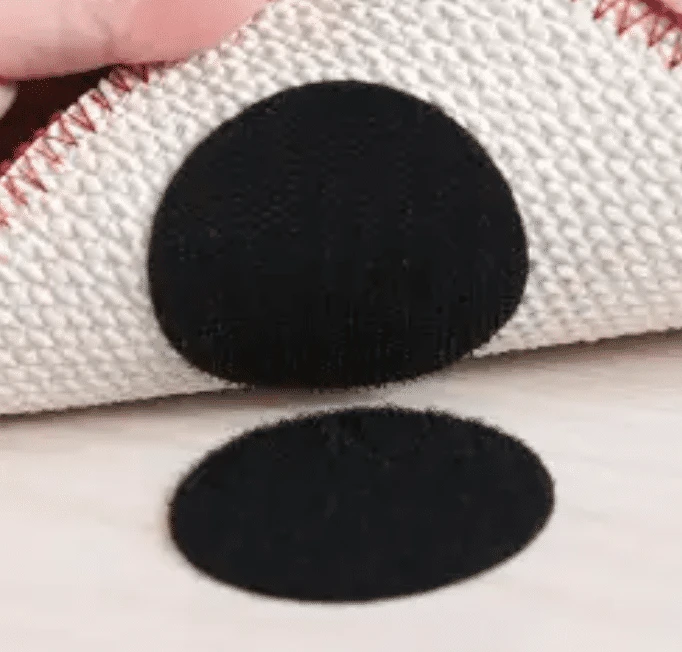
The hook-and-loop system, serving as a bridge connecting sandpaper to the grinding machine, is equally crucial in its design. Modern sandpaper commonly employs a two-component epoxy-polyurethane adhesive, which not only boasts an outstanding peel strength (up to 4.5N/cm), but also demonstrates excellent temperature resistance and chemical corrosion resistance. To further enhance the reliability of the hook-and-loop system, some products adopt a dovetail joint connection structure. Through the mating of male and female parts processed by CNC, the flatness at the sandpaper joint is controlled to be ≤0.05mm, effectively eliminating the traditional sandpaper joint trace defect and improving the grinding quality.
II. Precise Control of Manufacturing Process
The manufacturing process of aluminum oxide sandpaper hook and loop abrasive sheets is a highly precise procedure involving multiple critical steps. In the base material pretreatment stage, corona discharge technology is typically employed to increase the surface dyne value of the paper base to 42 mN/m, creating ideal conditions for the subsequent gluing process. Corona discharge treatment utilizes a high-voltage electric field to ionize the air and generate plasma, which activates the surface of the base material, thereby enhancing the adhesion of the adhesive layer.
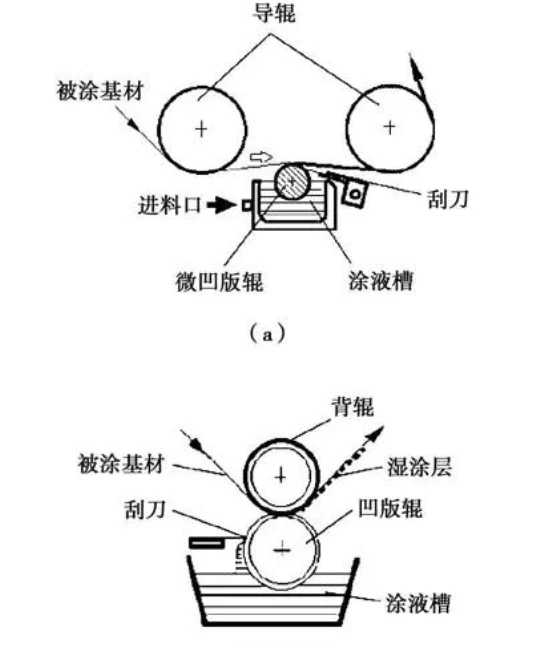
The application of the base glue is one of the key processes in the manufacturing of sandpaper. Modern production lines typically use micro-gravure printing technology, which evenly applies the base glue onto the substrate surface through a precisely machined gravure roller. The thickness of the glue layer is usually controlled between 8 and 12 μm. It is cured within 3 seconds by a near-infrared drying system (with a wavelength of 850 nm), ensuring that no thermal stress deformation occurs in the glue layer and maintaining the flatness of the substrate.
The electrostatic sanding process is the core technology in the manufacturing of sandpaper. In an electrostatic field with a voltage of 15-25kV and an electric field strength of 3.5kV/cm, alumina particles are ionized and charged. Under the force of the electric field, they are uniformly adsorbed onto the surface of the substrate with an opposite charge, forming a single layer of orderly arrangement. Particle size detection shows that the electrostatic sanding process can increase the abrasive coverage rate of P1000 sandpaper to 68±2%, a 23% improvement over the traditional gravity sanding process, significantly enhancing the cutting efficiency and lifespan of the sandpaper. Some high-end production lines are also equipped with dynamic compensation systems, which monitor the sanding current (0.5-2.0mA) in real time and automatically adjust the feeding speed to keep the particle size deviation within ±1μm, ensuring the stability of sandpaper quality.
The post-curing process is the final step in the manufacture of sandpaper and a crucial stage to ensure its performance. Modern production lines typically employ a three-stage hot air circulation system: a 60°C preheating section to make the adhesive layer flow and eliminate internal stress; a 120°C medium-temperature section to complete the initial curing and form an initial adhesive strength; and an 180°C high-temperature section to achieve full cross-linking and optimize the performance of the adhesive layer. DSC analysis indicates that the three-stage curing process can make the curing degree of epoxy resin reach over 95%, endowing the sandpaper with excellent water resistance (the peel strength retention rate is ≥ 85% after soaking in water at 23°C for 72 hours) and heat resistance.
III. Performance Characterization and Failure Mechanism
The performance of sanding discs directly affects the quality and efficiency of sanding. Therefore, conducting a comprehensive characterization of sandpaper performance and deeply analyzing its failure mechanism is of great significance for optimizing sandpaper design and enhancing its performance.
Cutting performance is the most core performance index of sandpaper. Usually, the TCM testing machine is used for quantitative evaluation. Under a 20N loading condition, high-quality P400 sandpaper can achieve a removal rate of 0.32g/min on ST12 steel plates while maintaining a surface roughness of Ra ≤ 0.8μm, demonstrating excellent cutting efficiency and surface finish. Wear tests show that the life curve of high-quality sandpaper typically presents three-stage characteristics: the initial running-in stage (0-500 revolutions), where the sandpaper and the workpiece surface adapt to each other and the cutting efficiency gradually increases; the stable wear stage (500-3000 revolutions), where the cutting efficiency of the sandpaper remains stable and the surface roughness remains consistent; and the rapid failure stage, where the cutting efficiency of the sandpaper drops sharply and the surface roughness deteriorates. The total effective life can reach over 4000 revolutions.
Failure mode analysis is an important means to enhance the performance of sandpaper. The analysis reveals that abrasive particle detachment is the main mechanism of sandpaper failure, accounting for 68% of failure cases. Through SEM observation of the failure surface, it can be seen that cohesive failure of the adhesive layer and abrasive particle fracture coexist, indicating that the toughness of the adhesive needs to be optimized and the bonding strength between the adhesive layer and the substrate, as well as between the adhesive layer and the abrasive particles, needs to be enhanced. Some studies have modified the adhesive layer by adding nano-SiO₂ (particle size 20nm), which increased the peel strength by 27% while maintaining flexibility (elongation at break ≥ 150%), effectively extending the service life and reliability of the sandpaper.
Clogging tendency is a key indicator that affects the user experience of sandpaper. Clogging refers to the phenomenon where grinding debris accumulates on the surface of the sandpaper, blocking the gaps between abrasive grains and reducing the cutting efficiency. According to the ASTM D3466 standard test, the sandpaper with a zinc stearate anti-clogging coating showed a 72% reduction in clogging compared to untreated samples during the grinding of white pine wood, significantly enhancing the service life and grinding efficiency of the sandpaper. Infrared spectroscopy analysis confirmed that the polytetrafluoroethylene micro-powder in the anti-clogging layer migrates to the surface under the effect of grinding heat, forming a self-lubricating film, effectively reducing the adhesion of grinding debris and lowering the clogging tendency.
IV. Optimization Directions for Application Processes
The application of aluminum oxide sandpaper hook-and-loop abrasive sheets covers multiple fields, and the requirements for the performance of the sandpaper vary in different fields. Therefore, optimizing the application processes for different application scenarios is of great significance for fully leveraging the performance of the sandpaper and improving the quality of grinding.
In the field of precision machining, the application of sanding discs must follow the principle of graded grinding. Graded grinding refers to the selection of sandpapers of different grits based on the surface roughness requirements of the workpiece, and the sequential execution of rough grinding, semi-precision grinding, precision grinding and polishing. Taking the polishing of aerospace aluminum alloy parts as an example, the typical process flow is: P80 → P120 → P180 → P240 → P320 → P400 → P600 → P800, with the feed rate decreasing by 30% at each stage, ultimately achieving a surface quality of Ra0.2μm. Some enterprises have also developed intelligent sanding systems, which use laser displacement sensors to monitor the surface roughness in real time and automatically switch the sandpaper grits, thereby increasing the processing efficiency by 40% while ensuring the consistency of surface quality.
Under special working conditions, the selection and optimization of sandpaper are particularly important. For instance, in automotive touch-up painting operations, water grinding is usually adopted to reduce dust pollution and improve the quality of the paint surface. The water grinding process places high demands on the water resistance of sandpaper. Therefore, water-resistant sandpaper (W series) should be chosen, with an absorption rate of no more than 5% and a water resistance of the adhesive layer (after soaking in 70℃ water for 168 hours, the peel strength retention rate is no less than 75%), to ensure that the sandpaper does not fall off or deform during water grinding and maintains stable cutting performance. For parts with a curvature radius R < 5mm, elastic back base sandpaper is recommended. Its bending fatigue resistance can reach over 100,000 times, allowing it to closely adhere to the irregular surface and achieve uniform grinding.
The maintenance and care of sandpaper also affect its service life and grinding quality. It is recommended to use the cross-grinding method, that is, to change the grinding direction regularly during the grinding process, which can increase the utilization rate of abrasive by 25% and extend the service life of the sandpaper. When cleaning, compressed air (0.6MPa) should be used to blow off the grinding debris and dust in the opposite direction. Organic solvents should not be used to avoid damaging the adhesive layer and base material. The storage environment should control the temperature and humidity (23±2℃/50±5%RH) to prevent the base material from absorbing moisture and deforming, which may affect the flatness of the sandpaper.
Send Inquiry