




Abrasives: Types and Classifications
Aug 30, 2024
Leave a message
Abrasive is a tool to give fine shape, polish, and design to every workpiece. The friction wears away a portion of the workpiece while doing this. The detailing of a workpiece, i.e., polishing, can also be done to get a silky, smooth, and polished surface.
In other words, An abrasive is a kind of ceramic that is used for cutting, grinding, and polishing. There are wide applications of abrasives in commercial and domestic needs. In addition to cutting and grinding, individuals can use these abrasives to buff, hone, drilling, sharpen, lapping, and sand.
Now, let's proceed toward the types of abrasives:
Types of Abrasives
Commonly abrasives are a hard material. It can be used to cut or wear away other materials. Mainly Small abrasive grains are used in grinding wheels. They are called abrasive grains.
The four types of abrasives include:
Natural Abrasives
Synthetic Abrasives
Bonded Abrasives
Coated Abrasives
Read More - Abrasives types
Classification of Abrasives

Abrasives are classified into broad categories. Below is a detailed structure for the classification of abrasives.
1. Cut-off Wheel Abrasive
The cut-off wheels are also recognized as self-sharpening abrasive. Cut-off wheels are mainly used for hard materials such as metal, stone, concrete, etc. It is known for its fast cutting tools and perfection and has a long life as well. These wheels are ideal for processing, servicing, repair, and general industrial applications of metals.
2. Mounted Point Abrasives
Mounted points abrasives are little grinding wheels that are bonded over a mandrel. It comes in various shapes and sizes, with abrasive grains, rubberized plastic, and felt.
In the manufacturing process, mounted point abrasive is used primarily for deburring applications. It is ideal for detailing and finishing, including in machine gears, in congested areas. A die grinder, straight shaft grinder, or hand-held rotary tools are paired with it.
3. Sanding Paper (SandPaper Sheets)
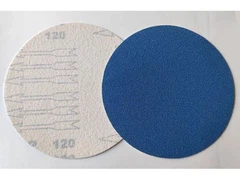
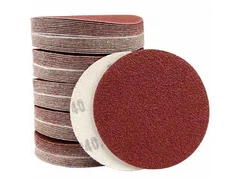
Sanding paper is also classified as glass paper. It removes stock from wood, metal, or any other surfaces and makes them smooth for coloring and polishing. Sandpapers are capable of removing old oil paint and glue. You may use the sandpaper sheets for both industrial purposes as well as DIY activities.
They are suitable for both hand sanding and power sanding too. The most common forms of sanding paper is Emery, Zirconium Alumina, Ceramic Alumina, Aluminum oxide, and garnet.
4. Grinding Wheel Abrasive
The Grinding Wheel is made up of an abrasive compound used for grinding processes, abrasive cutting, and abrasive machining. It is mainly designed for grinding machines. Grinding wheels are either made of aluminum or solid steel.
Straight wheels, cylinder rings, tapered types, dish cups, diamond-type, cut-off types, and type of saucers are common forms of grinding wheels. Using different bonding materials like resinoid, silicate, rubber, and metal, abrasive grains are held together in the machine.
5. Diamond Grinding Cup Wheels
Diamond grinding cup wheels are metal-bonded stone tools with a welded or cold-pressed diamond section on a wheel body. For grinding materials like concrete, granite, and marble, it is typically placed on concrete grinders. Often for quick material removal, it has double row segments. For both wet and dry concrete grinding, leveling, or concrete removal, cup wheels are necessary.
6. Sand & Fiber Discs
The sanding disc is a circular sand disc perfect for wood, metal, or plastic surfaces to remove material, light flaws, corrosion, paint, and rust. It has a coarse grain that helps extract metal welds, wood mill traces, and even the edges.
7. Fiber disc
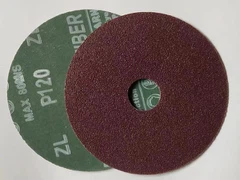
A fiber disc is a grinding wheel made of vulcanized fiber along with backing. It is covered with resin and abrasive grains on one side. It is fitted with a backing pad, and an angle grinder is attached. The fiber disc is widely used for machining metals.
8. Polishing Pads
Polishing pads are used to remove small car and truck scratches and dents. Usually, it is used to buff out the damage and add shine to the surface. They come in various finishes, forms, designs, and sizes. To get optimal outcomes, the pad should be used with the polishing compound.
9. Flap discs Abrasive
Flap disc is used explicitly for the finishing of metals, welding, machining, and industrial maintenance. It consists of numerous overlapping small pieces of flaps connected to a central hub.
The flaps are made of material from polyester or polycotton. Form, backing plate content, flap density, and flap grit size are the different parameters to consider when selecting the flap disc.
10. Cutting Blades and Discs
For the cutting process, cutting blades are widely used. Cutting blades are perfect for cutting different materials such as wood, metal, and stony minerals. Depending on the form of the edges, it can be defined.
11. Cutting Disc
A cutting disc is a flexible tool for cutting numerous materials using an angle grinder. It is about a small and flat disc that has as a binder a synthetic resin.
12. Abrasive Papers
Abrasive paper is glass paper to be used as an abrasive coating form consisting of a sheet of paper or fabric, fiber, film, or another abrasive material backing. The standard abrasive particles are aluminum oxide and silicon carbide. Such abrasive paper is used to deburr, polish, remove ink, remove rust, size, etc.
13. Cloth Rolls
Cloth rolls are perfect for flexible and quick cutting. It can be cut to the appropriate length in intricate areas for removal, blending, and finishing application and provides hand sanding ability. In the industrial sector (production) and craft market, fabric rolls have broad applications.
Cloth rolls give the workpiece a smooth and silky finish. It can support extreme use as well as durable. It has a synthetic bonding resin that boosts the life of the roll.
14. Buffing Wheels
Buffing wheels are also recognized as polishing wheels. It is used to finish several workpiece materials with scratches & dents. Perfect to use on flat surfaces as well as curved surfaces.
It provides a smooth and luminous texture. The wheel consists of different layers of soft materials such as cotton, flannel, etc. It has an internal mounting hole for the arbor or an incorporated shank.
15. PVA Sponges
PVA sponges are formed of synthetic material that prevents both mildew & mold. PVA sponge is ideal to use for absorption than a regular sponge or sheet. It has high absorption power and therefore provides a fast and efficient drying process. On all surfaces, it eliminates water spots. The PVA sponge expands during absorption and dry during compression.
Send Inquiry