


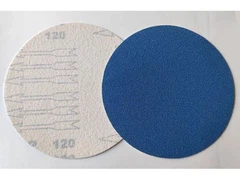
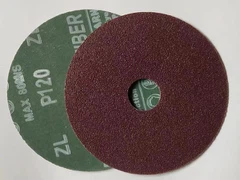
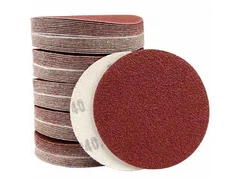


In the production process of sandpaper, how to control the uniformity of abrasive distribution to ensure the quality of grinding?
Feb 23, 2025
Leave a message
I. Abrasive Selection and Pretreatment
You need to pick abrasives that are right for specific uses. Common abrasives like silicon carbide and aluminium oxide have different hardness and wear resistance. They fit different grinding needs. After you choose the abrasives, you also need to do some pretreatment. This includes steps like cleaning, drying and screening to make sure the abrasives are pure and the particle size is the same.
II. Coating Process Control
Coating is an important step to spread the abrasives evenly on the base material (like paper or fabric). To control how evenly the abrasives are distributed, you need to take these steps:
1. Precise control of the coating amount: By changing the parameters of the coating equipment, like coating speed and pressure, you can control exactly how much abrasive is put on the base material. Too much abrasive will make the distribution uneven, and too little will affect the grinding efficiency.
2. Uniform coating technology: Using advanced coating technologies like knife coating and roller coating can make sure the abrasives are spread evenly on the base material. These technologies can make the coating even by precisely controlling the moving speed and pressure of the coating head, and the conveying speed of the base material.
3. Multiple coatings and curing: In some cases, you might need to do the coating several times to make sure the abrasives are distributed evenly. After each coating, you need to do the curing process to make the abrasives stick firmly to the base material. The curing temperature and time need to be changed based on the characteristics of the abrasives and the base material.
III. Quality Inspection and Control
When making sandpaper, you also need to do strict quality inspection and control to make sure the abrasives are distributed evenly.
1. Online monitoring: By installing online monitoring equipment, you can keep an eye on how the abrasives are distributed during the sandpaper production in real time. If you find anything strange, you can adjust it right away to avoid making bad products.
2. Sampling inspection: Regularly do sampling inspections of the made sandpaper. Use equipment like microscopes to see how the abrasives are distributed. If you find the abrasives are not distributed evenly or there are other quality problems, you need to find out the reason quickly and take corrective actions.
3. Finished product inspection: After the sandpaper is made, you still need to do the finished product inspection. This includes testing the particle size, hardness and wear resistance of the sandpaper to make sure it meets the quality standards and usage requirements.
IV. Other Influencing Factors and Countermeasures
1. Environmental factors: Things like the temperature and humidity in the production workshop can also affect how evenly the abrasives are distributed. So, you need to keep the environment in the workshop stable and avoid big changes in temperature and humidity.
2. Equipment maintenance: The condition of the production equipment like the coating equipment can also affect how evenly the abrasives are distributed. So, you need to do regular maintenance and servicing of the equipment to make sure it's in good shape.
3. Personnel training: The technical level and operating habits of the operators can also affect the quality of making the sandpaper. So, you need to train and assess the operators regularly to improve their operating skills and quality awareness.
Send Inquiry