


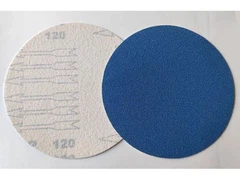
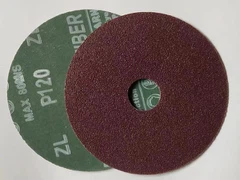
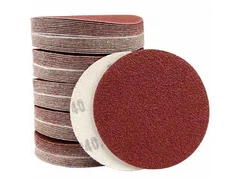


How much do you know about sandpaper?
Jul 01, 2024
Leave a message
Types of sandpaper
1. Dry sandpaper: also known as dry abrasive paper, it is based on synthetic resin as a binder, the silicon carbide particle abrasive paste on the latex paper, the gap between the sand particles is large, the ground debris will automatically fall off, not easy to produce blockage in the grinding process affect the grinding, suitable for grinding metal surface, wood surface, putty and coating. Dry sandpaper generally use special kraft paper or latex paper.
2. Waterproof sandpaper: Also known as waterproof abrasive paper, water resistant sandpaper, abrasive material is silicon carbide, paper base is generally kraft paper, the texture of water sandpaper is relatively fine, the gap between the sand particles is small, grinding out the debris particles are also small, and the use of water together with the debris will be washed out, so as not to affect the sharpness of the sand, water sandpaper is suitable for grinding the texture of more delicate things, and suitable for post-processing, Used in stone grinding, hardware processing, abrasive processing, automotive grinding and other industries.
3. Sponge sandpaper: also known as sponge sand block, it is a sponge as the matrix, implanting abrasive sand on the sponge, which is characterized by soft and elastic, strong water absorption, reusable, widely used in solid wood processing, metal stainless steel processing, mechanical manufacturing and other surface grinding and polishing.
Usage of sandpaper
1. Grinding and polishing: used to remove defects, rust, old paint on the surface of the object, so that the surface is smooth and flat.
2. Wood processing: Grinding the wood to make its surface smoother, or shaping a specific texture.
3. Metal processing: trim the metal surface, remove burrs, etc.
4. Car maintenance: polish the car paint and other parts.
5. Manual production: used for polishing and finishing in some manual activities.
Grit of sandpaper
The grit number of sandpaper refers to the number of sand grains on the surface of the sandpaper, usually expressed by the number of sand grains per square inch. The larger the grit number, the finer the sand, and the smoother the sanding effect of the sandpaper.
Sandpaper has a wide range of grit, and the common grit number is 80 , 120 , 180 , 240 , 320 , 400 , 600 , 800 , 1000 , 1200 , 1500 , 2000 . Different grit sizes of sandpaper are suitable for different grinding needs, such as:
*80-120 grit: For rough grinding to remove large blemishes, rust or old paint.
*180-240 grit: Used for medium grinding to further smooth the surface and remove fine defects.
*320-400 grit: Used for fine grinding to make the surface smoother and prepare for subsequent polishing.
*600 grit and above: for fine polishing to obtain a high gloss surface.
When choosing sandpaper, it is necessary to determine the appropriate grit number according to the object, requirements and tools used. In general, harder materials need to be initially polished with coarser sandpaper, and then gradually refined with fine sandpaper. In addition, lower grit sandpaper can be selected when using power tools, and higher grit sandpaper can be selected when sanding by hand.
It should be noted that the grit number of sandpaper is only a reference index, and the actual grinding effect will be affected by other factors, such as the quality of sandpaper, grinding pressure, grinding time, etc. In actual use, it can be tested and adjusted according to the specific situation to obtain the best grinding effect.
Send Inquiry