




How much do you know about abrasives?
Dec 20, 2024
Leave a message
1.Abrasives Overview

Abrasives are tools and materials used in the process of grinding, lapping and polishing. Abrasives are materials that play a cutting role in these processes, while abrasives are tools made by bonding abrasives and binders in a certain shape and size. Abrasives are widely used in machinery manufacturing, metal processing, food processing, papermaking industry, and non-metallic material processing fields such as ceramics, glass, stone, plastic, rubber, and wood.
2.Classification of abrasives
Abrasives are mainly divided into two categories: natural abrasives and artificial abrasives.
(1)Natural Abrasives
All materials in nature that can be used for grinding or polishing are collectively referred to as natural abrasives. Common natural abrasives include diamond and corundum. Among them, diamond, with its extremely high hardness and wear resistance, performs well in repairing grinding wheels and processing difficult-to-process materials (such as cemented carbide, gem glass, stone, etc.). Although sapphire and ruby in natural corundum are mainly used for jewelry, ordinary corundum can be used as an abrasive to make grinding wheels, oilstones, sandpaper, etc.
(2)Artificial Abrasives
Artificial abrasives are obtained through artificial synthesis and have a wider range of applications. The artificial abrasives of the corundum series include brown corundum, white corundum, zirconium corundum, single crystal corundum, etc. They each have their own characteristics. For example, brown corundum has medium hardness, good toughness, and low price, which is suitable for processing metals with high tensile strength; white corundum has a slightly higher hardness than brown corundum, good self-sharpening and strong grinding ability; single crystal corundum has higher hardness and toughness, but the production cost is higher. In addition, silicon carbide abrasives such as black silicon carbide and green silicon carbide are suitable for processing hard and brittle metals and non-metallic products due to their high hardness, high brittleness and strong wear resistance.
3.Classification of Abrasives
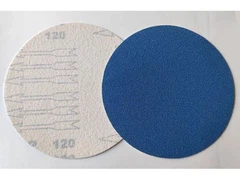
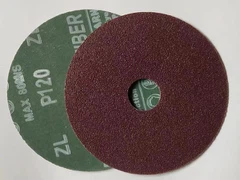
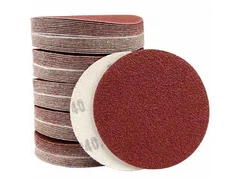
Abrasives can be divided into natural abrasives and artificial abrasives according to the source of raw materials. Natural abrasives mainly include oilstones, while artificial abrasives are divided into five categories according to their shape and structural characteristics: grinding wheels, grinding heads, oilstones, sand tiles (collectively known as bonded abrasives) and coated abrasives. In addition, abrasives are also considered a type of abrasives.
Bonded abrasives are composed of abrasives, binders and pores. The abrasives are used for cutting, the binders are used to bind the abrasives into a certain shape, and the pores are used to contain and remove chips. The binders are divided into inorganic binders (such as ceramics, magnesia, sodium silicate) and organic binders (such as resins, rubber, shellac), among which ceramics, resins and rubber binders are the most commonly used.

4.Selection principles of abrasive tools and abrasives
When selecting abrasive tools, it is necessary to determine the properties of the workpiece material, processing accuracy, surface roughness, grinding efficiency and other requirements. Specifically, the following principles should be followed:
Abrasive selection: When grinding workpiece materials with high hardness, abrasives with higher hardness should be selected; when grinding workpiece materials with high tensile strength, abrasives with high toughness should be selected; when grinding materials with low tensile strength, brittle or high-strength silicon carbide abrasives should be selected.
Particle size selection: When the roughness of the workpiece to be ground is required to be high, coarse particle size should be selected; when the surface roughness is required to be low, fine particle size should be selected. When the geometric accuracy of the workpiece is required to be high and the contact area is small, fine particle size should be selected; when the contact area is large, coarse particle size should be selected.
Hardness selection: When grinding hard materials, softer abrasives should be selected so that blunt abrasive particles can fall off in time; when grinding soft materials, harder abrasives should be selected to prevent unblunted particles from falling off prematurely. In addition, factors such as grinding wheel linear speed, workpiece rotation speed, and thermal conductivity will also affect the selection of abrasive hardness.

Grinding tools and abrasives are indispensable tools in industrial production, and their performance directly affects the processing quality and efficiency. Therefore, when selecting and using grinding tools and abrasives, it is necessary to fully understand their characteristics and application occasions and follow the selection principles to achieve the best processing effect. At the same time, with the continuous advancement of science and technology and the continuous innovation of technology, the types and performance of grinding tools and abrasives will continue to be enriched and improved, providing stronger support for industrial production.
Send Inquiry