




Can metallographic sandpaper and polishing cloth be used interchangeably?
Aug 11, 2025
Leave a message
1. There are differences in functionality.
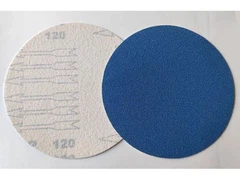
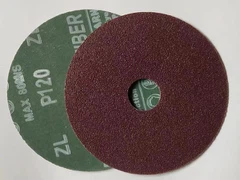
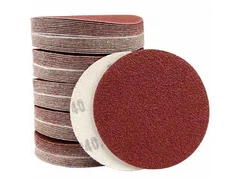
Metallographic sandpaper: It is mainly used in the rough grinding and fine grinding stages of metal sample preparation. Through the friction between the hard abrasive particles (such as silicon carbide, aluminum oxide) attached to its surface and the workpiece, it removes the surface oxide layer, processing marks, or deformation layer from the previous process. Its core objective is to rapidly and evenly reduce the surface roughness, providing a flat base for subsequent polishing.
Polishing cloth: It is a tool used in the final polishing stage, usually used in conjunction with polishing paste (containing micron-sized abrasives and lubricants). Its soft fabric structure can accommodate the fine abrasives in the polishing paste, eliminating the tiny scratches remaining from the fine grinding stage through a chemical-mechanical synergy, ultimately achieving a mirror-like surface.

2. Differences in structure and working principle
Sandpaper: Hard abrasive particles are fixed on a rigid substrate (such as paper or cloth), and material is removed through mechanical grinding. The abrasive particles directly contact the workpiece, which is highly efficient but prone to causing scratches.
Polishing cloth: A flexible fabric (such as flannel, nylon) accommodates the fine abrasives in the polishing paste through the elastic deformation of microprotrusions. Combined with the chemical action of the lubricant (such as oxidation, dissolution), it achieves low-damage surface modification.

3. Limitations of substitution
Substituting sandpaper for polishing cloth: In the rough grinding stage, if polishing cloth is used, due to the lack of hard abrasives, it cannot effectively remove materials. In the final polishing stage, if sandpaper is used, even with extremely fine grit (such as 2000#), its rigid structure will still cause surface scratches, failing to meet the mirror-like surface requirement.
Substituting polishing cloth for sandpaper: The flexible structure of the polishing cloth in the rough grinding stage is prone to deformation, unable to provide uniform grinding force, resulting in an uneven surface. Moreover, the chemical action of the polishing paste is extremely inefficient in the rough grinding stage, significantly prolonging the processing time.
4. Comparison in special scenarios
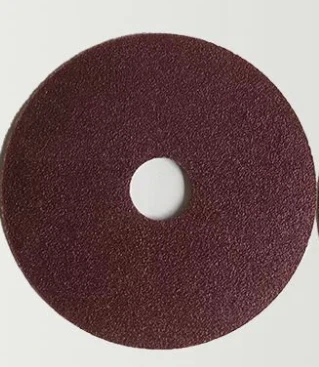
If the surface quality requirement is not high (such as only observing coarse grains), the process can be simplified: using fine sandpaper (such as 1200#) instead of final polishing, but the grinding time needs to be extended to reduce the depth of scratches. Conversely, if high-precision analysis is required (such as grain boundary corrosion, dislocation observation), the process of sandpaper → polishing cloth must be strictly followed; otherwise, it may lead to artifacts or data distortion.

Send Inquiry