


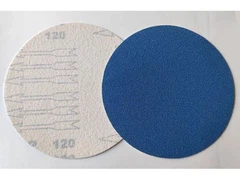
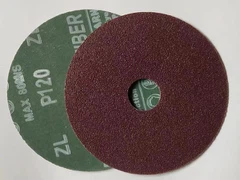
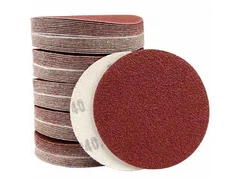


Coated Abrasives
SHAOXING SHANGYU COATED ABRASIVES CO..LTD is located inLianghuIndustrial Zone of Shangyu District, Shaoxing City,It's a specializedcoated abrasive industrial company that collects designing, developingproducing and selling into integration.
Company with"double horse" and"dark horse","shun source""flying wheel" and other brands as the center. The main production waterproolabrasive paper, silicon carbide sand paper, animal glue emery cloth, half resinemery cloth,resin over resin emerycloth, super coated sandpaper and abrasivecloth, metallographic sand paper and related coating with abrasive products.
Why Choose Us
Professional Team
Horizon decided to state,all take the customer as the center, tale the goocfaith as the basic,in order to prefect for the target.Customer satisfactioris our eternal criteria!
High Quality
The product is widely used in machinery, wood, plastics, electronics, instruments, automobiles, shipbuilding, glass and other fields, and is welcomed by customers at home and abroad.
Rich Experience
The main production waterproolabrasive paper, silicon carbide sand paper, animal glue emery cloth, half resinemery cloth,resin over resin emerycloth, super coated sandpaper and abrasivecloth, metallographic sand paper and related coating with abrasive products.
Factory
SHAOXING SHANGYU COATED ABRASIVES CO..LTD is located inLianghuIndustrial Zone of Shangyu District, Shaoxing City,It's a specializedcoated abrasive industrial company that collects designing, developingproducing and selling into integration.

Flying Wheel Abrasive Cloth In Tock
Abrasive sheets, or sandpaper, is a type of coated abrasive that consists of sheets of paper or cloth with an abrasive material glued to the face. Despite the name, sandpaper isn't manufactured anymore with sand or glass but with other types of abrasives.

It is widely used in grinding, polishing and finishing for the industries of metallurgy, machinery, automobile, ship building,aviation, light industry, timbering, furniture, building materials, tanning and textile, etc.

Resin Quality Abrasive Cloth Sheet
Semi-resin sanding cloth, as the name suggests, contains a lesser amount of resin bonding as compared to full resin sanding cloth. This type of sanding cloth is more flexible and can conform to irregular surfaces, making it an ideal choice for sanding curved or contoured surfaces.

Particularly suitable for carbon steel, high hardness alloy steel, forged steel and cast iron and other metal, stainless steel pipe of various caliber surfaces

Resin Over Resin Abrasive Cloth
Abrasive paper is supplied in roll form, offering a combination of a robust backing and abrasive grains that work in unison to provide superior grinding performance.

Animal Glue Abrasive Cloth Sheet
Our flywheel emery cloth is a high quality industrial grade product specially developed to meet all kinds of high precision grinding needs.

Dry Polishing Abrasiv Cloth Sheet
The flywheel emery cloth we offer is a top-tier, industrial-grade abrasive material that has been specifically engineered to cater to the diverse and exacting demands of high-precision grinding tasks.

Flying Wheel Abrasive Cloth Sheet
Flying wheel brown aluminium oxide cloth waterproof abrasive sandpaper is made with brown aluminium oxide grains, these waterproof 9×11 sheets are high quality kraft-backed/ latex-backed paper.

Flying Wheel Emery Cloth Sheet
Brown fused alumina cloth has many advantages and uses. This high-quality abrasive material is made of brown fused alumina, a type of fused mineral that is produced by smelting bauxite in a high-temperature furnace.
What Is Coated Abrasives?
The coated-abrasive name derives from one layer of abrasive grains being coated or deposited onto a versatile or semi rigid backing material using an adhesive, like resin bond the grains to the backing material. This text examines the coating process, various sorts of grains, man-made minerals, and backing materials for coated-abrasive products for several metalworking applications.
A coated abrasive may be a product that consists of a skinny layer of abrasive grain attached to a substrate like paper, cloth, etc. Coated abrasives are available through forms like Sheets, Discs, rolls, Specialties, or Belts.
Benefits of Coated Abrasives
Durability and Wear Resistance
The durability and wear resistance of an abrasive are critical factors that determine its lifespan and effectiveness in various applications. Bonded abrasives, due to their rigid structure, often exhibit high levels of durability, especially when used on hard materials. Coated abrasives, while flexible, can wear down more quickly but are easier to replace.
Cutting Efficiency and Finish Quality
The performance of abrasives is critically measured by their cutting efficiency and the quality of finish they produce. Bonded abrasives are known for their precision and ability to create a smooth surface on harder materials. Coated abrasives, on the other hand, offer flexibility and are better suited for contoured or irregular surfaces.
High precision, suitable for hard materials
Coated Abrasives: Greater flexibility, ideal for contoured surfaces
While bonded abrasives tend to last longer, coated abrasives may require more frequent replacement but can achieve a finer finish on certain materials. The decision should be based on the specific requirements of the project and the desired end result.
Comparing Lifespan and Maintenance Needs
When selecting an abrasive for a project, one of the critical factors to consider is the lifespan and maintenance needs of the product. Bonded abrasives, known for their rigidity, often have a longer lifespan when used for heavy-duty grinding and cutting tasks. In contrast, coated abrasives are more flexible and may require more frequent replacement, but they are easier to maintain and switch out due to their adhesive backing or hook-and-loop systems.
Types of Coated Abrasives
Sandpaper
Sandpaper is perhaps the most recognizable form of coated abrasives, consisting of abrasive grains adhered to a paper backing. It comes in various grit sizes, ranging from coarse to fine, catering to different surface finish requirements.
Belt
Coated abrasive belts feature abrasive grains bonded to a flexible backing material, typically cloth or polyester. They are commonly used in belt sanders and power sanding tools for rapid material removal and surface smoothing.
Rolls
Coated abrasive rolls offer versatility and cost-effectiveness, allowing users to cut custom-sized abrasive sheets tailored to their specific needs. They find applications in hand sanding, manual grinding, and portable sanding devices.
Discs
Coated abrasive discs are circular-shaped abrasives designed for use with rotary sanders and grinding machines. They are available in various diameters and attachment options, making them suitable for a wide range of surface preparation and finishing tasks.
Material of Coated Abrasives


Ceramic
A high performance, man-made abrasive material. Very uniform, high density grain structure is extremely durable and self sharpening for longer life and cooler cut. Excels on tough to grind materials.
Aluminum Oxide
A tough, blocky shaped, man-made grain used for high speed grinding and finishing of metals, wood, and other high tensile strength materials without excessive fracturing or shedding. Wherever the ability to resist fracturing is the main consideration, aluminum oxide will outperform all other coated abrasive grains.
Zirconium
A very fine, dense, man-made crystalline grain which can be used for aggressive stock removal. Zirconium is a very dense material with a unique self-sharpening characteristic which gives it long life on heavy stock removal operations.
Silicon Carbide
A very hard, very sharp, man-made abrasive suited for non-ferrous materials and non-metallic materials such as concrete, marble and glass. A very friable grain, silicon carbide cuts faster under light pressure than any other grain used in coated abrasives.
Garnet
Garnet is made of natural aluminum oxide which is a relatively sharp, but very weak bonding structure. Very inconsistent when compared to synthetics. It is used primarily in woodworking as garnet dulls too quickly to be used in metalworking.
Application of Coated Abrasives
Choosing the right cutting/grinding tool is largely driven by application-specific needs. There are various cost and supply parameters to consider, such as material availability and price in the wake of global economic disruption. Yet the need for an exceptional surface finish with accuracies approaching the sub-microscale regime has penetrated an ever-growing range of market segments. Consequently, the quality of grains for coated abrasives is not an area where manufacturers can afford to cut corners.
The quality of coated abrasives varies from basic commodity grains to precision engineered solutions. These differ from bonded abrasives in that they are deposited onto flexible backings rather than being embedded into a fixative binder. Grains for coated abrasive typically end up formatted as belts, flap wheels, jumbo rolls, or vulcanized fibre discs.
Fibre discs; flap discs; narrow and wide belts; and specialty coated abrasive shapes are all utilised in heavy duty grinding applications. Low-quality coated abrasives with a single layer of abrasive material fixed on a flexible backing cannot be used in heavy-duty industrial applications as they degrade extremely quickly. Grains dull and break away from the backing long before surfaces reach an optimal finish.
Specialty engineered grains for coated abrasives, comprising high-performance nano-structures that fracture minimally under stress, provide ground-breaking results in heavy duty grinding applications.
Heavy duty grinding typically relies on high-strength grains with low friability and exceptional thermodynamic stability to deal with the severe stress of high-throughput working of hard substrates. The demands of fine finishing grains are different, but no less stringent.
Fine finished coated abrasives are typically used for precision applications where topographical uniformity at the lowest possible scale is intrinsically critical. Applications such as the finishing of orthopaedic implants and electronic substrates for power generation are common.
How To Differentiate Open-Coat And Closed-Coat Abrasive Products?
Coated abrasives are generally manufactured in two levels of abrasive grain surface density. Closed-Coat The abrasive grains completely cover the coated surface of the sandpaper backing. The greater number of abrading points per square inch causes faster stock removal during use and produces a better finish than open-coat. Closed-coat is recommended where loading is not a significant problem. Open-Coat The abrasive grains cover approximately 50% to 70% of the coated surface of the backing. Open-coat abrasives are the best choice where clogging or filling of the abrasive surface would otherwise be a problem. They offer greater flexibility, but are harsher cutting and do not provide as good a finish as closed-coat.
Printing
Normally, the only time it is seen is when private labeling is being done in large quantities for someone. When the jumbos arrive, there is no way of knowing what different sizes of belts etc will be made out of that jumbo, so pre-printing a size is not possible. If attempted, after the belts are cut, the size would need to be printed on each individual item.
Maker Coat
The maker coat is the first layer of adhesive bonding in the maker process. The purpose of the maker coat is to provide a seat for the grain that will be applied in the electrostatic coating process. In other words, it is what adheres the grain to the backing.
Electrostatic Coating
Electrostatic coating is a process in which negatively and positively charged plates are placed above the backing (which has the maker coat applied) and below a loose grain conveyer (containing pre-graded for size grains). This results in a separate charge being created between the two plates that will pull loose grain up from the conveyor and onto the backing in such a way that the grain is consistently oriented on the backing with a broad base against the backing and a sharp end pointing out.
Curing
After the maker coat has been applied and the electro statically placed grain has been added, the material is run through curing ovens to ensure a good bond between the grain and the backing. You can have the best grains and backing in the world, but if they do not remain connected, the products will not be effective. Curing oven times and temperatures vary depending on the types and sizes of grain/grit used, the backing used and the type of bonding agents used. Once this initial curing is completed you are ready to add the second layer of adhesive bonding called the size coat.
Size Coat
The second layer of adhesive bonding, referred to as the size coat has two main purposes. The first is to tie the individual grains on the abrasive face together, so that they act as a unit instead of as individual grains. The other function of the size coat is to act as a heat shield for the grain. As previously discussed, most of the bonding agents in coated abrasives are phenolic resins, which after curing, are heat resistant.
Curing (Again)
After the size coat is applied another curing step needs to be implemented to ensure the bonding agents set up.
Jumbo
After the 2nd curing, the material is wound onto jumbo rolls. These rolls vary in width depending on the material backing and it's most common use, but may be as narrow as 37 inches or as wide as 65 inches with lengths ranging from 50M to 2000M.
Flexing
Flexing is a process by which a base cloth material, in our case either the J or X weight cottons, may be made more pliable.By cracking the bonding, you enhance a material's flexibility. However, by cracking the bonding you also provide a doorway for heat to get to the grain and for that reason, flexed products will exhibit lower life than non-flexed materials.
Storage
After all processes to the material are accomplished it is put into storage until required to fill orders.
Conversion
Conversion is the manufacturing of belts, sheets, discs, flapwheels etc. from jumbo roll material.
How Many Types Of Adhesives Are Used In Manufacturing Coated Abrasives?
Coated abrasives use one of two types of adhesives. One is based on animal glue and the other is based on synthetic, heat-hardenable resins. The adhesive is applied with a minimum of two bonding applications. The first or "maker" coat adheres the abrasive grain to the backing, ensuring proper anchoring and orientation. After drying or curing, the second or "sizer" coat is applied. The sizer adhesive unites with the maker bond to provide final grain anchoring and proper total-adhesive level for the finished product. Glue Bond Glue has a tendency to soften from the normal heat of grinding.
Glue bond products usually produce a more uniform, less harsh finish which, in the case of fine grits, can be easily buffed out. Resin Bond Resins offer greater heat resistance and are more durable in heavy stock removal operations. Resin bond products are the best all-around coated abrasives. However, they have a tendency to produce a harsher, more scratchy finish which, in the case of finer grits, is more difficult to buff out.
Our Factory
The product is widely used in machinery, wood, plastics, electronics, instruments, automobiles, shipbuilding, glass and other fields, and is welcomed by customers at home and abroad.


FAQ
Q: What is the difference between coated and bonded abrasives?
Q: Which of the following is a type of coated abrasive?
Q: What are coated abrasive sheets commonly referred to as?
Q: What are coated abrasives used for?
Q: What is the difference between open and closed coated abrasives?
Q: How is a coated abrasive made?
Q: What is the make coat in coated abrasives?
Q: What is open coat abrasive?
Q: What is the difference between bonded and coated abrasives?
Q: What are coated abrasives used for?
Q: Which of the following is a type of coated abrasive?
Q: What are coated abrasives made of?
Q: What is the difference between open and closed coated abrasives?
Q: What three basic parts make up a sheet of coated abrasive?
Q: Which of the following is a type of coated abrasive?
Q: What is the use of coated abrasive to smoothen rough surfaces called?
Hot Tags: coated abrasives, China coated abrasives manufacturers, suppliers, factory
You Might Also Like


Send Inquiry