


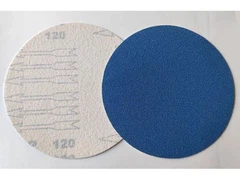
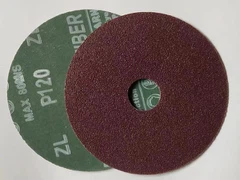
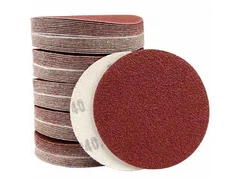


Silicon Carbide Abrasive Coth
SHAOXING SHANGYU COATED ABRASIVES CO..LTD is located inLianghuIndustrial Zone of Shangyu District, Shaoxing City,It's a specializedcoated abrasive industrial company that collects designing, developingproducing and selling into integration.
Company with"double horse" and"dark horse","shun source""flying wheel" and other brands as the center. The main production waterproolabrasive paper, silicon carbide sand paper, animal glue emery cloth, half resinemery cloth,resin over resin emerycloth, super coated sandpaper and abrasivecloth, metallographic sand paper and related coating with abrasive products.
Why Choose Us
Professional Team
Horizon decided to state,all take the customer as the center, tale the goocfaith as the basic,in order to prefect for the target.Customer satisfactioris our eternal criteria!
High Quality
The product is widely used in machinery, wood, plastics, electronics, instruments, automobiles, shipbuilding, glass and other fields, and is welcomed by customers at home and abroad.
Rich Experience
The main production waterproolabrasive paper, silicon carbide sand paper, animal glue emery cloth, half resinemery cloth,resin over resin emerycloth, super coated sandpaper and abrasivecloth, metallographic sand paper and related coating with abrasive products.
Factory
SHAOXING SHANGYU COATED ABRASIVES CO..LTD is located inLianghuIndustrial Zone of Shangyu District, Shaoxing City,It's a specializedcoated abrasive industrial company that collects designing, developingproducing and selling into integration.

Flying Wheel Abrasive Cloth In Tock
Abrasive sheets, or sandpaper, is a type of coated abrasive that consists of sheets of paper or cloth with an abrasive material glued to the face. Despite the name, sandpaper isn't manufactured anymore with sand or glass but with other types of abrasives.

It is widely used in grinding, polishing and finishing for the industries of metallurgy, machinery, automobile, ship building,aviation, light industry, timbering, furniture, building materials, tanning and textile, etc.

Resin Quality Abrasive Cloth Sheet
Semi-resin sanding cloth, as the name suggests, contains a lesser amount of resin bonding as compared to full resin sanding cloth. This type of sanding cloth is more flexible and can conform to irregular surfaces, making it an ideal choice for sanding curved or contoured surfaces.

Particularly suitable for carbon steel, high hardness alloy steel, forged steel and cast iron and other metal, stainless steel pipe of various caliber surfaces

Resin Over Resin Abrasive Cloth
Abrasive paper is supplied in roll form, offering a combination of a robust backing and abrasive grains that work in unison to provide superior grinding performance.

Animal Glue Abrasive Cloth Sheet
Our flywheel emery cloth is a high quality industrial grade product specially developed to meet all kinds of high precision grinding needs.

Dry Polishing Abrasiv Cloth Sheet
The flywheel emery cloth we offer is a top-tier, industrial-grade abrasive material that has been specifically engineered to cater to the diverse and exacting demands of high-precision grinding tasks.

Flying Wheel Abrasive Cloth Sheet
Flying wheel brown aluminium oxide cloth waterproof abrasive sandpaper is made with brown aluminium oxide grains, these waterproof 9×11 sheets are high quality kraft-backed/ latex-backed paper.

Flying Wheel Emery Cloth Sheet
Brown fused alumina cloth has many advantages and uses. This high-quality abrasive material is made of brown fused alumina, a type of fused mineral that is produced by smelting bauxite in a high-temperature furnace.
What Is Silicon Carbide Abrasive Coth?
Silicon carbide is an important ceramic material known for its excellent hardness. Its hardness is only surpassed by diamond, cubic boron nitride, and boron carbide. This compound is composed of silicon and carbon. It has very high abrasion resistance and is relatively cheaper when we talk about production. The material is lightweight, has excellent thermal conductivity, and has low thermal expansion. For these reasons, silicon carbide material is often applied as a loose or solid abrasive material in several applications. Silicon carbide ceramics maintain a high mechanical strength in temperatures as high as 2,550° F.
It is capable of withstanding corrosion by chemicals much better than many other ceramic materials. Silicon carbide crude is produced by mixing and heating silica (SiO2) with carbon (C) in an adhesion graphite resistance furnace at very high temperatures. Silicon carbide abrasives are available in several forms, depending on the applications they're meant for. Before we look at these, let's quickly consider the different types of silicon carbide products.
Benefits of Silicon Carbide Abrasive Coth
Unleashing the Power of Silicon Carbide Abrasive Paper
Silicon carbide abrasive paper is one type of abrasives products specially designed to deliver outstanding results in finishing tasks. Its unique composition of silicon carbide grains embedded in a strong paper backing makes it an ideal choice for various applications. Unlike conventional sandpaper, silicon carbide abrasive paper offers exceptional durability and dimensional stability, ensuring a consistent finish throughout the entire project.
Superior Finishing Performance
When it comes to achieving a smooth surface with impeccable precision, silicon carbide abrasive paper is a go-to tool. Its ability to provide consistent grit-to-grit performance enables craftsmen to tackle a wide range of materials, including wood,
metal, plastic, and composites. From sanding rough surfaces to leveling imperfections, this abrasive paper delivers optimal results throughout the finishing process.
Unmatched Versatility for Crafting Excellence
Craftsmanship requires adaptability, and silicon carbide abrasive paper offers just that. With varying grit sizes available, it can cater to diverse finishing needs. Lower grit papers effectively remove rough or uneven surfaces, while higher grit
papers provide the final touch of smoothness. Additionally, silicon carbide abrasive paper is compatible with hand sanding or can be used with power tools, further enhancing its versatility.
In the world of craftsmanship, excellence lies in the details. Silicon carbide abrasive paper is a vital tool that ensures the flawless execution of finishing tasks.
Silicon Carbide Powder
Silicon carbide powders are particularly used as abrasive materials for abrasive machining processes such as grinding, water-jet cutting, and sandblasting. Silicon carbide powders serve as grinding powders for fine grinding or rough polishing semiconductors, ceramics, and ferrous materials. It can also be used for shaping, honing, and polishing other materials.
Silicon Carbide Sandpaper Sheet
Silicon carbide sandpaper is actually the hardest and sharpest abrasive commonly used in many applications. However, it lacks durability due to its brittleness, and its narrow particle size wears down faster. The grains are razor-sharp, making them ideal for sanding metal, marble, glass, stone, cork, medium-density fiberboard, and plastic using minimal pressure application.
Silicon Carbide Grinding Wheel
Grinding wheels consist of abrasive compounds, which are used for various grinding and abrasive machining operations in grinding machines. Most grinding wheels are made with composite materials. Silicon carbide grinding wheel is another common application of the fast-cutting silicon carbide material. It is used for non-ferrous metals. It has very sharp abrasive grains and is typically recommended for grinding relatively soft metals like aluminum or cast iron. It can also be utilized for grinding extremely hard materials like cemented carbide. For instance, a green silicon carbide grinding wheel is a type of bonded abrasive that uses green silicon carbide grain materials and vitrified or resinoid bonds to form certain shapes. Green silicon carbide grinding wheels are mostly used on carbides. Black silicon carbide, on the other hand, is used for machining materials like stone, plastics, etc. These wheels can be run with or without coolant.
Silicon Carbide Sharpening Stone
A common application of silicon carbide sharpening stone is for the sharpening of knives made from hard stainless steel. Silicon carbide sharpening stone cuts aggressively. Usually, silicon carbide stones do come in a coarser grit and are suitable for the initial coarse sharpening. Silicon carbide stones have been shown to have a Mohs Hardness of 9-10. Silicon carbide sharpening stones can be used with either water or oil. Oil stones, for instance, can be made from different types of materials, which are novaculite, aluminum oxide, and silicon carbide, but the fastest cutting oil stones are silicon carbide stones. When using water with the stones, it helps to have some dish soap mixed with it, so it doesn't just soak into the pores immediately.
Application of Silicon Carbide Abrasive Coth


The main application areas of silicon carbide abrasives
Namely: Functional ceramics, advanced refractories, abrasives and metallurgical raw materials. Silicon carbide abrasives can already be supplied in large quantities and cannot be regarded as a high-tech product, and the application of nano- Scale silicon carbide powder with extremely high technical content is unlikely to form economies of scale in a short time.
1. As an abrasive, it can be used to make abrasive tools, such as abrasive grinding wheels, oilstones, grinding heads and sand tiles.
2. As a metallurgical deoxidizer and high temperature resistant material.
3. High-purity single crystals can be used to manufacture semiconductors and silicon carbide fibers.
The main use of silicon carbide abrasives
1. Silicon carbide abrasive is used for wire cutting of 3-12 inch monocrystalline silicon, polycrystalline silicon, potassium arsenide, quartz crystal, etc. Engineering processing materials for the solar photovoltaic industry, semiconductor industry, and piezoelectric crystal industry.
2. Silicon carbide abrasives are used in semiconductors, lightning rods,circuit components, high temperature applications,ultraviolet light detectors, structural materials, astronomy, disc brakes, clutches, diesel particulate filters, filament pyrometers, ceramic films, cutting tools, heating elements, nuclear fuel, jewelry, steel, protective gear, catalyst support and other fields.
Properties of Silicon Carbide Abrasive Coth
Oxidation resistance
When the silicon carbide material is heated to 1300 degrees in the air, a silicon dioxide protective layer begins to form on the surface of the silicon carbide crystal. When the temperature reaches above 1627 degrees, the silicon dioxide protective film begins to be destroyed, and the oxidation of silicon carbide intensifies, so 1627 degrees is the high temperature of silicon carbide in an atmosphere containing an oxidant.
Electrical properties
Industrial silicon carbide is a semiconductor at room temperature and has impurity conductivity. The resistivity of high-purity Silicon Carbide Abrasive Coth decreases as the temperature increases, and impurity-containing silicon carbide has different conductive properties depending on its impurities. Another electrical property of silicon carbide is electroluminescence, and practical devices have been developed.
Physical and mechanical properties
The particle density of various silicon carbide crystal forms is very close. It is generally considered to be 3.20 g/mm3. The natural packing density of Silicon Carbide Abrasive Coth is between 1.2-1.6 g/mm3. Its level depends on the particle size number and particle size. Composition and particle shape.
Thermal conductivity
Silicon carbide products have high thermal conductivity, small thermal expansion coefficient, and high thermal shock resistance. They are good refractory materials.
Process of Silicon Carbide Abrasive Coth
Manufacturing Process of Silicon Carbide Abrasive Coth
The manufacturing process of silicon carbide abrasive Ccoth is intricate and requires precise control to ensure quality and consistency.
The primary raw materials for producing silicon carbide abrasive Ccoth are high-purity sand and carbon materials, like petroleum coke. These materials are chosen for their abundance and affordability, making SiC a cost-effective material for a wide range of applications.
Mixing and Heating: The first step involves mixing silica sand and petroleum coke at a predefined ratio. This mixture is then heated to extremely high temperatures in an electric resistance furnace. The heating process typically occurs at temperatures above 2,200°C, which facilitates the reaction between silicon and carbon to form SiC.
Cooling and Crushing: Once the reaction is complete, the furnace is cooled. The resultant SiC is in a solid, crystalline form. This material is then crushed into finer particles, which can be further processed depending on the intended application.
Purification and Grading: The crushed SiC undergoes a purification process to remove impurities. This step is crucial as it determines the purity and quality of the final product. After purification, the SiC is graded based on particle size and shape, tailored to specific industrial requirements.
Our Factory
The product is widely used in machinery, wood, plastics, electronics, instruments, automobiles, shipbuilding, glass and other fields, and is welcomed by customers at home and abroad.


FAQ
Q: What is silicon carbide abrasive used for?
Q: What is silicon carbide used for?
Q: What is silicon carbide sandpaper used for?
Q: Why is silicon carbide so expensive?
Q: What are the two types of silicon carbide abrasive?
Q: Is silicon carbide a metal or ceramic?
Q: What is the difference between aluminum oxide and silicon carbide sandpaper?
Q: What is the difference between green and black silicon carbide?
Q: How do you get silicon carbide?
Q: Does silicon carbide melt?
Q: Does silicon carbide react with water?
Q: What is the Mohs hardness of silicon carbide?
Q: What can silicon carbide be used for?
Q: Which is stronger aluminum oxide or silicon carbide?
Q: Types of silicon carbide abrasive
Q: Is silicon carbide stronger than steel?
Q: How do you get silicon carbide?
Q: Is silicon carbide hard or soft?
Q: Why use silicon carbide?
Q: Is it safe to touch silicon carbide?
Repeated high exposure to Silicon Carbide may result in Pneumoconiosis (chronic disease of the lungs) with chest x-ray changes, and a decrease in lung function with shortness of breath, wheezing and cough.
Hot Tags: silicon carbide abrasive coth, China silicon carbide abrasive coth manufacturers, suppliers, factory
You Might Also Like


Send Inquiry