




Abrasives Automotive
SHAOXING SHANGYU COATED ABRASIVES CO..LTD is located inLianghuIndustrial Zone of Shangyu District, Shaoxing City,It's a specializedcoated abrasive industrial company that collects designing, developingproducing and selling into integration.
Company with"double horse" and"dark horse","shun source""flying wheel" and other brands as the center. The main production waterproolabrasive paper, silicon carbide sand paper, animal glue emery cloth, half resinemery cloth,resin over resin emerycloth, super coated sandpaper and abrasivecloth, metallographic sand paper and related coating with abrasive products.
Why Choose Us
Professional Team
Horizon decided to state,all take the customer as the center, tale the goocfaith as the basic,in order to prefect for the target.Customer satisfactioris our eternal criteria!
High Quality
The product is widely used in machinery, wood, plastics, electronics, instruments, automobiles, shipbuilding, glass and other fields, and is welcomed by customers at home and abroad.
Rich Experience
The main production waterproolabrasive paper, silicon carbide sand paper, animal glue emery cloth, half resinemery cloth,resin over resin emerycloth, super coated sandpaper and abrasivecloth, metallographic sand paper and related coating with abrasive products.
Factory
SHAOXING SHANGYU COATED ABRASIVES CO..LTD is located inLianghuIndustrial Zone of Shangyu District, Shaoxing City,It's a specializedcoated abrasive industrial company that collects designing, developingproducing and selling into integration.

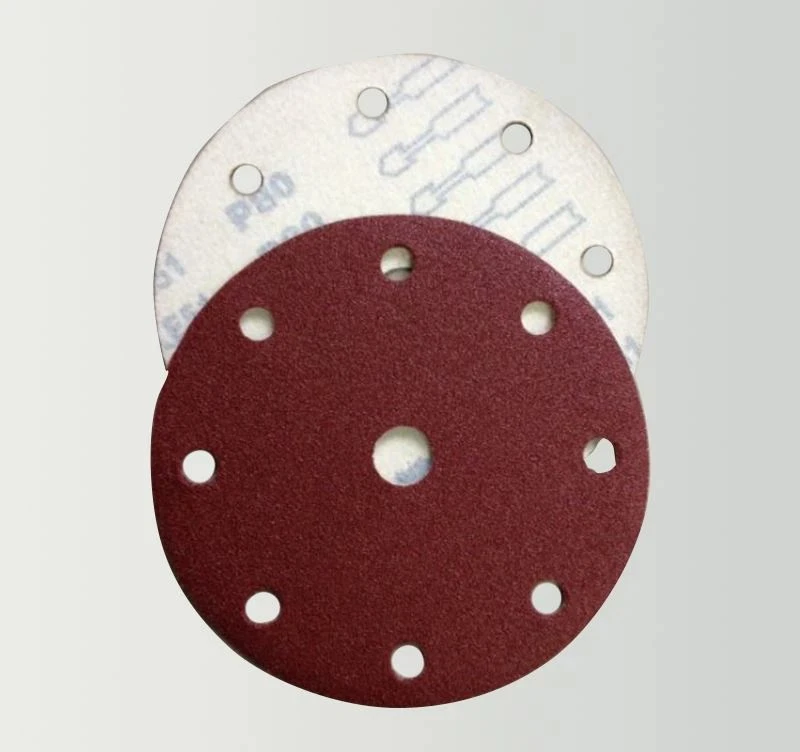
Have you ever wondered why some sanding discs have small holes around the center? Well, those holes serve an important purpose. They help to prevent dust and debris from building up on the sandpaper's surface while sanding.

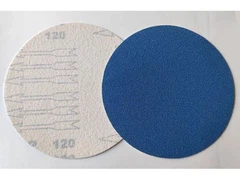
This Sandpaper is made of aluminum oxide for a good sanding effect and long service life; it will not fall apart, tear or crumble off during use; resin bonded sandpaper ensures paper backing is flexible, which makes a good fit to your hand or machine.

GOOD POLISHING EFFECT:Open-coat produces an even and consistent scratch pattern,special stearate coating is used to maximize resistance to clogging and pilling,offering better surface finishes,and perfect cleaning and polishing effect.

Products Description Shaoxing Shangyu coated abrasives Co,.Ltd is located in Zhejiang province, China.

Made with Super Coated Aluminum OxideCorundum for a sharp cut and uniformfinish to the surfaces.

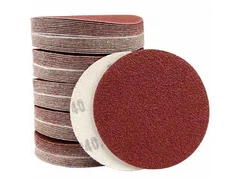
Used on orbital or rotary sanders. Velcro disc is easy to replace when worn. The everlasting grains and paper backing significantly extend the using life.

Hook and Loop Sandpaper is made of aluminum oxide for good sanding effect and long service life; It is electro coated so that it will not fall apart, tear or crumble off during use; resin bonded sandpaper ensures paper backing flexible, which makes a good fit to your hand or machine.

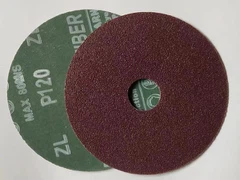
Made from alumina oxide abrasive, durable, anti-static, and anti-clogging, apply to metal and non-metal, wood, rubber, leather, plastic, stone and other materials grinding, and polishing.

Features
1, Premium aluminum oxide abrasive
2, Closed coating
3, Semi-open or open coating
4, Size: 4'', 4.5'', 5'',6'',7'',9''
What Is Abrasives Automotive?
Abrasives are widely used in the automotive industry as they help in achieving the desired surface finishes on various parts. The use of abrasives can range from pre–treatment to polishing and finishing, and we provide products for various applications and automotive needs. This includes common processes such as pre–treatment, grinding and cutting, and machining. Before any coating or painting can be applied to a car's surface, it needs to be free of rust, dirt, and other contaminants. Abrasive blasting or sanding is often used to remove any unwanted materials and prepare the surface for further treatment. This helps the coating adhere better to the surface and improves the overall quality and durability of the finish.
Benefits of Abrasives Automotive
Improved Fuel Efficiency
The more fuel-efficient that you can make a vehicle, the better. That's because no one wants to spend more money on fuel when some abrasive flow machining can lead to better fuel efficiency. By improving combustion in the engine, abrasive flow machining for automotives can ensure more fuel is used by the engine and less is wasted.
Improved Performance
With abrasive flow machining, you can achieve better performance. With abrasive flow machining, you can improve airflow and fuel flow. This means better combustion in the engine and higher volumetric efficiency. The benefits with the more free-flowing exhaust are that the cylinder can be evacuated more quickly, making room for more fuel and air at the next ignition. With abrasive flow machining for your automotive components, you can increase horsepower, thrust, and torque.
Cleaner Exhaust Emissions
Reducing emissions is key, especially in today's climate. When it comes to reducing emissions from combustion engines, abrasive flow machining can help. Abrasive flow machining improves combustion and fuel efficiency, which naturally reduces emissions.
Type of Abrasives Automotive
Sandpaper
Sandpaper is one of the most commonly used abrasives in the auto industry. It is made by gluing abrasive particles onto a paper backing. Car sandpaper comes in different grit sizes ranging from coarse to fine. The coarse grits are for heavy-duty sanding and removal of paint or rust, while the finer grits work best for finishing and smoothing out surfaces. When sanding, we recommend starting with a coarse grit and working to a fine grit for a smooth finish.
Grinding Wheels
These work well for heavy-duty tasks like shaping metal or removing large amounts of material. Grinding wheels have different variations, including diamond, ceramic, and aluminum oxide. Diamond wheels are the most expensive for cutting hard materials like ceramics, carbide, or hardened steel. Ceramic and aluminum oxide wheels are less expensive and are for grinding softer materials like iron and steel.
Polishing Compound
A polishing compound can give surfaces a glossy and shiny appearance. Polishing compound comes in different forms, including liquids, gels, and pastes. It is applied to the surface using a buffing pad or cloth. You should base the compound on the type of material you are polishing and the desired finish.
Wire Wheels
These work well for removing rust, paint, and other coatings from metal surfaces. Wire wheels come in different types, including twisted, knotted, and crimped. Twisted and crimped wire wheels are softer for lighter-duty tasks like removing surface rust. Knotted wire wheels are more aggressive for heavy-duty tasks like wire brushing a weld joint.
Sanding Discs
These discs work well for sanding and grinding small areas or hard-to-reach places. Sanding discs come in different sizes and grits, but the most common sizes are 5-inch and 6-inch discs. They are attached to a backing pad and used with a rotary tool like a drill or angle grinder.
Material of Abrasives Automotive


Abrasives automotive can be natural or artificial. Its hardness level serves as the primary defining characteristic. Legend says two materials can abrade one another when in contact. Special scales measure hardness (Knopp, Mohs, etc).
Diamond is the toughest abrasive substance known in nature. Some materials, like silicon carbide, corundum, and zirconium, can be naturally occurring or man-made. They are quite near diamond hardness but do not match it.
Abrasive creation requires adhesive support. The most common supports are canvas or paper. The Abrasives Automotive are then fixed using resin or adhesive. This is how abrasive tools are created. Examples include abrasive paper strips, paper sheets, and more. A few more complex processes require industrial machinery to make complex instruments like discs and flap wheels.
Drivetrain components, such as engine blocks, cylinder heads, valves, crankshafts, camshafts, bearings, and gears, etc., require highly precise, smooth, and polished surfaces to reduce friction and wear, ensure proper sealing or achieve smoothness, Low noise effect.
Our hard cloth, soft cloth, pyramid soft cloth, and hard cloth custom sanding belts can be used in grinding parts burr gloss polishing, and precision automotive sanding discs.
Welded and brazed body parts require a sanding operation to remove sharp edges and obtain a smooth and polished surface suitable for high gloss paint. Various automotive abrasives grinding uses of abrasives may require different types of coated abrasive products in different configurations.
RMC flap disc, flap wheel with shaft, zirconium sand cloth belt, pyramid cloth belt can be used in grinding welding point burr, etc.)
Our RMC sandpaper, film velcro disc, sponge abrasives, and pyramid daisy disc can be used in sanding and polishing electrophoretic paint surface, paint surface, putty, glossy paint surface defects, etc.
Cars and passenger cars can use our non-woven abrasives, super flexible film FV, soft sand cloth in polishing the surface of the paint surface of automobile panels and after spraying or polishing.
Large-scale machinery and equipment for construction vehicles, buses can use our stearated dry sandpaper,waterproof sandpaper, super flexible film sponge in large-area automotive sanding discs or repairing before spraying, polishing putty, old paint layer, primer, etc.
In the automotive abrasives industry, the key considerations in selecting the appropriate abrasive for grinding operations include the type, design, and configuration of the part to be ground, the material to be ground(including the type of heat treatment, hardness, or abrasive), polishing requirements (rough straightness,straightness, or dimensional tolerances), the machining or grinding cycle time allowed for the operation, and the grinding equipment available (e.g., hand-held, manual, or robotic). When choosing abrasive disc manufacturers, these factors will help define several important aspects of the abrasives, such as size, type of the coated abrasives (wheel, disc or cylinder), and the type and hardness of the abrasive (traditional versus super abrasives). Polishing the paint surface mainly considers scratches and whether it meets the next process, and makes the surface perfect.
How And For What Purposes Are Abrasives Automotive Used?
Abrasives Automotive are used in industrial processing. They are crucial in the automotive and metallurgical industries. Abrasives Automotive allow the production of many everyday items. Consider the car's bodywork if you can. The metal connecting area develops burrs due to the welding process used to assemble a car. Removal of welding burrs involves abrasive compounds.
As a result, both amateurs and experts utilize bonded and coated Abrasives Automotive to perform specific tasks. Carpenters and finishers use Abrasives Automotive to sand and polish parquet surfaces. Also, artisans often employ Abrasives Automotive to produce furniture or works of art. Abrasives Automotive help artists cut and shape stainless steel. You can produce incredible works of art with the right tools. Abrasives Automotive are the most effective tool for polishing these pieces. The Abrasives Automotive make it easy to give final products a flawless polish and create a glossy or matte surface, depending on your preferences.
The Difference Between Wet Grinding and Dry Grinding
Both dry and wet sanding contribute to smoothing an object's surface, although in different ways. While not always necessary, mixing wet and dry sand is necessary for various activities. Even though they are frequently paired together, the two have some variances.
The evident difference is that the sandpaper is entirely dry when dry sanding is used. The sandpaper will be lubricated with water or another liquid, typically a detergent when using the wet method.
Dry will be harsher, especially when using sandpaper with a lower grain. This allows you to shape your workpiece or drastically smooth out uneven areas. In a later step of the procedure, wet sandpaper is used to enhance the object's shine or to prepare for buffing and polishing.
In contrast to dry sandpaper, wet sandpaper prevents loading, which occurs when the paper becomes gummed up with the surface material being removed. As a result of the liquid lubrication and the unique construction of the wet paper's abrasive side, the debris is pushed away rather than adhering to the abrasives.
Wet and dry sanding accomplish the same goal of removing material to produce a smoother surface. However, wet sanding takes a lot longer and produces a surface even smoother than the one achieved by dry sanding.
There are further variations. Water is used in wet sanding but not in dry sanding. Sanding, while wet, is less messy. Power tools are widely used for dry sanding. However, the main distinction-and the reason you'd pick one method over the other is the degree of smoothness of the outcome.
Our Factory
The product is widely used in machinery, wood, plastics, electronics, instruments, automobiles, shipbuilding, glass and other fields, and is welcomed by customers at home and abroad.


FAQ
Q: What is the purpose of abrasives in automotive repair?
Q: Can you describe the most common types of abrasives used in automotive work?
Q: How do I choose the right grit size for sanding?
Q: Are there any special considerations when sanding fiberglass panels?
Q: What's the best way to remove rust from metal surfaces?
Q: How do I safely dispose of used abrasives?
Q: Can you explain the process of buffing and polishing an automotive finish?
Q: What should I look for when purchasing abrasives for automotive use?
Q: Can I use the same abrasive for both metal and plastic surfaces?
Q: How often should I replace my abrasive tools?
Q: What's the best way to store abrasive tools when not in use?
Q: Can I use abrasive tools on painted surfaces without damaging them?
Q: What are Abrasives and Why are They Important in the Automotive Industry?
Q: What is abrasive used for?
Q: What is the description of abrasives?
Q: What are the most commonly used abrasives?
Q: What are the benefits of abrasives?
Q: What is the importance of abrasive machining?
Q: What is the most common abrasive machining process?
Q: What's the difference between wet and dry sanding?
Hot Tags: abrasives automotive, China abrasives automotive manufacturers, suppliers, factory
You Might Also Like


Send Inquiry